








LED strip lights
LED strip lights turn a cove, shelf or benchtop into a clean line of light. Synced stocks strips you can plan a room around: the right brightness, colour and control for where the strip is going.
SMD, COB and RGBIC
SMD strips space individual diodes along the tape and suit runs behind a diffuser. COB strips pack the LEDs into one continuous line with no visible dots, better where the strip is on show. RGBIC adds per-segment colour, so a single strip can run several colours at once.
Brightness and colour
Brightness comes from LED density, the number of LEDs per metre. Choose tunable white for everyday light, or RGB and RGBIC if you want colour and effects.
Power and length
Most strips run on 12V or 24V through a driver, or off USB for short desk and TV runs. They cut to length at marked points and join with clips or solder, so you trim a roll to fit the wall rather than the other way around.
Lighting · 13 products LED Strips at Synced Australian stock


Filter guide
Which protocol should I pick?
Protocols are the wireless languages smart devices use to talk to each other. Some need a hub, some run straight off your Wi-Fi. Here's what each one means for your setup.
-
Zigbee
Low-power meshThe cleanest mesh for a bigger setup. Every mains-powered device repeats the signal, so coverage grows as you add more. Needs a hub like a Hue Bridge or SmartThings.
-
Bluetooth
Direct, short-rangeGood for setup and close-range control from your phone. Range is short with no remote access on its own, so it's often paired with a hub or bridge.


None selected
Filter guide
Gradient or single colour?
Some strips show several colours along their length at once, others show one colour at a time. Here's the difference, so you can pick the effect you're after.
-
Gradient
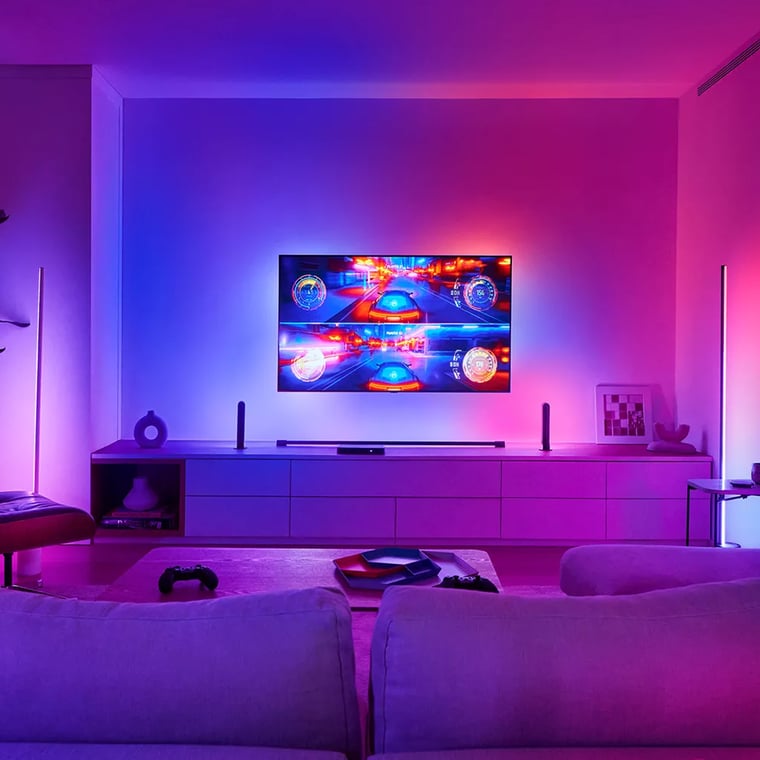
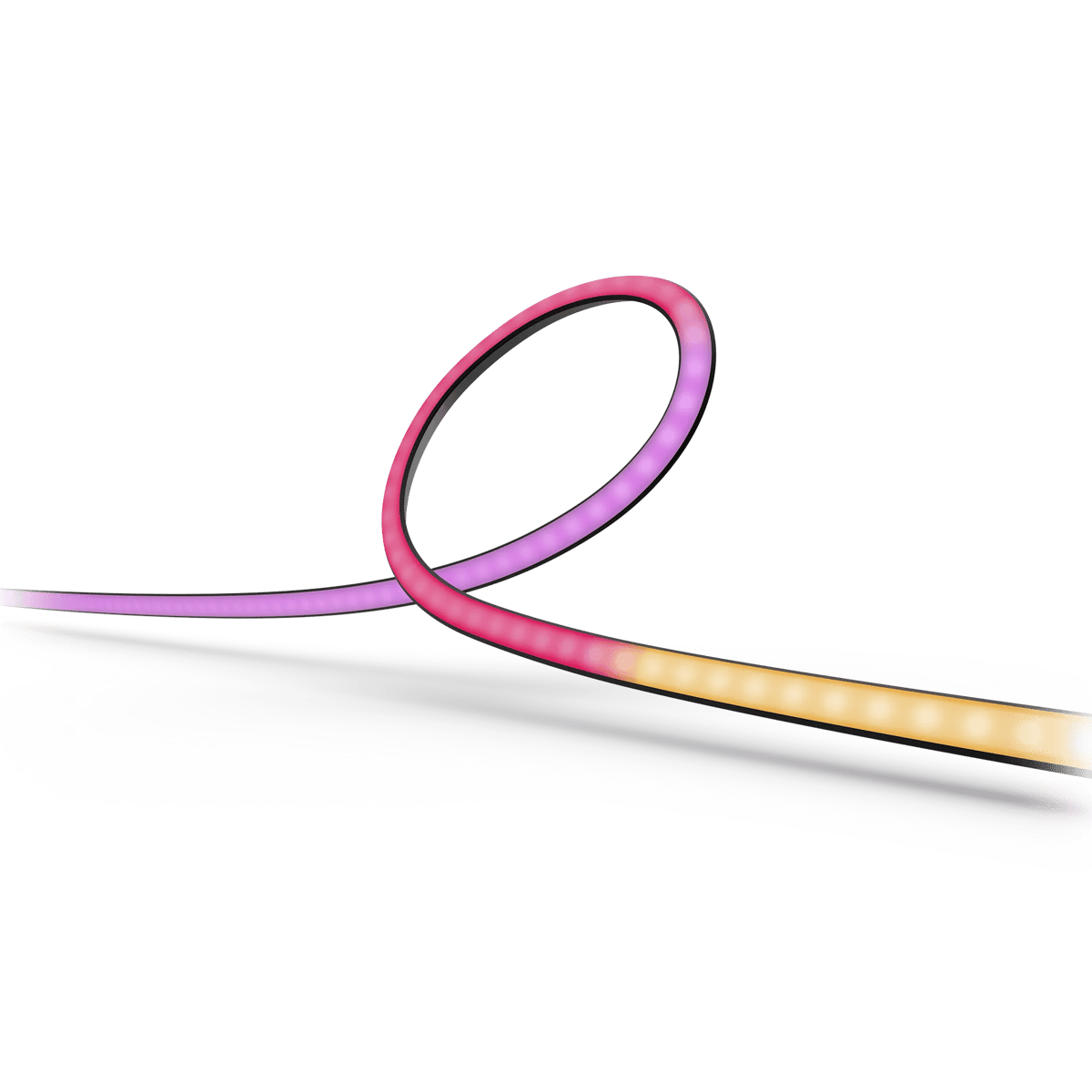
Many colours at onceThe strip shows several colours along its length at the same time, so you can run a blend from one shade to the next or match the colours on your screen. Sometimes called addressable, or RGBIC.
-
Single colour
One colour at a timeThe whole strip lights up in one colour at a time. You can change that colour to anything you like, it just shows a single shade end to end rather than a blend.
None selected
IP rating guide
What does the IP rating mean?
An IP rating tells you how well a light is sealed against dust and water. The first number covers dust, the second covers water, and higher is better on both. Here's what each one can handle.
- IP20 Indoor, dry areas
IP20
Indoor, dry areasIndoor only, with no protection against water. Fine for living rooms, bedrooms and other dry spaces, but keep it well away from bathrooms and outdoors.
- IP67 Dust-tight · brief immersion
IP67
Dust-tight · brief immersionFully sealed and survives brief immersion in water up to a metre deep, so it handles flooding-prone spots, pond edges and ground-level garden lights.
None selected
Tap led strips to compare them
That's the most you can compare at once









No products match those filters.
Pick COB for a smooth line, SMD to save
If the strip sits in view along a benchtop edge or open shelf, COB gives you a solid line of light with no dots. If it hides behind a diffuser or up in a cove, SMD does the same job for less. Want colour or per-segment effects behind the TV or in a kid's room? Choose RGBIC over plain RGB.
Match the IP rating to the spot
Indoor, dry runs need no weatherproofing, so an IP20 strip is fine behind a TV or along a shelf. For a bathroom, eave or anywhere it cops a splash, step up to IP65. Under a pergola or out in the garden where it sits in the weather, IP67 or higher earns its keep.
Sort the power and how you'll switch it
Short USB or plug-in strips you can fit yourself. Long hardwired runs need a 12V or 24V driver sized to the length, and anything joined to the mains needs a licensed electrician. For control, pick a Wi-Fi or Matter strip if you want app scenes, schedules and voice; a plug-in strip with a remote is plenty for set-and-forget colour.
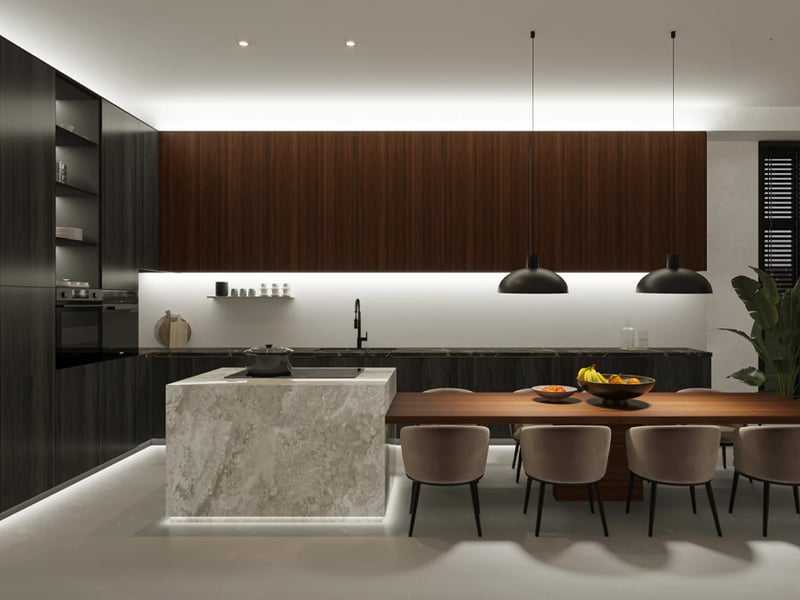
What you can do with them


Common questions
Quick answers before you buy. We test this gear ourselves. Can't find yours? Ask our Melbourne team
Only if you wire them into the mains. Plug-in, USB and battery strips you can fit yourself, no licence needed. A hardwired run that joins your home's 240V supply, or sits behind a wall, has to be done by a licensed electrician under Australian wiring rules. If in doubt, start with a plug-in strip.
Clean and dry the surface first, then press the strip's 3M adhesive backing firmly along its full length. On rough, dusty or hot surfaces the glue lets go over time, so add mounting clips or run the strip inside an aluminium channel. The channel also hides the diodes and protects the strip.
Not much. A typical 5-metre strip draws about 20 to 40 watts at full brightness, close to a single old halogen downlight, and less as you dim it. Running cost tracks length and brightness, not the colour you choose. Strips are among the cheaper lights in the house to leave on.
The main one is quality spread: cheap strips fade, shift colour or fail at the joins within a year. The adhesive can also lift on hot or rough surfaces, and very long runs dim toward the far end without enough power. Buy a known brand, mount it well and size the driver, and you sidestep all three.