








Wall lights
Wall-mounted lights for living rooms, hallways and bedrooms, from sculptural sconces to up-and-down wall lights. We curate the ones worth having: well-made fixtures you can dim, schedule and control by app or voice.
Sconces and up-and-down lights
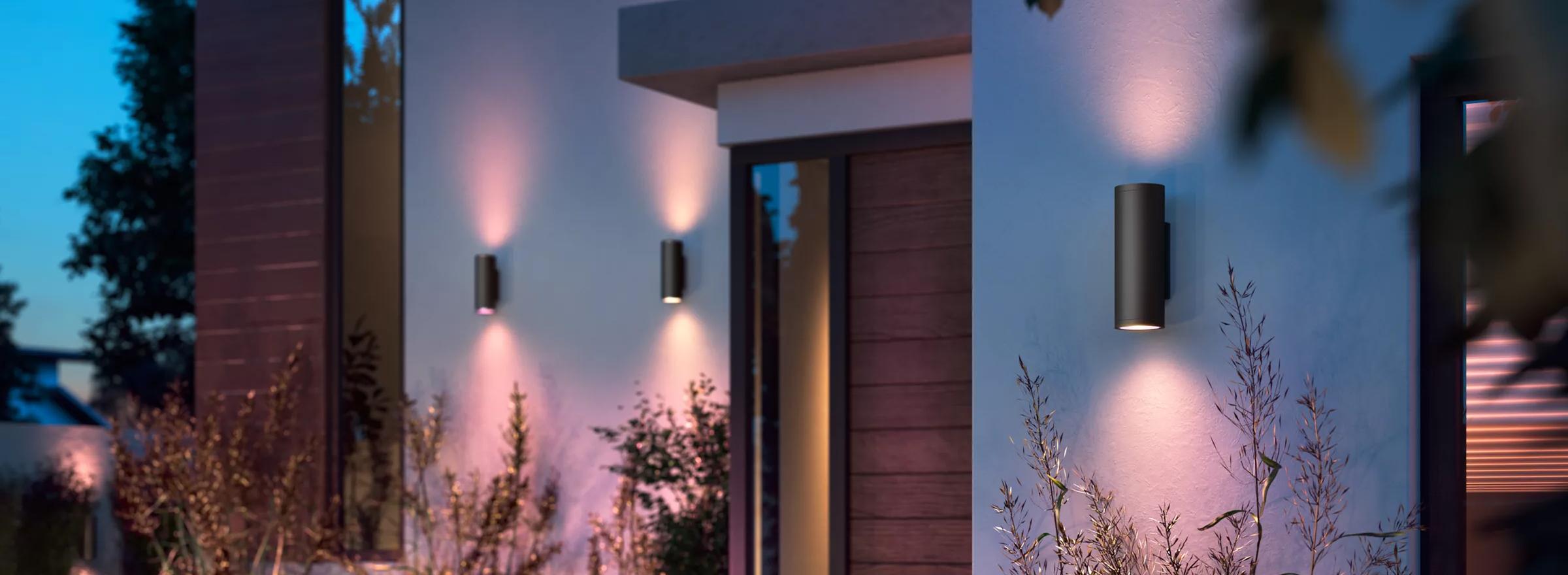
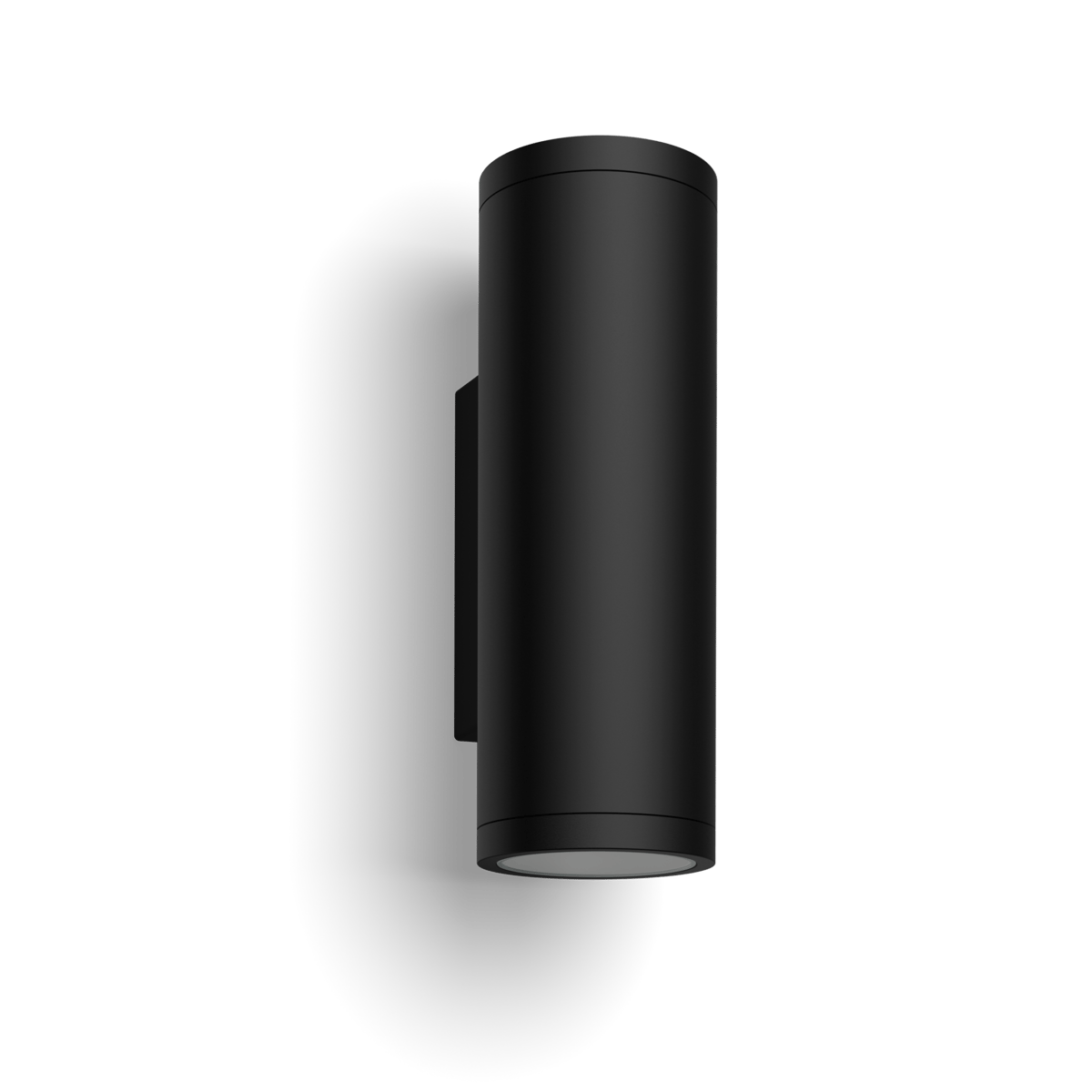
A sconce is a decorative fixture mounted flat to the wall. Up-and-down models throw light both ways, for a soft wash above and below.
Integrated LED or a globe
Many wall lights have the LED built in. Others take a separate globe, so you pick the brightness and colour yourself.
How it's powered
Hardwired fixtures join your mains wiring, plug-in models run to a nearby powerpoint, and rechargeable ones lift off to charge.
What makes one smart
Smart wall lights dim, schedule and answer to app or voice control through Matter, Hue or Zigbee, the systems behind our wider smart lighting range.
Lighting · 3 products Wall Lights at Synced Australian stock
Brightness guide
How much light do I need?
Brightness is measured in lumens, not watts. We've sorted globes into five bands so you can filter by how much light they actually put out, from a soft bedside glow to an outdoor floodlight. Here's what each band covers.
-
Bright
800 to 1500 lm800 to 1500 lumens, around a 75 to 100W globe. Proper room lighting for downlights, a bright pendant or the main light in a living area or kitchen.
-
Very bright
1500 to 3000 lm1500 to 3000 lumens of clear, high output for large or open-plan rooms, kitchens and task lighting. Often one fitting doing the work of several globes.
None selected
Tap wall lights to compare them
That's the most you can compare at once



No products match those filters.
More about wall lights
Choosing wall lights.
Match the power option to your space
Hardwired wall lights give the cleanest finish but need a cable in the wall, so they suit new builds and renovations. Plug-in models trail a cord to a powerpoint, handy beside a bed or sofa. Rechargeable lights need no wiring at all, so you can move them around or fit them where there's no power.
Pick a fixture rated for where it goes
Indoor wall lights are built for looks and light quality, not weather. Entrances, alfresco areas and bathrooms need a fixture with a moisture and dust rating so it stands up to splashes and damp. We cover weather-rated options, and how to read an IP rating, on the outdoor lighting page.
Decide if you want them smart
A smart wall light dims, runs on a schedule and answers to your phone or a voice assistant, so a hallway can fade on at dusk or a bedside sconce drop to a warm glow at night. If you already run Apple Home, Google Home or Alexa, choose a fixture on a system you own. Our smart lighting hub explains how the pieces fit.
What you can do with them


Common questions
Quick answers before you buy. We test this gear ourselves. Can't find yours? Ask our Melbourne team
Only for hardwired fixtures. Connecting a light to your mains wiring is licensed work in Australia under AS/NZS 3000, so a hardwired wall light should be fitted by a registered electrician. Plug-in and rechargeable models avoid this entirely: they run from a powerpoint or a battery, so you can put them up yourself.
Yes, if it runs on a local protocol. Wall lights on Zigbee, Thread or a Hue bridge keep working on your home network with no internet, so the switch and your automations still respond. Wi-Fi-only lights that depend on the maker's cloud can lose app control during an outage, which is why we favour local control.
Around eye level is the usual rule. Hallway and living-room sconces sit about 1.5 to 1.7 metres off the floor, spaced 2.5 to 3 metres apart. Bedside wall lights go a little lower, roughly 1.2 metres or just above the mattress, so the light falls on a book rather than in your eyes.
It depends on the fixture. Many modern wall lights use an integrated LED that lasts around 25,000 to 50,000 hours and is meant to outlive the fitting, so there's no globe to change. Others take a standard globe like a B22 or E27, which you can swap for a brighter or warmer one from our bulbs range.