









Explainer Protocols

What is Bluetooth?

Bluetooth is the wireless in every phone, and in the smart home its main job is setup. Here is how BLE works, why it is the onboarding front door, and where it fits.

You know Bluetooth from headphones and car stereos, but it does a quieter job in the smart home. It is rarely the network your devices live on. Instead, it is usually the front door: the way you get a new device set up before it hands over to another protocol for the day-to-day. Understanding that one role clears up most of the confusion about where Bluetooth fits.

How Bluetooth works

Bluetooth is a short-range wireless standard that runs on the 2.4 GHz band, the same crowded space as Wi-Fi and Zigbee. It comes in two flavours. Classic Bluetooth is the older, higher-power version built for streaming, like audio to your headphones. Bluetooth Low Energy, or BLE, is a separate, low-power design meant for gadgets that send small bursts of data and need to last a long time on a small battery. Almost everything Bluetooth does in the smart home uses BLE.

Where Bluetooth came from

Bluetooth is older than most smart home tech. The Bluetooth Special Interest Group released the first version in 1999, and named it after Harald Bluetooth, a 10th-century Scandinavian king who united warring tribes, a nod to Bluetooth uniting different devices. For years it was mainly a cable replacement for headsets and keyboards. The smart home story really starts in 2010, when Bluetooth 4.0 introduced BLE, the low-power version aimed at sensors, wearables and beacons.

Bluetooth's job in the smart home

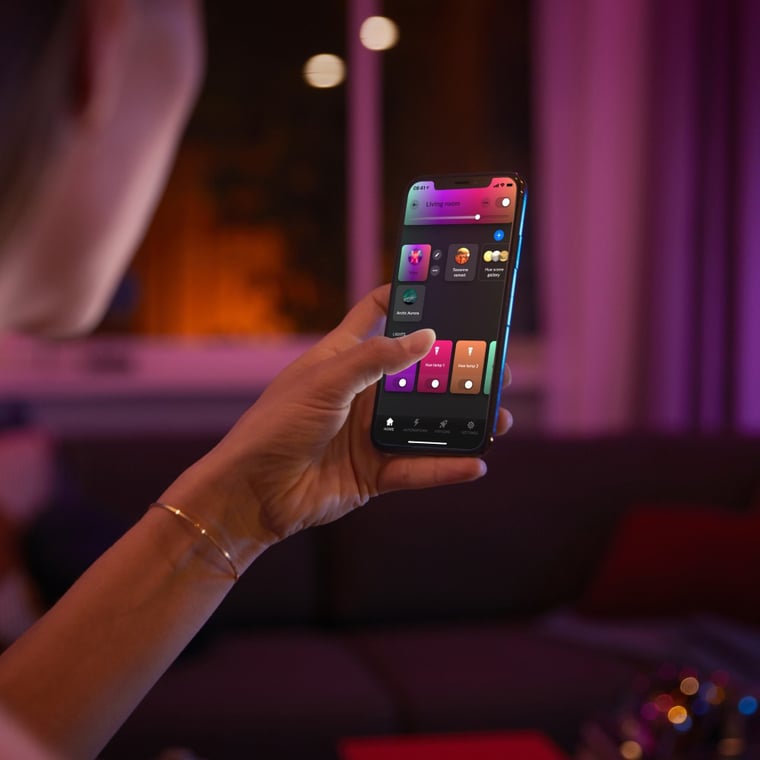
Here is the key thing: Bluetooth is not built to run a whole home. Its main job is setup. When you add a new device, your phone talks to it over Bluetooth to get it configured and onto your real network, whether that is Wi-Fi, Thread or Zigbee. After that, Bluetooth steps back and the device runs on the other protocol.

This is exactly how Matter devices are set up: you scan the code, your phone commissions the device over Bluetooth, then it switches to Wi-Fi or Thread for good. Zigbee is heading the same way with Zigbee Direct, a feature that lets your phone set up and control Zigbee devices over Bluetooth without a separate hub. Because every phone has Bluetooth, it has become the shared front door across ecosystems. Beyond setup, Bluetooth also handles a few devices directly, like some smart locks and trackers, and it powers presence features that notice when your phone is nearby.

What Bluetooth is good at

For its actual job, Bluetooth is hard to beat.

  • It is already in your pocket. Every phone has Bluetooth, so setting a device up needs no hub and no extra hardware, just the phone you are holding.
  • Low power and cheap. BLE sips power and the chips cost almost nothing, which is why it is in everything from trackers to fitness bands.
  • Good for presence. Because your phone carries Bluetooth everywhere, it is a natural way to tell when you are home or standing at the door.

Where Bluetooth falls short

As a smart home network, Bluetooth runs out of road quickly.

  • Short range. Bluetooth reaches a room, not a house, so it cannot link devices across your home the way a mesh protocol does.
  • It does not scale. Direct phone-to-device control is fine for one lock, but it falls apart across dozens of devices, and it stops the moment you leave.
  • Its mesh never caught on at home. Bluetooth Mesh exists, and it runs some commercial lighting, but consumer smart homes went with Zigbee, Thread and Wi-Fi instead.
  • It is a helper, not a backbone. For anything beyond setup and a few gadgets, another protocol does the real work.

How Bluetooth compares

Bluetooth Current, the page you are on
Type
Short-range wireless
Radio band
2.4 GHz
Network
Device to device
Needs a hub
Not usually
Power use
Low
Range per device
Short
Best for
Pairing and onboarding
Zigbee
Type
Low-power mesh
Radio band
2.4 GHz
Network
Mesh
Needs a hub
Yes
Power use
Very low
Range per device
Tens of metres
Best for
Sensors, bulbs, switches
Z-Wave
Type
Low-power mesh
Radio band
Sub-GHz (921 MHz AU)
Network
Mesh
Needs a hub
Yes
Power use
Very low
Range per device
Longer, sub-GHz
Best for
Locks, sensors
Matter
Type
Software standard
Radio band
Rides Wi-Fi / Thread
Network
Rides other networks
Needs a hub
A controller
Power use
Depends on carrier
Range per device
Depends on carrier
Best for
Cross-brand glue
Thread
Type
Low-power mesh
Radio band
2.4 GHz
Network
Mesh
Needs a hub
Border router
Power use
Very low
Range per device
Tens of metres
Best for
Battery Matter devices
Wi-Fi
Type
Home network
Radio band
2.4 / 5 GHz
Network
Star, to the router
Needs a hub
No
Power use
High
Range per device
Tens of metres
Best for
Cameras, mains devices

How the main smart home connection types compare.

The short version: Bluetooth is the setup and short-range specialist, not the network your home runs on. That job goes to Wi-Fi for cameras, and to Zigbee, Z-Wave or Thread for everything low-power.

Where Bluetooth is headed

Bluetooth's smart home role is growing, just not as a backbone. As Matter and Zigbee both lean on it for setup, it is cementing its place as the universal front door, the one radio every device and every phone can rely on to get started. Newer versions are adding precision too: Bluetooth 6.0, from 2024, brought Channel Sounding, a secure way to measure the exact distance between two devices. That points at smarter presence features, like a door that unlocks only when your phone is genuinely beside it, not just somewhere in the house. So Bluetooth is not fading. It is quietly becoming the layer that gets everything else started.

Frequently asked questions

Is Bluetooth the same as Wi-Fi?

No. Bluetooth links two nearby devices directly over a short range, while Wi-Fi connects your devices to the internet across the whole home. In a smart home, Bluetooth is mostly for setup; Wi-Fi carries the ongoing traffic.

What is Bluetooth Low Energy (BLE)?

BLE is the low-power version of Bluetooth, built for gadgets that send small bursts of data and run a long time on a small battery. It is the version smart home devices use.

Do smart home devices use Bluetooth?

Mostly for setup. Your phone uses Bluetooth to get a device onto Wi-Fi, Thread or Zigbee. Some locks and trackers also use it for direct, close-range control.

Is Bluetooth used to set up Matter devices?

Yes. A Matter device is commissioned over Bluetooth, then it switches to Wi-Fi or Thread for everyday use.

Can I control a Bluetooth device when I am away?

Not on its own. Bluetooth is short-range, so a Bluetooth-only device only responds when your phone is nearby. For remote control you need Wi-Fi or a hub.

What is the disadvantage of Bluetooth in a smart home?

Short range and no real whole-home mesh, so it cannot run a house on its own. It is a setup and companion protocol, not a backbone.

Still need a hand?

We answer most messages within one business day. If your question is about an existing order, have your order number ready. It speeds things up.

Contact us