











On this page
- Key takeaways
- The short answer
- What each radio actually does
- Why so many devices set up on Bluetooth and then leave it
- What you give up on Bluetooth alone
- A Bluetooth proxy changes the calculation
- Battery life, where Bluetooth wins cleanly
- The Philips Hue decision at the shelf
- What we would actually buy
- Frequently asked questions
Comparison Protocols
Bluetooth vs Wi-Fi for smart home devices
Bluetooth and Wi-Fi are rarely rivals. Most smart home devices set up over Bluetooth, then run on Wi-Fi. Here is when Bluetooth on its own is enough, and when it will let you down.
The short answer
They are not usually alternatives. Bluetooth is the radio your phone uses to talk to one device in the same room. Wi-Fi is the radio that puts a device on your home network, where a hub, a voice assistant or your phone from the other side of the country can reach it. Most products carry both and use each for a different part of the job.
When a product does make you choose, the question is not which radio is technically better. It is whether you want to control the thing while you are not standing next to it.
What each radio actually does
Both sit in the 2.4 GHz band, so they share airtime with each other, with Zigbee and Thread, and with the microwave. Bluetooth LE hops across 40 narrow channels, which helps it survive a crowded band but does nothing for its range.
The difference that produces everything else is the shape of the network. A Bluetooth device talks to one thing: your phone, or a gateway standing in for it. A Wi-Fi device joins the access point along with the laptops and the TV, takes an IP address, and becomes reachable from anything else on that network.
| Bluetooth LE | Wi-Fi | |
|---|---|---|
| Band | 2.4 GHz | 2.4 GHz, plus 5 GHz and 6 GHz on newer gear |
| Network shape | Direct link from your phone or a gateway to the device | Every device joins the router or access point |
| Useful indoor range | A room, sometimes two. Roughly 10 to 30 m in the clear, far less through brick | Most of a house from a well-placed access point, roughly 20 to 50 m at 2.4 GHz |
| Control from outside the house | No, unless a gateway is doing it for you | Yes |
| Automations while your phone is away | No | Yes |
| Power | Years on a coin cell | Mains power in almost every case |
| Role in Matter | Setup only, never the operating radio | A full Matter transport |
| What it needs from you | A phone in the room | Working Wi-Fi and the password |
Why so many devices set up on Bluetooth and then leave it
A brand new device does not know your Wi-Fi password, so it cannot join the network to be told what the password is. Bluetooth solves that neatly: your phone is already in the room, it pairs directly, and hands over the credentials. After that the device is on Wi-Fi and Bluetooth goes quiet.
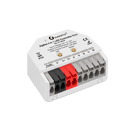
Shelly does exactly this. In the Shelly Smart Control app you choose Add via Bluetooth, pick the device, type in your Wi-Fi details, and it joins your network. Bluetooth stays active for only 15 minutes after power-up, which catches people who wander off mid-setup.
Matter formalises the same pattern: Bluetooth LE discovers and commissions the device, then Wi-Fi or Thread carries it from there. Matter has no Bluetooth-only mode, which is why a Bluetooth-only light cannot be a Matter device however modern it is. Philips says the same in its own support pages.
What you give up on Bluetooth alone
You lose remote access. There is no path from your phone at the shops back to a Bluetooth bulb at home, because nothing in between is holding the connection open.
You lose automations that run without you. A schedule stored in the app usually needs the phone nearby and awake to fire, and phone operating systems are aggressive about killing background Bluetooth work. A light meant to come on at sunset while you are away is not a job for Bluetooth.
And you lose range in a way that is easy to underestimate, especially through the double brick and plasterboard common in older Australian houses. Philips is blunt about this for outdoor lighting: outdoor fixtures usually sit outside Bluetooth range, which is why the Bridge exists.
A Bluetooth proxy changes the calculation
If you already run a hub, most of those limits stop applying. A Bluetooth proxy is a small mains-powered device that listens for Bluetooth traffic and forwards it over Wi-Fi or Ethernet to your hub. The Bluetooth devices are now on the network, the hub runs the automations, and your phone can be anywhere.
Home Assistant leans on this heavily. Its own documentation recommends an ESP32 Bluetooth proxy over a USB adapter plugged into the server in many cases, and treats adapters and proxies alike as scanners, so coverage goes in the rooms that need it rather than in the cupboard where the server lives. Shelly does its own version: a Gen3 or Pro device on Wi-Fi can act as a BLE gateway with the BTHome component and relay Shelly BLU sensors onto the network.
The proxy does not change the radio in the sensor. It changes who is listening, and that is enough.
Battery life, where Bluetooth wins cleanly
A Bluetooth LE sensor sleeps almost all the time, wakes for a few milliseconds to broadcast a reading, and goes back to sleep. Average draw sits in the microamps. A Wi-Fi radio has to associate, authenticate, hold an IP address and stay awake enough to be reachable, which runs to hundreds of milliamps in bursts.
That gap is why you can buy a Bluetooth door sensor that runs for years on a coin cell and cannot buy a Wi-Fi one that does the same. If there is no power at the device, Bluetooth, Zigbee or Thread is the honest answer. Wi-Fi is for things wired into a switchboard or plugged into a powerpoint.
The Philips Hue decision at the shelf
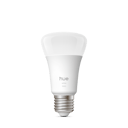
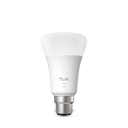
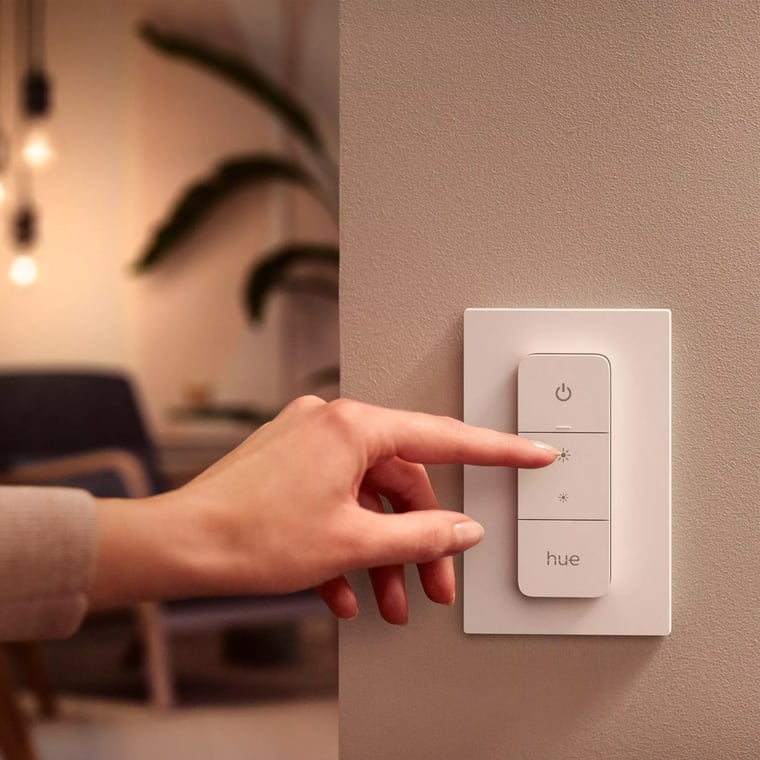
This is where an Australian buyer actually has to choose, because Hue sells the same bulbs both ways. Philips' own Australian support pages set out the limits. On Bluetooth you can control up to 10 lights in a single room, and you get one routine, which runs once. Add a Bridge and you get out-of-home control, up to 50 lights and accessories, outdoor lighting and real automations. The Bridge Pro raises that to 150 lights.
Bluetooth-only also cuts you out of Matter and the Spotify integration, and narrows your voice options. Hue over Bluetooth works with Alexa on up to five lights and needs a compatible Echo in the room. On Google it needs a Home or Nest speaker, and third-party Assistant devices will not do.
None of that makes Bluetooth the wrong buy. One room, a few bulbs, no ambition beyond turning them a nice colour from the couch, and the Bridge is money you did not need to spend. It is also not a dead end: Philips confirms Bluetooth bulbs move onto a Bridge later and keep working.
What we would actually buy
For anything mains powered that you want to reach from outside the house, buy Wi-Fi and stop thinking about it. For anything on a battery, buy Bluetooth LE, Zigbee or Thread, and plan for a hub or a proxy to catch it.
The case worth pausing on is filling a whole house with Wi-Fi devices. Thirty Wi-Fi bulbs on a modest router is a different proposition to three, and that is the argument for Zigbee rather than Wi-Fi once the count climbs. Buy for the device and the job in front of you. You will end up with all of these radios in the house anyway.
Frequently asked questions
Do you need Bluetooth if you have Wi-Fi?
For smart home gear, usually yes, at least during setup. Most Wi-Fi devices use Bluetooth to receive your Wi-Fi password from your phone before they can join the network, so the Bluetooth on your phone needs to be on when you first add them. After that the device runs on Wi-Fi and you can leave Bluetooth alone.
Do smart bulbs work without internet?
Bluetooth bulbs do, because your phone talks to them directly with nothing in between. Wi-Fi bulbs depend on the brand. Some keep working over your local network when the internet drops, others route every command through a cloud server and go dead. It is worth checking before you buy, because it is not usually printed on the box.
Do smart light bulbs slow Wi-Fi?
A handful will not. Each Wi-Fi bulb is another client on your router, and consumer routers have a practical ceiling on how many they handle well, so a whole house converted to Wi-Fi bulbs can start to feel it. Bluetooth, Zigbee and Thread devices do not take up a slot on the router at all.
Why would you use Bluetooth instead of Wi-Fi?
Two reasons. Battery life, because a Bluetooth LE sensor can run for years on a coin cell and a Wi-Fi one cannot. And simplicity, because a Bluetooth device works straight out of the box with no network, no password and no account, which suits renters and single rooms.
Still need a hand?
We answer most messages within one business day. If your question is about an existing order, have your order number ready. It speeds things up.
Contact us