











Explainer Ecosystems
Do you need a Philips Hue Bridge?
Hue bulbs run over Bluetooth without a Bridge, up to 10 lights in one room. Here is what the Bridge adds, when you can skip it, and whether to buy the Bridge or the Bridge Pro.
Not for a small setup. Every Hue light sold today has two radios inside it, and the Bluetooth one is enough to run a handful of lights in a single room from your phone. The Bridge is what turns those lights into a system: the whole house instead of one room, sensors and switches, control from work, and Apple Home or Matter at all. Which one you need comes down to how far you intend to take it.
What the Bridge actually does
The Bridge is a small hub that connects to your router and runs its own Zigbee network. Every mains-powered Hue light on that network repeats the signal to the next one, so coverage gets better as you add lights rather than thinner. The Bridge also stores your scenes, schedules and automations and runs them itself, which is why they keep working when your phone is at the office.
What you get without one
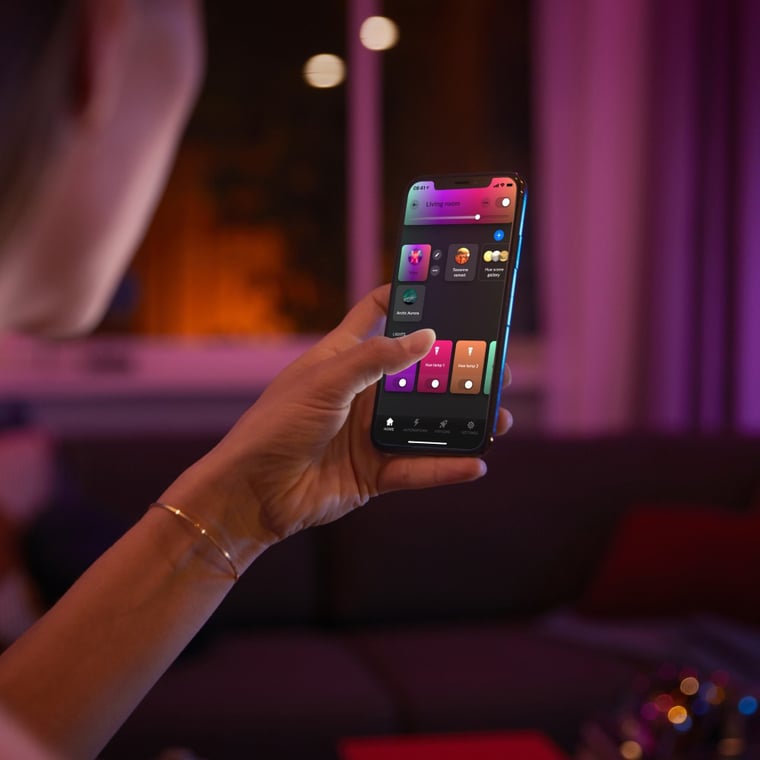
Philips caps the Bluetooth app at 10 lights per phone, in a single room, with a control range of about 10 metres. Inside that you get on and off, dimming, the full colour and white range, the preset scenes, and simple timers. Outside it you get nothing: walk to the far end of the house and the lights are out of reach, because your phone is talking to each bulb directly rather than through anything.
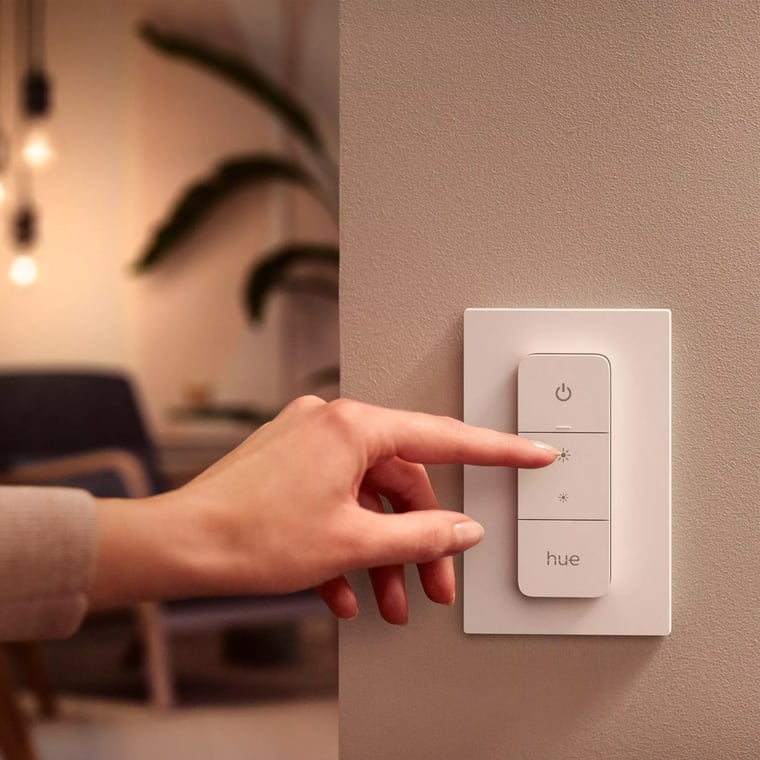
Four things are off the table entirely. You cannot control the lights when you are not home. You cannot pair an accessory, so no motion sensors, no dimmer switch, no Tap Dial. You cannot use Hue Sync, so no lights following a film or a game. And you cannot use Matter, which Philips states plainly: lights connected over Bluetooth cannot be used with it. That rules out Apple Home and SmartThings.
Voice is the exception. A compatible Amazon Echo or Google Nest speaker will turn Bluetooth Hue lights on and off, dim them and change their colour with no Bridge in the house. If voice control is the only reason you were considering a Bridge, you do not need one.
| Bluetooth | Bridge | Bridge Pro | |
|---|---|---|---|
| Lights | 10 per phone | 50 | 150 |
| Accessories | None | 12 | 50 |
| Reach | One room, about 10 m | Whole home | Whole home |
| Control while away | No | Yes | Yes |
| Automations | Timers only | Full | Full |
| Hue Sync | No | Yes | Yes |
| Matter, Apple Home, SmartThings | No | Yes | Yes |
| Alexa and Google Home voice | Yes | Yes | Yes |
| MotionAware | No | No | Yes |
| Price | Included | $99.95 | $179.95 |
When Bluetooth is enough
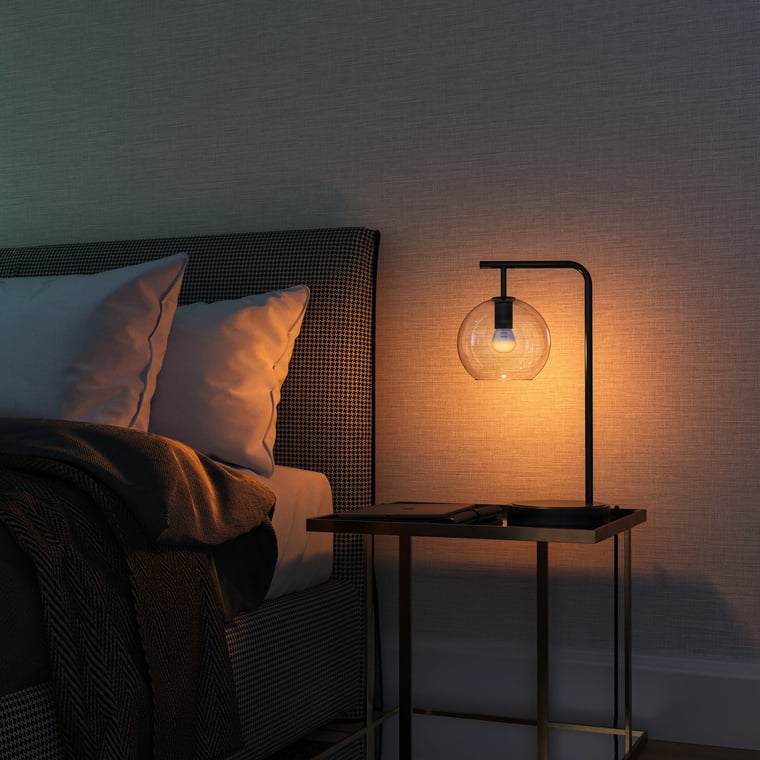
One room, a few lights, no plans beyond that. A bedside lamp and a pair of downlights you want to dim from the couch, or a single colour light behind the telly. If that is the whole ambition, buy the lights and skip the Bridge. You are not missing much at that size, and the app does the basics well.
When you need the Bridge
Any one of these is enough on its own:
- More than 10 lights, or lights in more than one room.
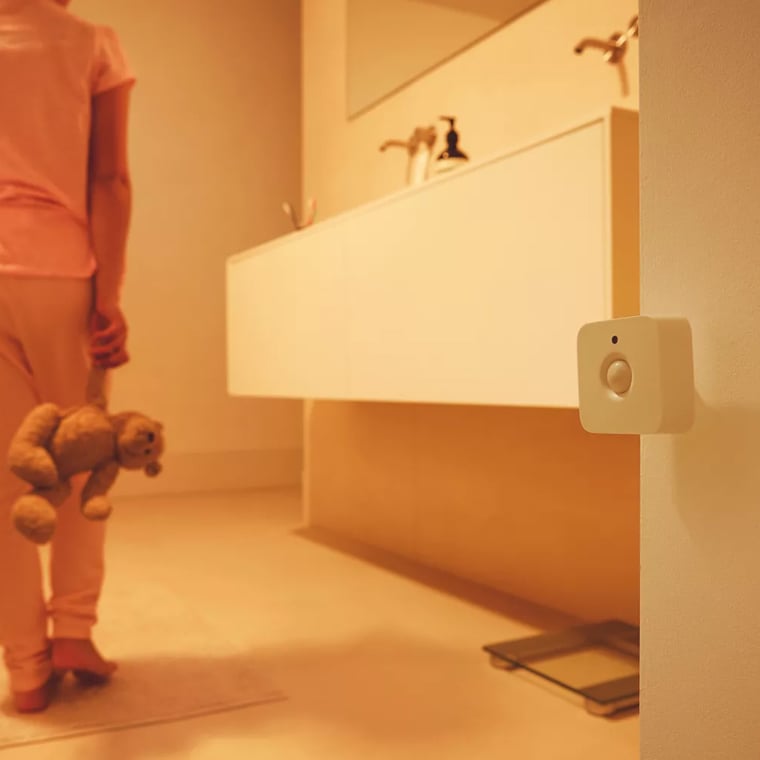
- A motion sensor, a dimmer switch, a Tap Dial or a smart button.
- Turning lights on or off when you are not at home.
- Apple Home, SmartThings, or anything reached through Matter.
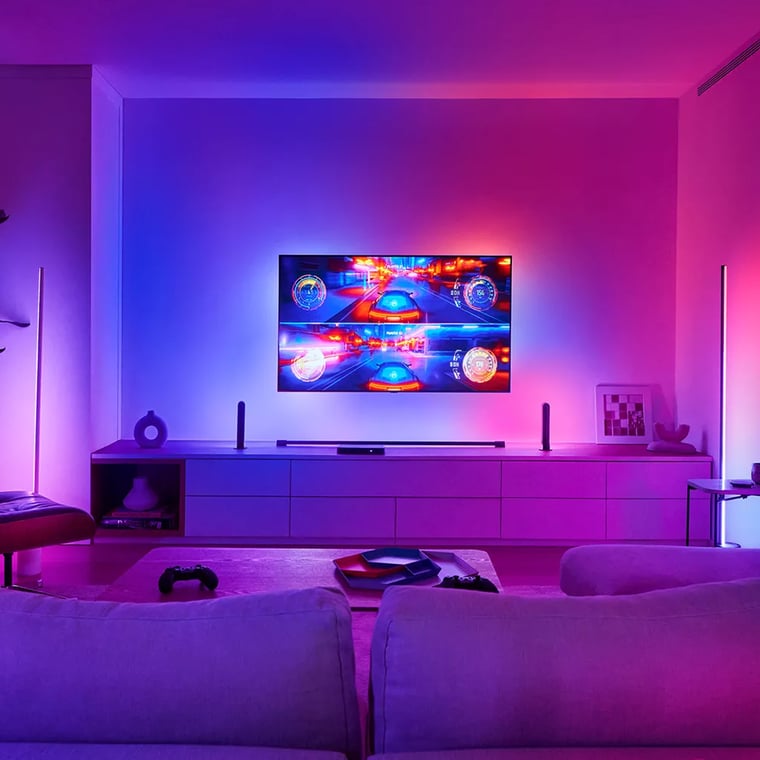
- Lights that follow what is on the TV, in a game or in a track.
Bridge or Bridge Pro?
The standard Bridge is $99.95 and takes 50 lights and 12 accessories. That covers most Australian homes comfortably, including a full downlight retrofit with sensors in the hallway and bathroom. The Bridge Pro is $179.95 and takes 150 lights and 50 accessories, connects over Wi-Fi as well as ethernet, and adds MotionAware: it senses movement using the Hue lights already in the room, so you can skip a sensor in spaces that have at least three lights.
Buy the Pro if you are fitting out a whole house at once, or you want motion sensing without buying sensors. Otherwise the standard Bridge is the right call, and it is the one bundled in most starter kits. We stock both, along with the rest of the Philips Hue range.
Frequently asked questions
Can I use Philips Hue without a Bridge?
Yes, over Bluetooth. The Hue app pairs directly with up to 10 lights in one room and controls them from about 10 metres away. You get dimming, colour, scenes and timers, but not remote access, accessories, Hue Sync or Matter.
Is the Hue Bridge obsolete now that the Bridge Pro exists?
No. Philips still sells the standard Bridge, still ships firmware for it, and has not announced an end of support date. The Pro is a larger-capacity option, not a replacement.
How many bulbs can one Hue Bridge handle?
Philips rates the standard Bridge at 50 lights and 12 accessories, and the Bridge Pro at 150 lights and 50 accessories. Accessories are switches, dials, buttons and sensors.
Does the Hue Bridge need to be connected to my router?
The standard Bridge does. It connects to your router with the ethernet cable in the box, so it has to sit within reach of the router, which is worth planning for if your router lives in a cupboard at the far end of the house. The Bridge Pro can connect over Wi-Fi instead.
Do Hue lights still work if someone flicks the wall switch off?
No. Cut the power at the wall and a Hue light is an ordinary light that is off, with or without a Bridge. Leave the switch on and control the light from the app, a Hue dimmer switch, or a Hue Wall Switch Module fitted behind the existing switch. The dimmer switch and the module both need the Bridge.
Still need a hand?
We answer most messages within one business day. If your question is about an existing order, have your order number ready. It speeds things up.
Contact us