










BTF-Lighting
Dotless COB strip by the roll, for the lighting runs the big brands don't make.
What you get from BTF is the light engine on its own: dense COB strip on a 12 mm board, cut to the run you actually have, at a price that makes lighting a whole kitchen or a full cove detail a reasonable thing to do.
Hue and the rest sell finished strip in fixed lengths with the controller built into the roll. That is the right answer for a TV backlight and the wrong one for seven metres of kickboard. Cut-to-length strip with a separate controller costs less per metre, goes where you need it to go, and leaves the smart part as the piece you can change later without pulling the light out of the channel.
COB is what makes these worth stocking. The diodes sit under one continuous phosphor layer rather than in separate packages, so the strip reads as a line of light instead of a row of dots. In a shallow channel, or an open cove where you can see the strip itself, that is the whole difference between a lighting detail and a visible strip of LEDs.
Two things to be straight about. The strip has no radio and no driver in it, so it needs a 24 V constant-voltage supply and a 6-pin RGBCCT controller before it will light at all. And these rolls have no waterproofing, so they are for indoor, dry locations.
Brand BTF-Lighting 1 category · AU stock


Buying guide
Before you buy.
Why BTF
They specialise in LED strips.
BTF-Lighting has made LED strips in Shenzhen since 2014, selling under its own name and making strips for other brands to badge. It also makes the controllers and power supplies that run them, and that is the whole range: no bulbs, no downlights, no app of its own. This one is a strip built by people who make nothing else, at 960 LEDs per metre with six pins for proper white light as well as colour. Those six pins are why we pair it with Gledopto. Their Pro controllers are built for exactly this strip, and because they join Zigbee, it turns up as an ordinary colour light in the Philips Hue app, Home Assistant or SmartThings.
See the controllers Before you order
What else you need
The strip is one of three parts. Here is the rest of the shopping list.
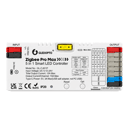
A 6-pin RGBCCT controller
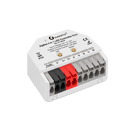
The smart partSix pins carry red, green, blue, warm white and cool white, so the controller has to match. The Gledopto GL-C-301P and GL-C-601P both drive this strip and put it on Zigbee, which means the Hue app, SmartThings or Home Assistant. A 5-pin RGBW or 4-pin RGB controller will run the colours and leave you without the whites.
A 24 V constant-voltage supply
The one that bitesConstant voltage, never constant current. A constant-current driver fights the controller's dimming and you get flicker, or nothing at all. Size it with headroom for the length you are actually running, and buy one with a plug and a lead unless an electrician is wiring it in.
A channel, if it will be seen
OptionalCOB strip is dotless on its own, so a diffuser is about protection and a finished edge rather than hiding LEDs. In a cove or behind a pelmet the bare strip is fine. On an exposed underside, an aluminium channel gives you a straight line and somewhere for the heat to go.
Common questions
Quick answers about BTF-Lighting. We test this gear ourselves. Can't find yours? Ask our Melbourne team
Yes, two things: a 24 V constant-voltage supply and a 6-pin RGBCCT controller. The strip has no radio and no driver of its own. Neither part is in the box.
Flexible chip-on-board. The diodes are mounted bare on the board and covered by one continuous phosphor layer, instead of being packaged individually. That is why you see a line of light rather than a row of dots.
No. The whole strip shows one colour at a time. Addressable strip runs a data line and an IC per segment, which is a different product and needs a different controller.
Every 41.5 mm, at the marked copper pads. Rejoin a cut with solder or a 12 mm 6-pin solderless connector.
No. These rolls have no ingress protection, so keep them indoors and dry. For a deck or a garden run you want a sealed strip and a weatherproof enclosure for the controller and supply.
Because the smart part and the light have different lifespans. A strip glued into a channel should outlast two or three controllers, and separating them means you can change ecosystems later without touching the installation.