













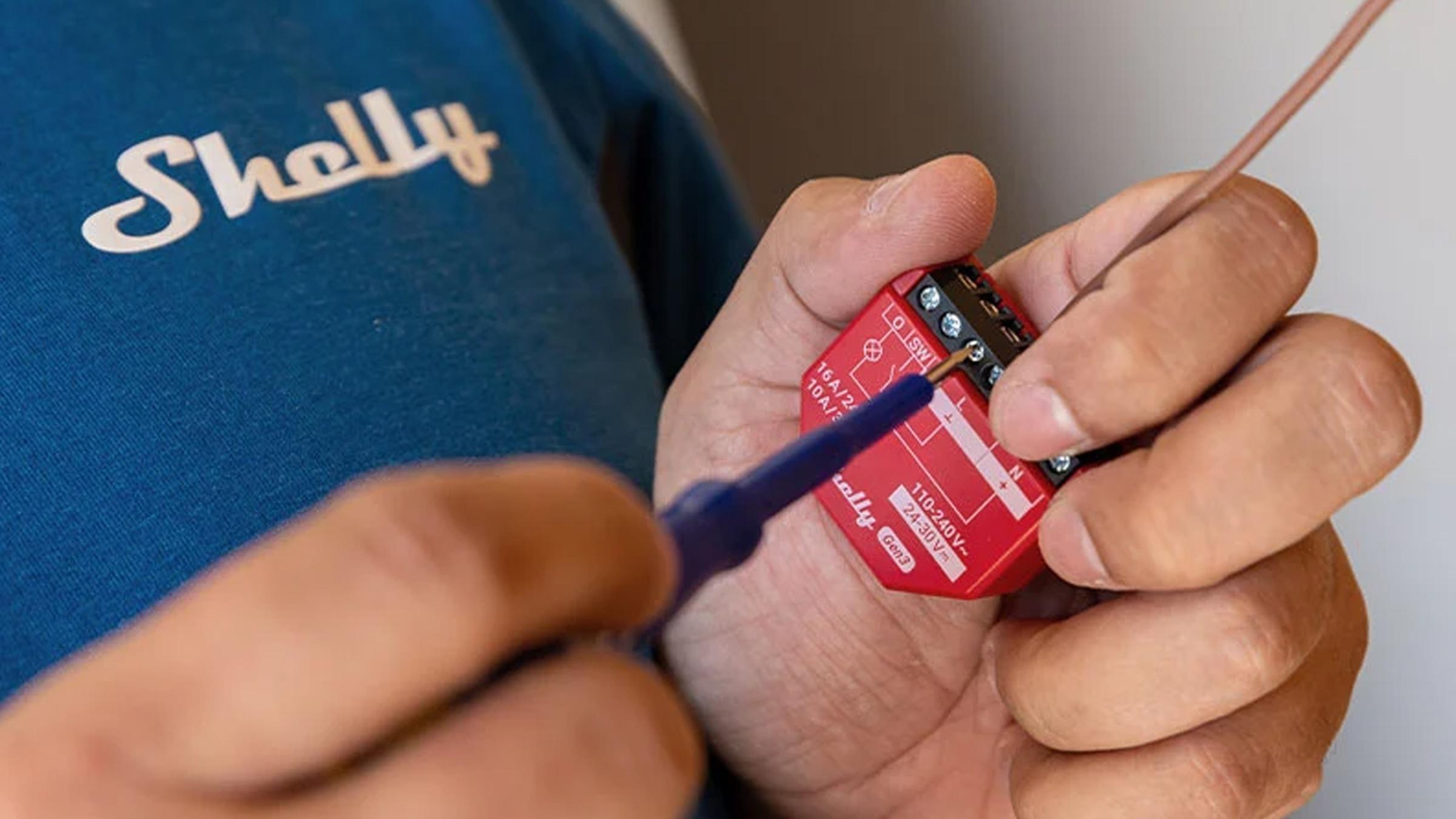

Shelly Dimmers
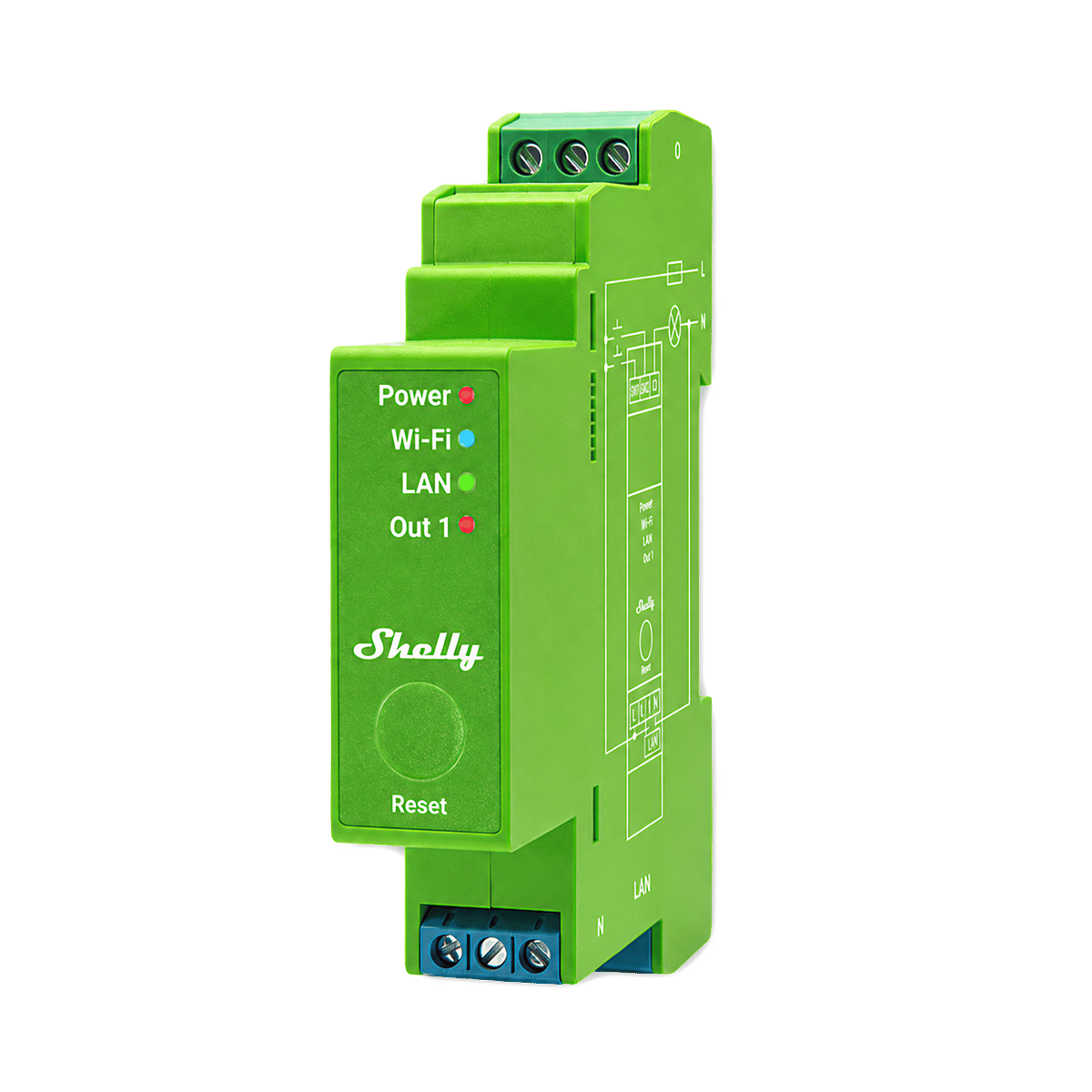
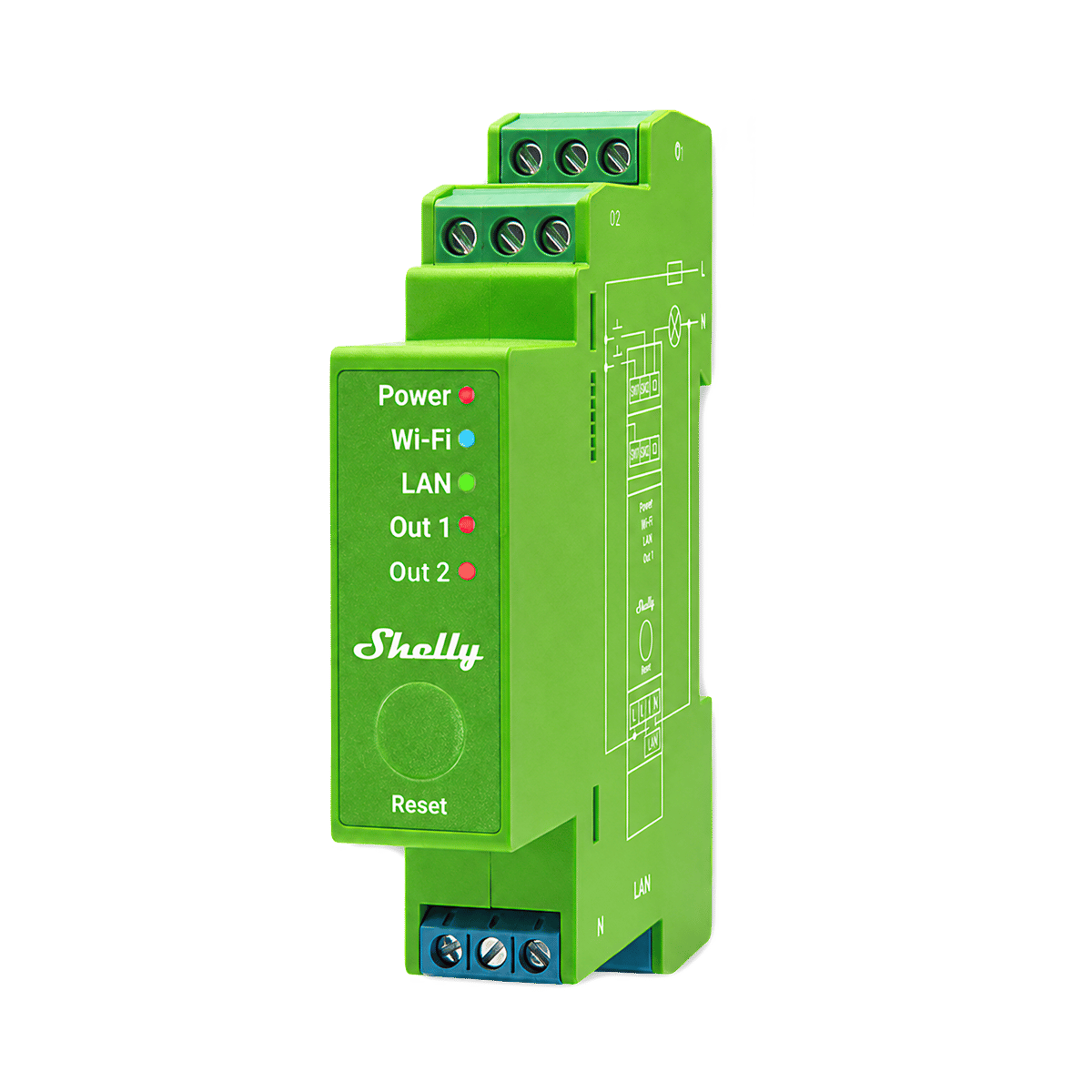
Every Shelly dimmer we stock. They are trailing edge modules: the in-wall ones hide behind the switch you already have, and the Pro models clip onto the switchboard rail. You will see them sold as a Shelly dimmer switch as well, and that is the same device.
Is a Shelly dimmer the same as a Shelly dimmer switch?
The same device, and Shelly smart dimmer gets used for it online too. Shelly calls them dimmers, so we do too. The name matters less than whether it goes behind your existing switch or onto the switchboard rail, because that is the choice that picks the model.
Shelly doesn't make a wall dimmer
There is no Shelly dimmer switch plate to fit. The in-wall models go in the recess behind the switch you already have, and the Pro models go on the DIN rail in the switchboard. Whatever is on the wall now stays there and keeps working.
The whole range is trailing edge
Every Shelly dimmer dims on the trailing edge, which is the LED-friendly half of the choice. There is no leading-edge model, so a circuit that needs one is not a Shelly job. The in-wall models calibrate on the first switch-on and after any change of load.
150 W of LED in the wall, 200 W on the rail
The in-wall Dimmer Gen3 and Gen4 take up to 150 W of dimmable LED, and 200 W of incandescent or halogen. The Pro Dimmer 1PM runs 200 W of LED, and the Pro Dimmer 2PM runs 200 W on each of its two channels rather than 200 W shared. Count a long downlight run before you order.
No neutral, with conditions
The in-wall Dimmer Gen3 and Gen4 both run without a neutral at the switch. Under 20 W of load they need a Bypass fitted at the light, and with no neutral they cannot measure power and their over-current protections may not behave as intended. The Pro models need a neutral.
Shelly · 4 products Shelly Dimmers Australian stock


Filter guide
Which protocol should I pick?
Protocols are the wireless languages smart devices use to talk to each other. Some need a hub, some run straight off your Wi-Fi. Here's what each one means for your setup.
-
Zigbee
Low-power meshThe cleanest mesh for a bigger setup. Every mains-powered device repeats the signal, so coverage grows as you add more. Needs a hub like a Hue Bridge or SmartThings.
-
Wi-Fi
No hub neededThe simplest way to start. Plugs into your existing Wi-Fi with no extra hardware. Best for a handful of devices; very large setups can crowd the network.
-
Ethernet
Wired to your routerThe steadiest connection you can give a device. A cable means no Wi-Fi congestion and nothing to drop out, which is why hubs, panels and cameras so often offer it. The catch is physical: it has to sit within cable reach of a network port.
-
Bluetooth
Direct, short-rangeGood for setup and close-range control from your phone. Range is short with no remote access on its own, so it's often paired with a hub or bridge.



None selected
Compatibility guide
Which platforms does it work with?
Works with shows the smart home platforms a device pairs with, so you can control it from the app and voice assistant you already have. Here's what each one is.
-
Apple Home
Apple ecosystemPairs with Apple Home, so you control it from the Home app and Siri across your Apple devices. Look for this if your household runs on iPhones.
-
Google Home
Google ecosystemWorks with the Google Home app and Google Assistant, for voice control through Nest speakers and displays or your Android phone.
-
Amazon Alexa
Alexa voicePairs with Amazon Alexa, so you can control it by voice through any Echo speaker or display and the Alexa app.
-
Samsung SmartThings
SmartThings hubWorks with Samsung SmartThings, controlled from the SmartThings app. Handy if you've already built your setup around Samsung phones or appliances.
-
Home Assistant
Open-source hubWorks with Home Assistant, the open-source platform for people who want full local control and custom automations. More hands-on, very flexible.





None selected
Tap products to compare them
That's the most you can compare at once


No products match those filters.
Shelly picker
Which Shelly dimmer do I need?
Answer two questions, about the wiring and how you want to control it. We'll recommend which of the 4 Shelly smart dimmers we stock suits the job, and explain why.
Or read the guide firstQuestion 1 of 2
What's behind the wall plate?
Buying guide · Shelly dimmers
What is a Shelly dimmer?
Dimming for the lights and the switches you already have.
A Shelly dimmer lets you dim a dimmable light from an app, by voice or on an automation, without buying new light switches. The module hides in the recess behind the switch you already have, or clips onto the DIN rail in the switchboard, and the switch on the wall keeps working by hand the way it always did.
All of them dim on the trailing edge, which is the type modern LED wants, and all of them calibrate themselves to the load rather than asking you to set a range. On the in-wall Gen3 and Gen4 that calibration runs the first time the light is switched on, by the wall switch or the app, and has to be run again after any change to the lights on the circuit, swapping globes included. Every Gen2 and later device runs locally over your network, so the switch and the schedules carry on if the internet drops.
What they will not do is drive a fitting that expects a control signal. These dim the mains supply, so a 0-10V or DALI driver needs a different kind of dimmer. Shelly makes those, and we don't range them yet.

In the wall, or in the switchboard?
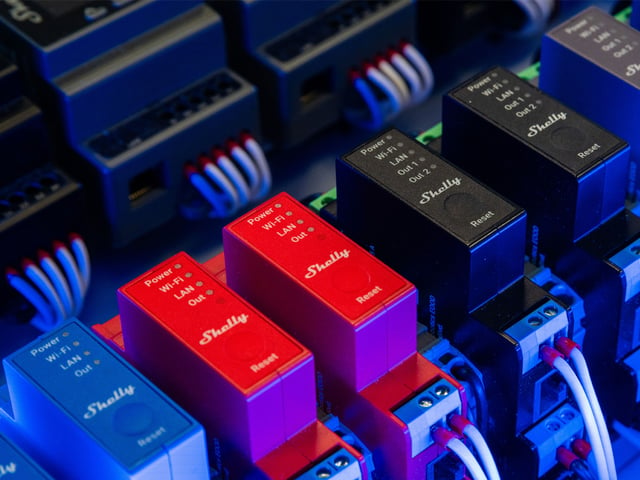
Two shapes, and the job picks between them before price does. An in-wall module goes where the switch already is, and the Pro dimmers live in the switchboard.
Gen4 In-wall · current
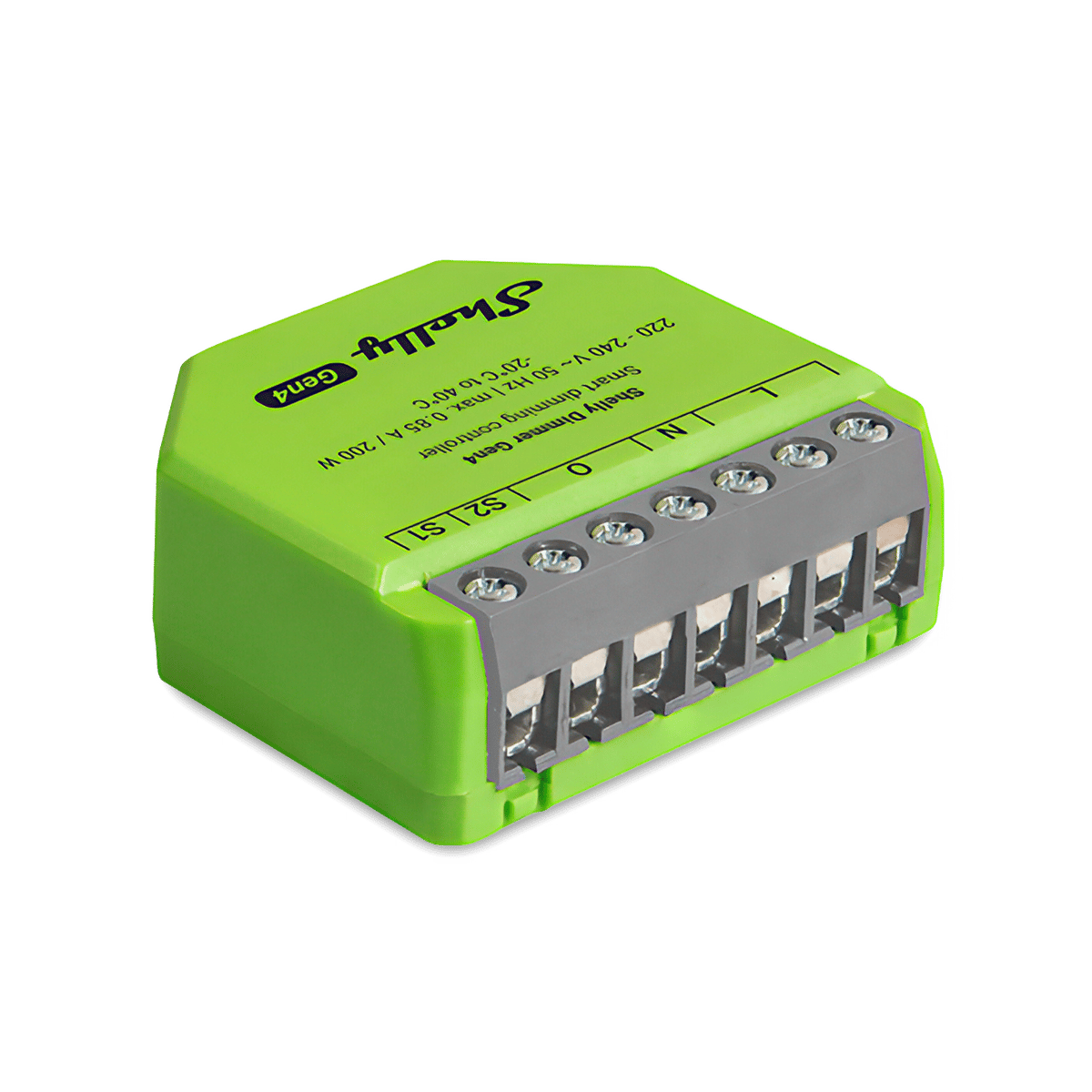
38.5 x 43.5 x 17 mm, single channel, 150 W of dimmable LED. Runs with or without a neutral, and repeats Zigbee for other devices nearby. Matter is the profile it ships on, and you can switch it to Zigbee instead. This is the one to buy for a retrofit.
Protocols  Wi-Fi
 Bluetooth
 Zigbee
 Matter
Wi-Fi Bluetooth Zigbee Matter Gen3 In-wall · previous
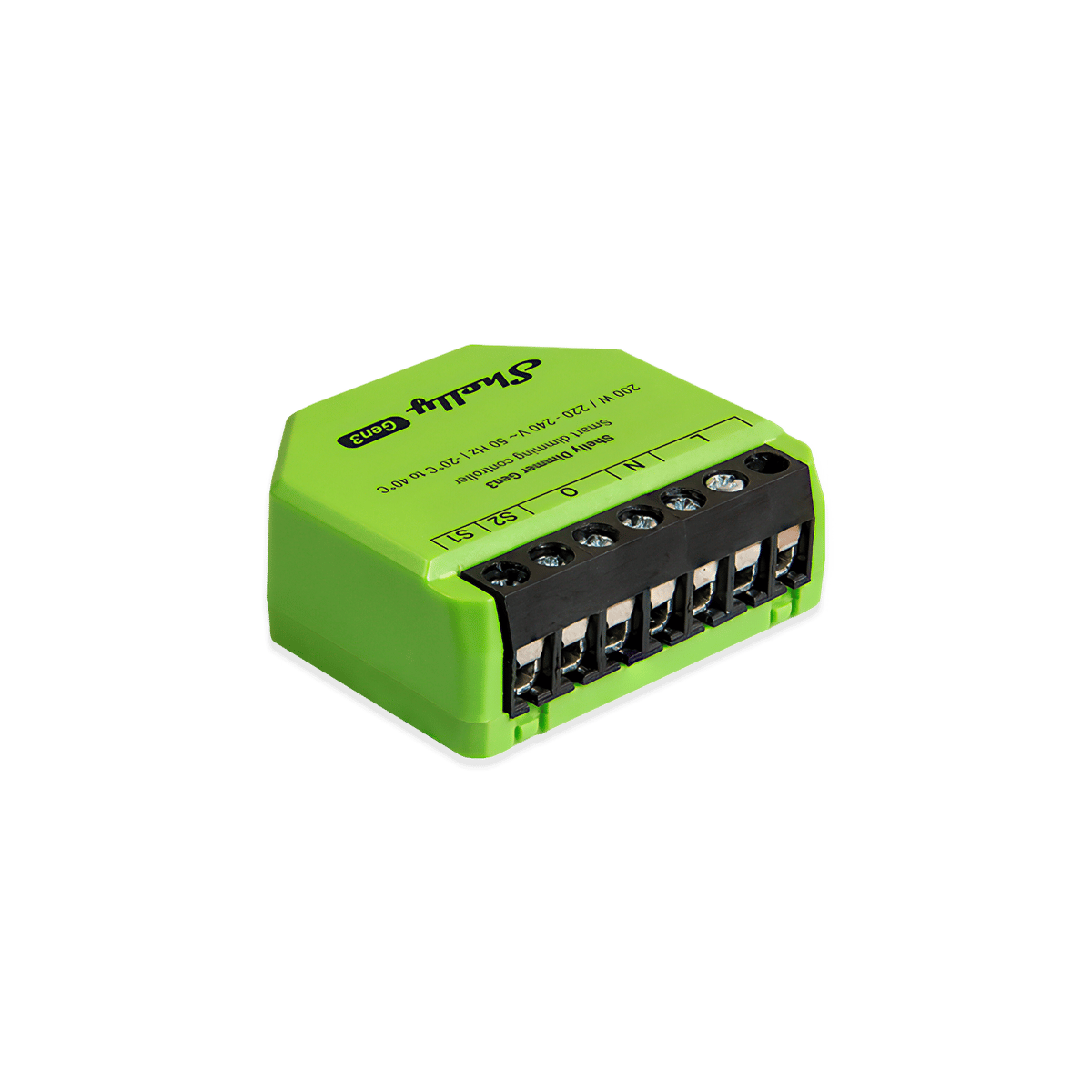
38 x 42.5 x 16.5 mm, single channel, the same 150 W of dimmable LED and the same no-neutral wiring as the Gen4. What you give up is the Zigbee radio and Matter. Worth it only if the price difference decides the job.
Protocols Wi-Fi Bluetooth
Wi-Fi Bluetooth Pro DIN rail · needs a neutral
94 x 19 x 69 mm on the rail, with a network port as well as Wi-Fi. The Pro Dimmer 1PM is one channel at 200 W, the Pro Dimmer 2PM is two channels at 200 W each. Both measure the power on the circuit they operate. They run Shelly's Gen2 firmware, so no Zigbee and no Matter.
Protocols Wi-Fi Bluetooth  Ethernet
Wi-Fi Bluetooth Ethernet Frequently asked questions
We wire this gear ourselves. Can't find yours? Ask our Melbourne team