












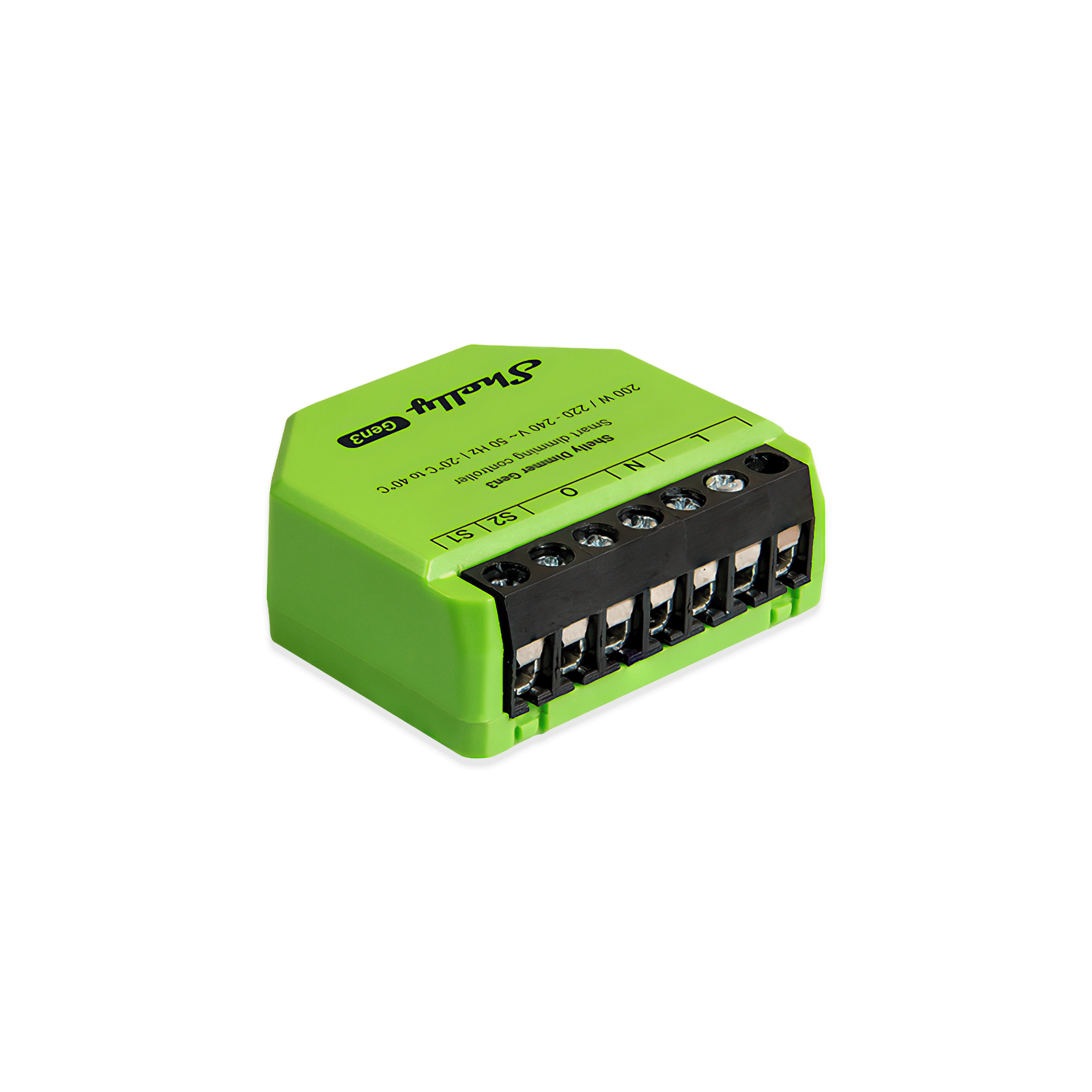

Dimmer Gen3
An in-wall dimmer for the light switch you already have, working with or without a neutral wire. Wi-Fi control, no hub and no subscription.
$49.95 inc GST In stock · ships today
Generation
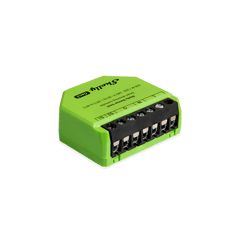
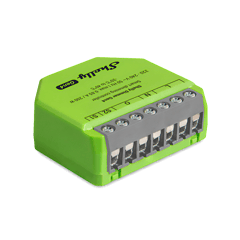
Model guide
Which generation should I pick?
A generation is the brand's own version label. Newer usually means more ways to connect rather than a different device: Shelly's Gen4 adds Zigbee and Matter on top of the Wi-Fi and Bluetooth that Gen3 already had.
-
Gen3
Wi-Fi + BluetoothShelly's third-generation devices. Wi-Fi and Bluetooth, with a faster processor and more automation capacity than the Plus range they replaced.
Selected -
Gen4
Adds Zigbee + MatterShelly's fourth-generation devices. Adds Zigbee alongside Wi-Fi and Bluetooth, and works with Matter, so it pairs with Apple Home as well as the others.
Currently sold out.
Free shipping over $150 Order before 3pm Melbourne time on a weekday and it ships the same day.
30-day returns Unused items, easy online returns
3-year warranty Backed by Shelly
Everything you need to know
A single-channel trailing-edge dimmer for dimmable LED loads up to 150 W, controlled over your own Wi-Fi. No Matter or Zigbee: for those, choose the Shelly Dimmer Gen4.
Product features
Your light switch keeps working, and now it dims
The Dimmer Gen3 goes into the wall box behind your existing light switch and dims the light circuit from there. The switch works the way it always has: flick it and the light goes on and off. Hold it down and the light dims. Add a second switch and you get one button for up and one for down. It all keeps working when the internet is down.
- Fits behind the light switch you already have
- Flick for on and off, hold to dim
- Add a second switch for separate up and down buttons
No neutral, no problem (mostly)
Shop the Bypass for DimmerOlder Australian switch boxes often have no neutral wire, and the Dimmer Gen3 runs without one. It needs at least 20 W of load to do it. Below that, add the Bypass for Dimmer at $9.95, which also stops LEDs glowing faintly when they should be off. With a neutral connected, the app shows what the circuit is drawing.
- Runs with or without a neutral wire
- Needs at least 20 W of load without a neutral
- Power measurement works only when a neutral is connected
Your Wi-Fi, your rules
The Gen3 runs on your own Wi-Fi with no hub to buy and nothing to subscribe to. Schedules, timers and scripts run on the dimmer itself, so a dropped connection doesn't stop the lights coming on at sunset. Its web interface gives you full control from a browser without a cloud account, and it works as a Bluetooth gateway for Shelly BLU sensors.
- No hub and no subscription
- Schedules run on the dimmer, not in the cloud
- Gateway for Shelly BLU sensors
Dimming that stays smooth
The Gen3 calibrates itself to your lights on install, and needs calibrating again whenever the globes change. Minimum and maximum brightness limits keep the usable range where you want it, and transition duration sets how quickly it fades.
- Automatic calibration on install and after a globe change
- Minimum and maximum brightness limits
- Adjustable fade time
What it can dim
Dimmable LED lamps up to 150 W, and incandescent or halogen up to 200 W. Dimmable electronic transformers run to 200 W, iron-core transformers with low-voltage incandescent lamps to 200 VA. It's a trailing edge dimmer, which is the type modern LED drivers are built for, so the lights dim evenly instead of buzzing or stepping the way they can on an older dimmer. Lights grouped on one dimmer should be the same model.
- Dimmable LEDs to 150 W, incandescent and halogen to 200 W
- Trailing edge, suited to LED
- Group lights only if they're the same model
What is a Shelly dimmer?

A Shelly dimmer sits between the power and a light circuit and sets how bright the lights are. The Dimmer Gen3 and Gen4 fit in the wall box behind your existing switch, and the Pro Dimmers clip onto the rail in your switchboard. The switch on the wall keeps working, and the same lights can now be dimmed from your phone, on a schedule or by an automation.
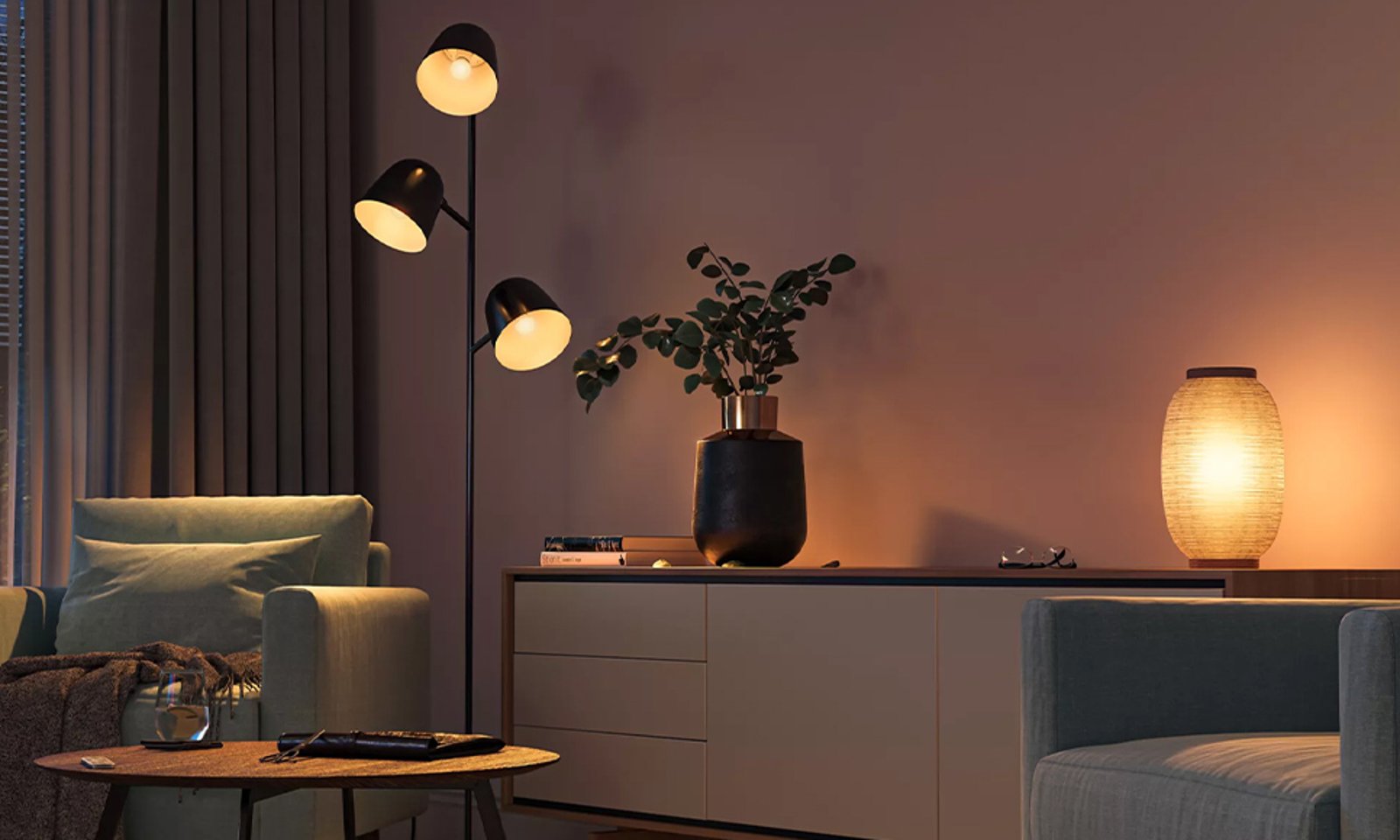
The lights
Made for dimmable lights
Use lights marked dimmable: LED, incandescent or halogen. The in-wall dimmers take up to 150 W of LED, and each Pro channel up to 200 W.
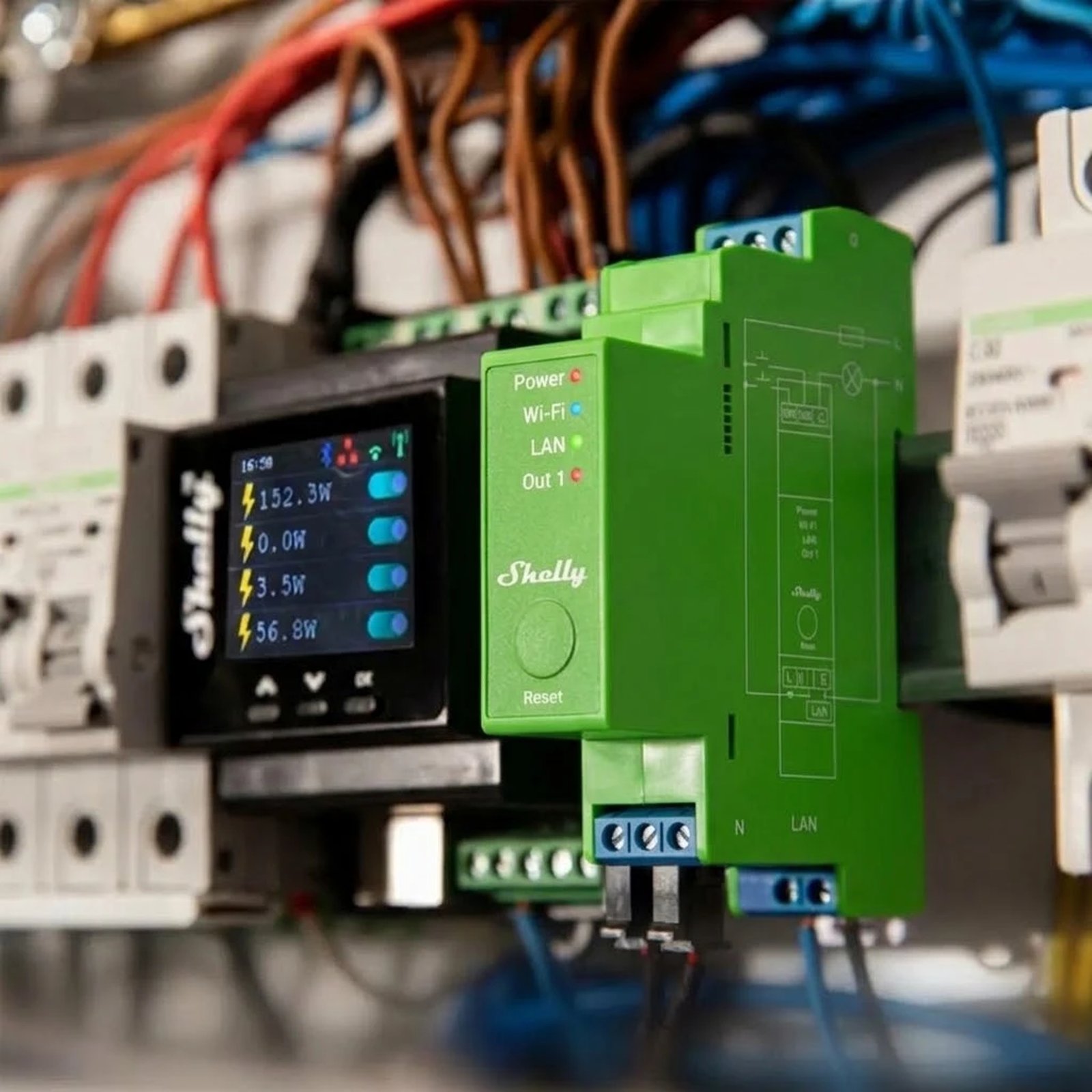
Mounting locations
Where the dimmer lives
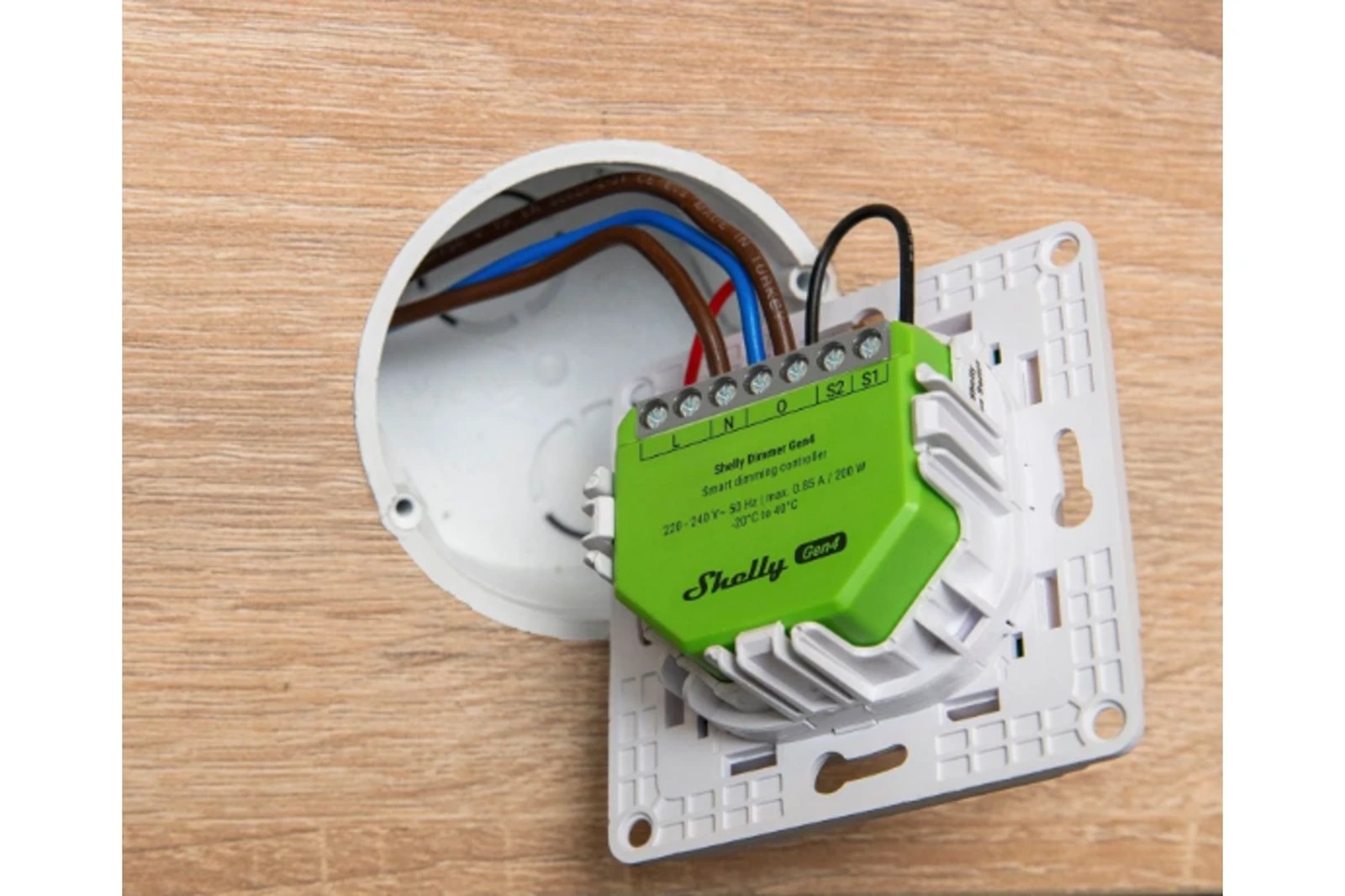
The Dimmer Gen3 and Gen4 sit in the wall box behind your switch. Pro Dimmers clip onto DIN rail in the switchboard, and a 2PM dims two circuits from one unit.
The neutral wire
No neutral in the switch box
The Dimmer Gen3 and Gen4 work without a neutral wire. Under 20 W they need a Shelly Bypass at the light, and power readings need the neutral connected.
Gen 3 and Gen 4
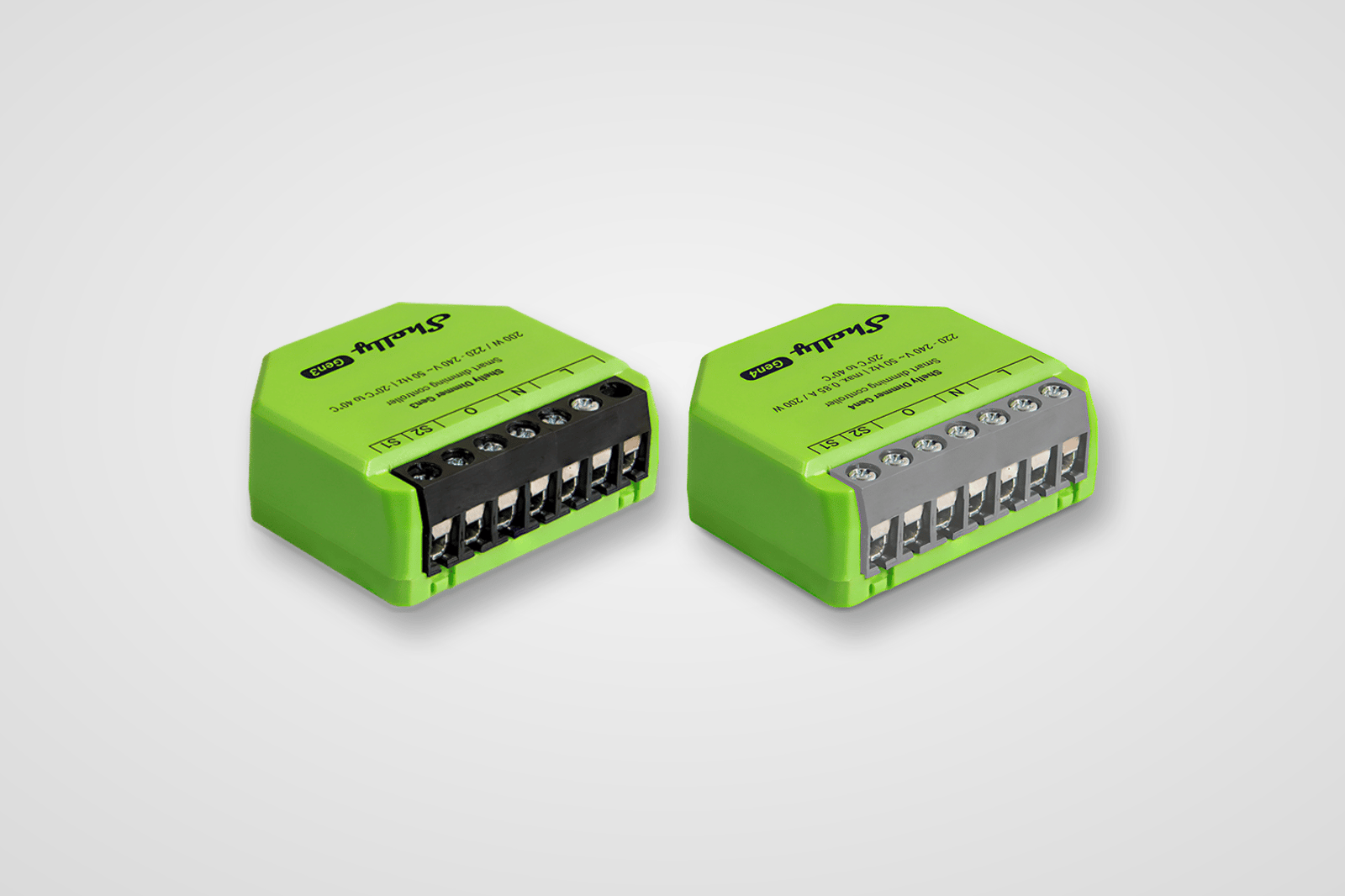
What the generation changes
Gen 3 runs on Wi-Fi and Bluetooth. Gen 4 adds Zigbee and Matter, running one or the other. The wiring and load ratings are the same.
The existing controls
Press to switch, hold to dim
Wire a push button to the dimmer and a press turns the lights on or off, while holding it fades them up or down. You set how fast the fade runs. A standard switch still turns the lights on and off as it does now.
Schedules and scenes
Brightness on a timer
A schedule or scene sets a brightness level and how long the fade takes, not only on or off. The hallway can come up at 10% overnight and at full brightness in the morning, and the dimmer runs that schedule itself.
Works with
Also works with
-
Pairs with Amazon Alexa
-
Pairs with Google Home
-
Pairs with Home Assistant
-
Pairs with SmartThings
Connects over
On your Wi-Fi
Joins your home network, so you control it from the app with no hub or bridge.
-
Wi-Fi
Set up over Bluetooth
Used once, to get it onto your Wi-Fi.
-
Bluetooth
Works offline
Keeps working on your home network when the internet is down.
Scripts
7
Give it jobs the app can't
Scripts add jobs the dimmer can't do with the Shelly app's schedules and actions alone, like acting on the weather forecast or sending an alert to your phone. Each one is a small program that runs on the dimmer itself: copy it, paste it into the device's script editor and press Start. It doesn't need a hub, a cloud account or a subscription.
-
Lighting Control a Philips Hue room from a wall switch -
Lighting Phone alert when a globe blows, from the power the light draws -
Safety Holiday lights that come on at a different time each night -
Garden Frost alert on your phone the evening before a cold night -
Notifications Phone alert when a Shelly goes offline -
Network Phone alert when your home's public IP address changes
Scripts are free; installing one takes about two minutes.
Specifications & Installation
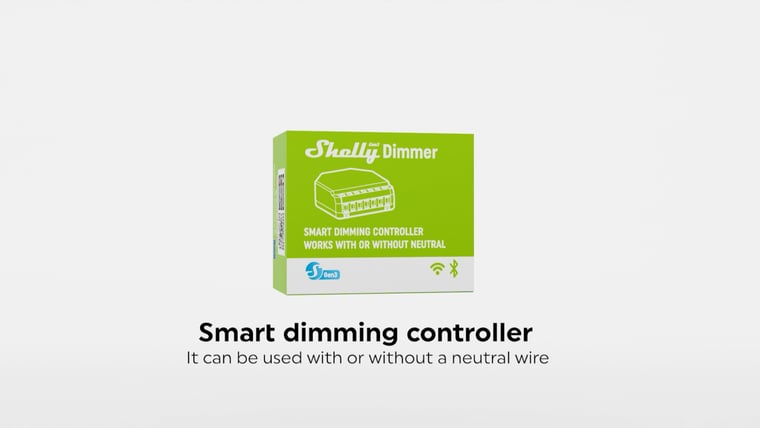
Setup · 1:54
How to install it
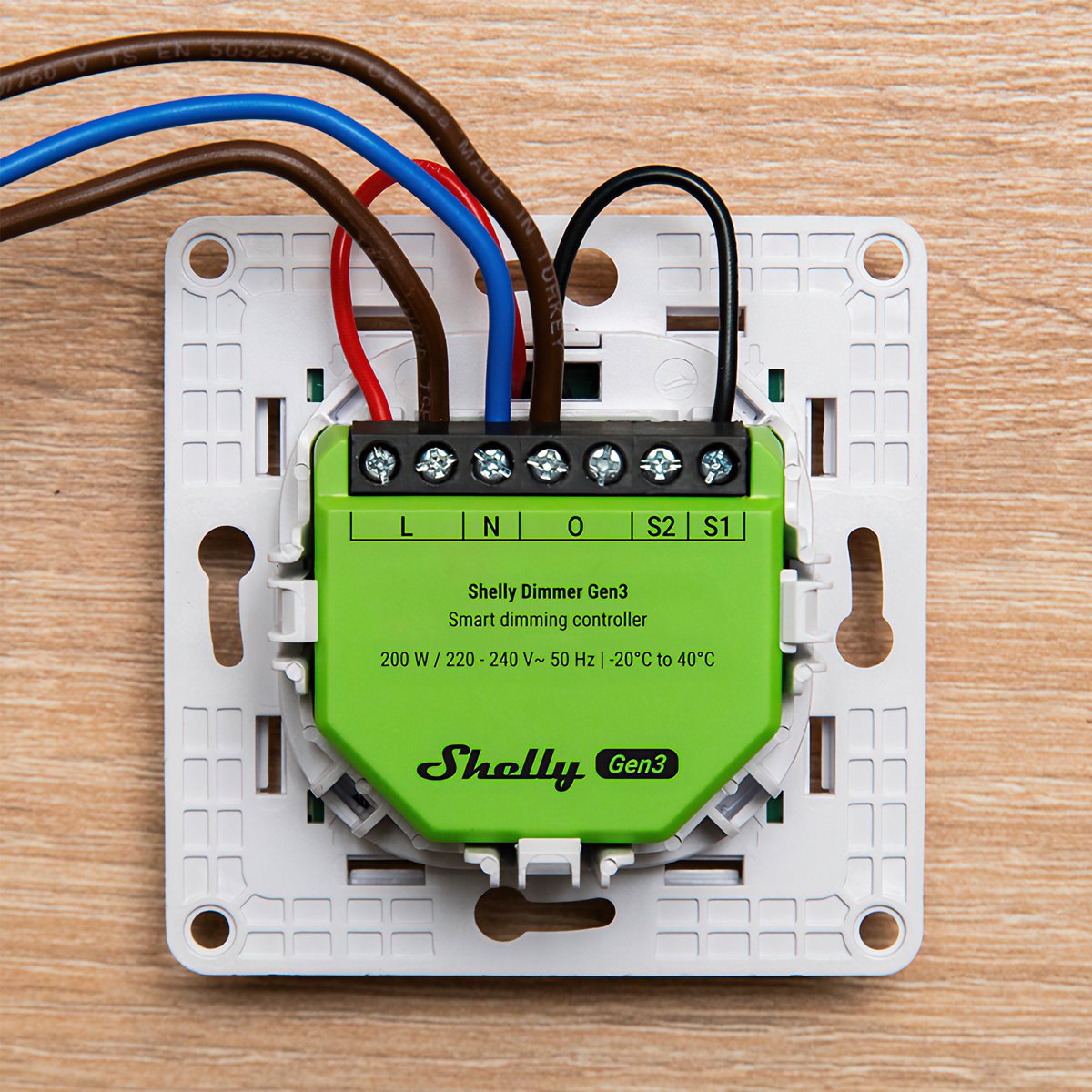
Shelly's own step-by-step install, from isolating the power to wiring L, N, O and the switch inputs.
Watch setup videoNo specifications match.
Build
- Type
- Module
- Gangs
- 1
- Housing material
- Plastic
- Power
- Hardwired
- Supply voltage
- 220–240 V
- Standby power
- < 1.5 W
- Generation
- Gen3 Also available: Gen4
- Dimming method
- Trailing edge
- Max load
- 200 W
- Max LED load
- 150 W
- Works with loads
- LEDHalogenIncandescent
- Neutral required
- No
- Neutral not needed
- Yes
- Min. load without neutral and without a Bypass
- 20 W
- Dimming type
- Trailing edge
- External protection
- 16 A, tripping characteristic B or C, 6 kA interrupting rating, Energy limiting class 3
- Short circuit protection
- Yes
- Standard
- 802.11 b/g/n
- Range (indoors)
- 30 metres
- RF band
- 2401 - 2483 МHz
- Max. RF power
- < 20 dBm
- Version
- 4.2 (BLE)
- Range (indoors)
- 10 metres
- RF band
- 2402 - 2480 MHz
- Max. RF power
- < 4 dBm
- Operating temperature
- -20–40 °C
- Operating humidity
- 30–70 % RH
- Max altitude
- 2000 metres
- Size (HxWxD)
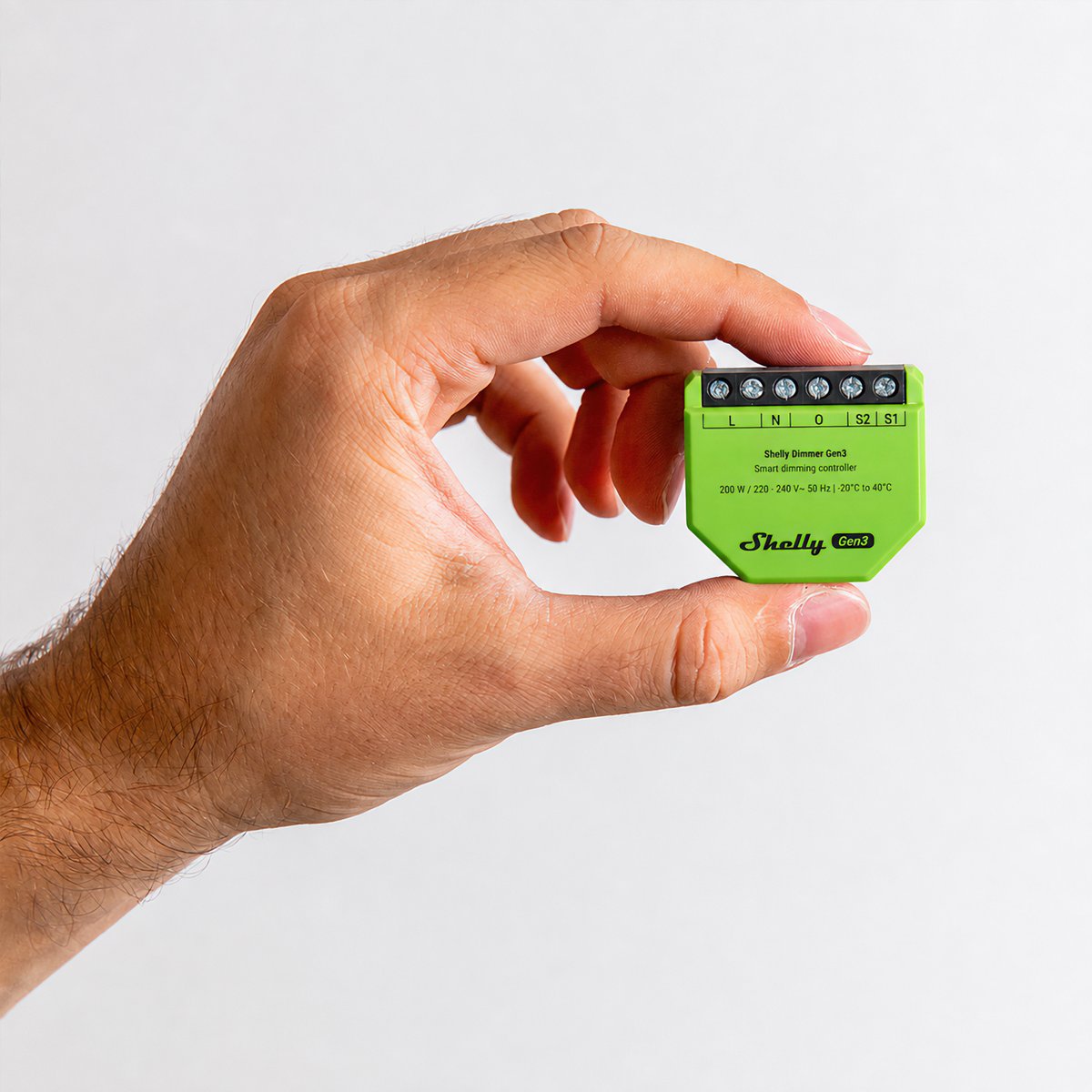
- 38x42.5x16.5 mm / 1.50x1.67x0.65 inch
- Weight
- 24.3 g / 0.86 oz
- Screw terminals max torque
- 0.4 Nm / 3.5 lbin
- Conductor cross section
- 0.5 to 4 mm² / 20 to 11 AWG (solid, stranded, and bootlace ferrules)
- Conductor stripped length
- 5 to 6 mm / 0.20 to 0.24 in
- Mounting
- In-wall
- Shell color
- Shell: Lime Print: Black
- Connector color
- Black
- Max. output power
- 200 W
- Voltmeter range (AC)
- 180 V - 240 V
- Voltmeter accuracy
- ± 5 % (when used with neutral)
- Ammeter range (AC)
- 0 A - 3 A,
- Ammeter accuracy
- ± 5 % (when used with neutral)
- Internal-temperature sensor
- Yes
- CPU
- * ESP32 C3 * STM32 G051
- Clock frequency
- ESP32 C3: 40 Mhz
- Flash
- 8 MB
- Schedules
- 20
- Webhooks (URL actions)
- 20 with 5 URLs per hook...
- Scripting
- Yes
- MQTT
- Yes
- Advanced schedules
- Yes
- KVS (Key-Value Store)
- Yes
- SKU
- SHE-SWT-0001
- MPN
- S3DM-0A101WWL
- Barcode
- 3800238070526
Wiring diagrams
Circuit overview
1Dimmable light2Push button
Active (supply)Neutral / 0 VSwitched loadSwitch signal / dry contact
In Australia, fixed 230 V wiring is licensed-electrician work. Use these diagrams to plan the job and brief your electrician.
Showing the whole circuit
What you can do with it
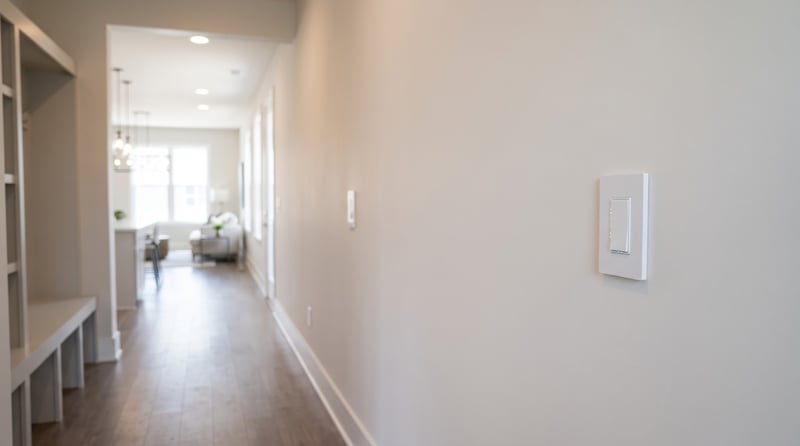
Add a second light switch without running new cable
A Shelly i4 behind a second switch tells the light to change over Wi-Fi, so the far end of the hall or the top of the stairs gets its own switch. Nobody runs cable between the two. Control with any of

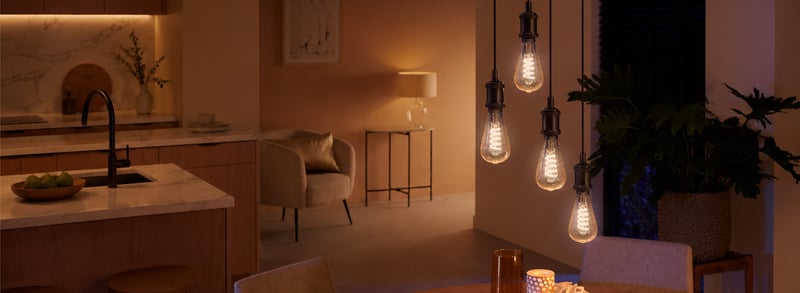
Control any group of lights from one wall switch
Outdoor lights on, the lounge set for a movie, everything off at bedtime. Behind one switch plate, each press sets the lights the way you choose. Control with any of 
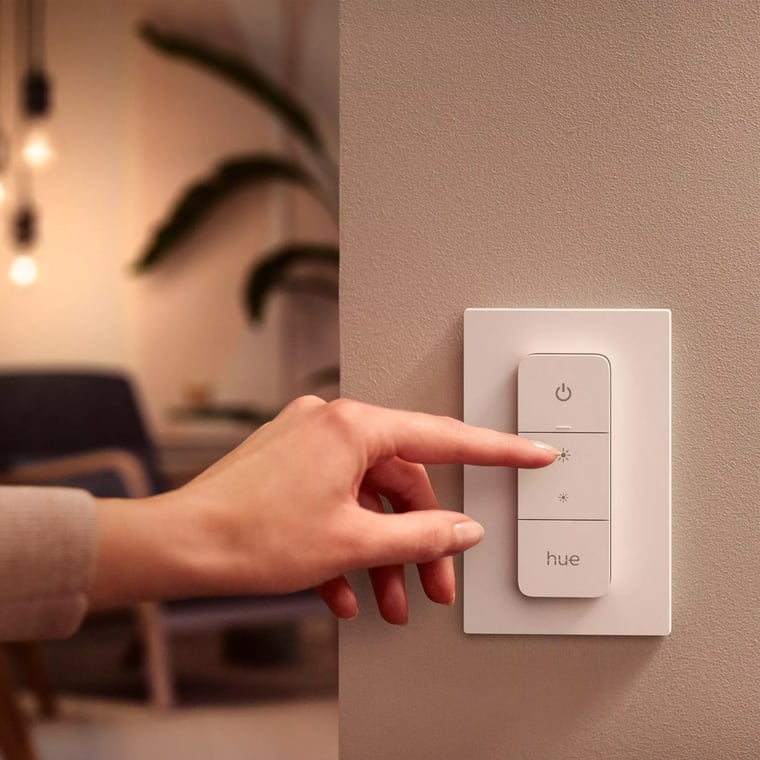
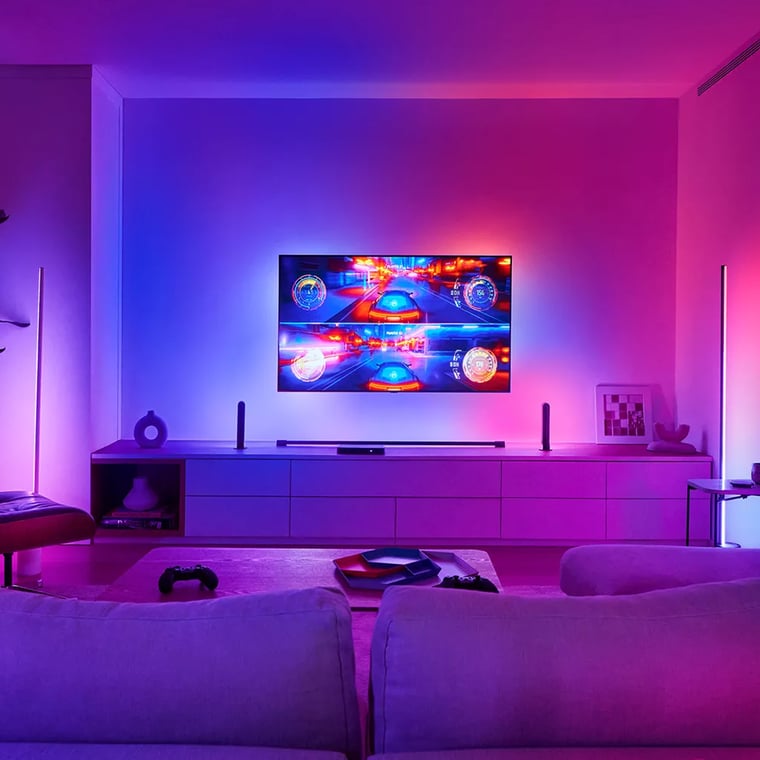
Dim the lights from the couch for movie night
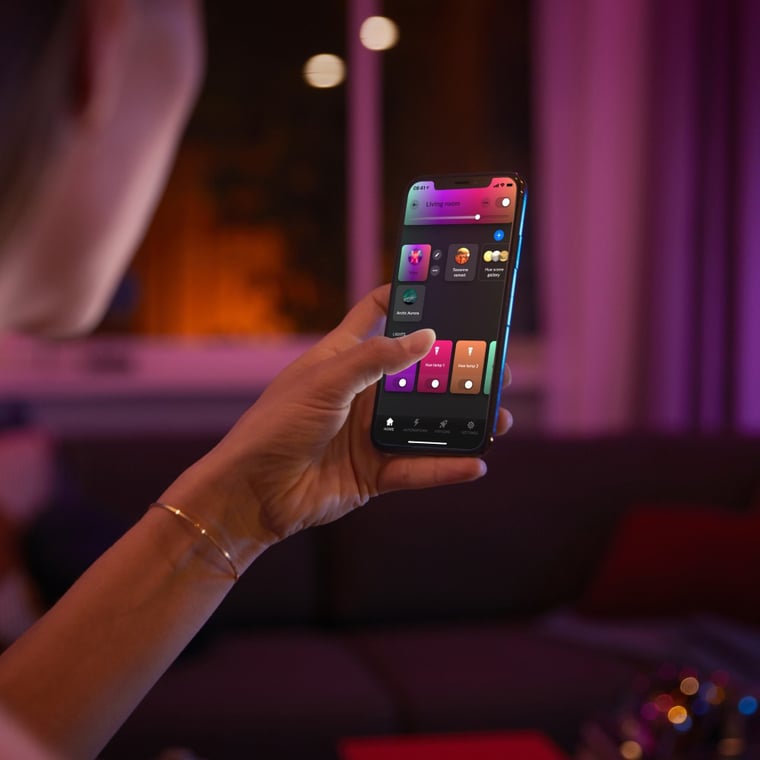
Drop the lights to a glow from the couch, then bring them back up when it's time to tidy. Fit a Shelly dimmer behind the wall plate, or swap to Philips Hue bulbs and use the app. Control with any of 
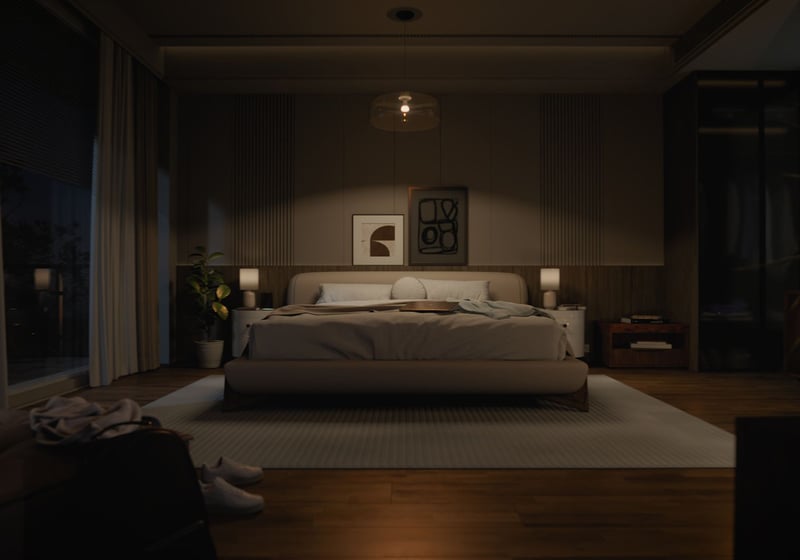
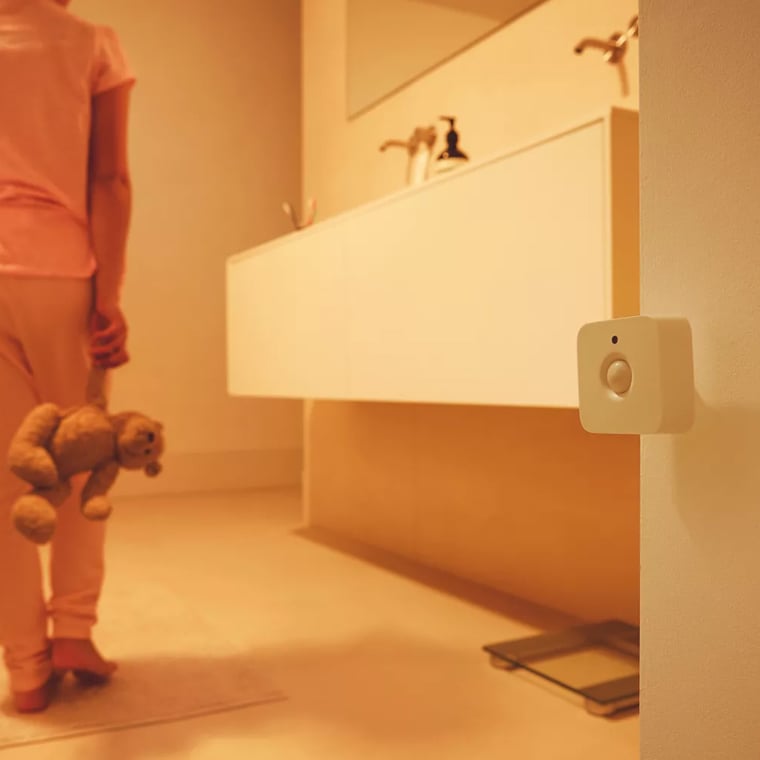
Lights that come on as you walk in, softer late at night
A sensor turns the bedroom or hallway light on as you walk in, at full brightness in the evening and a low glow at 2am. Fit Philips Hue bulbs and a motion sensor, or keep your lights and add a Shelly dimmer and presence sensor. Control with any of 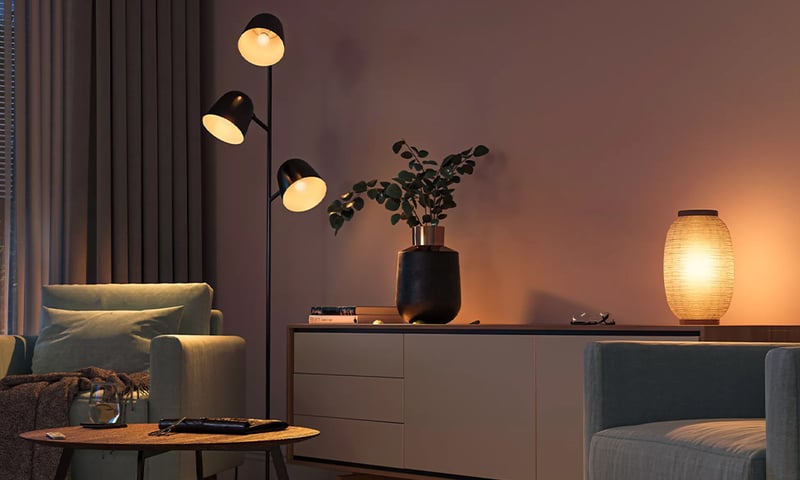
Lights that dim on a schedule each evening
The lights fade down to a low glow after dinner instead of snapping between full and off. Do it with a Shelly dimmer behind the wall plate or Philips Hue bulbs, in their app or Home Assistant. Control with any of 
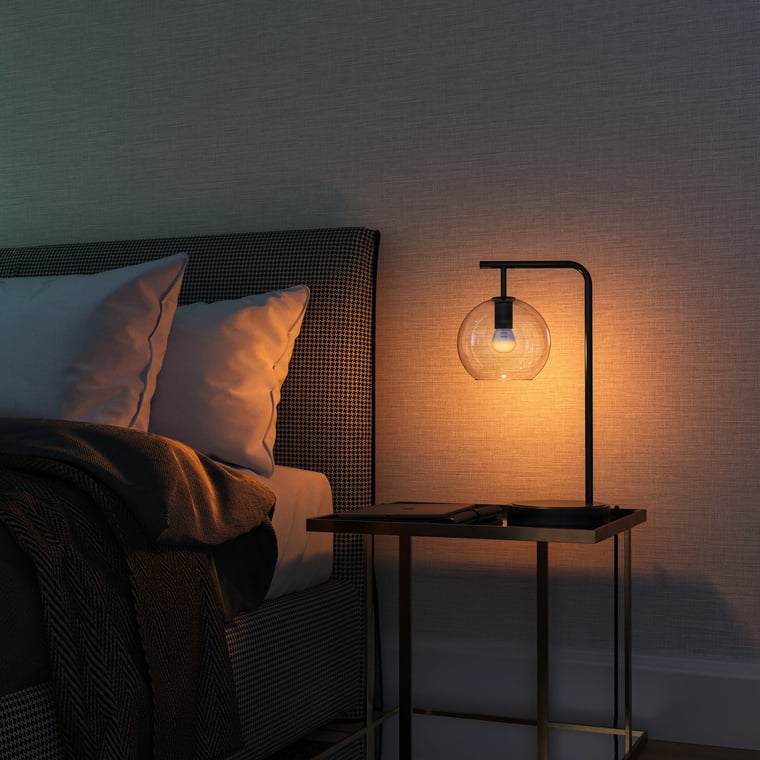
Lights that fade up to wake you in the morning
The bedroom lights come up slowly before your alarm, so you wake to a lit room instead of a dark one. Do it with a Shelly dimmer behind the wall plate or Philips Hue bulbs, in their app or Home Assistant. Control with any of Common questions
Quick answers before you buy. We test this gear ourselves. Can't find yours? Ask our Melbourne team
No. It works with or without one. Without a neutral it needs at least 20 W of load, so for low-wattage LEDs add the Shelly Bypass for Dimmer. A neutral also gives you power measurement.
Not directly. The Gen3 has no Matter or Zigbee radio, so it connects through the Shelly app and cloud integrations, or locally through Home Assistant. If you want it to join Apple Home, Google Home or Alexa as a Matter device, choose the Shelly Dimmer Gen4.
Yes. It wires into a 240V lighting circuit, so in Australia a licensed electrician fits it. It's a quick job for one wall box.
Radios. The Gen4 adds Matter, Zigbee and Wi-Fi 6, and dims in finer steps. The dimming hardware, the load limits and the no-neutral behaviour are the same, and the Gen3 is $10 cheaper.
Shelly · Dimmer Gen3