












Comparison Lighting
GU10 vs MR16: upgrading halogen downlights
GU10 and MR16 spotlights look identical but differ in one thing that matters: the base and the voltage. Here's how to tell them apart and which to choose when you upgrade.
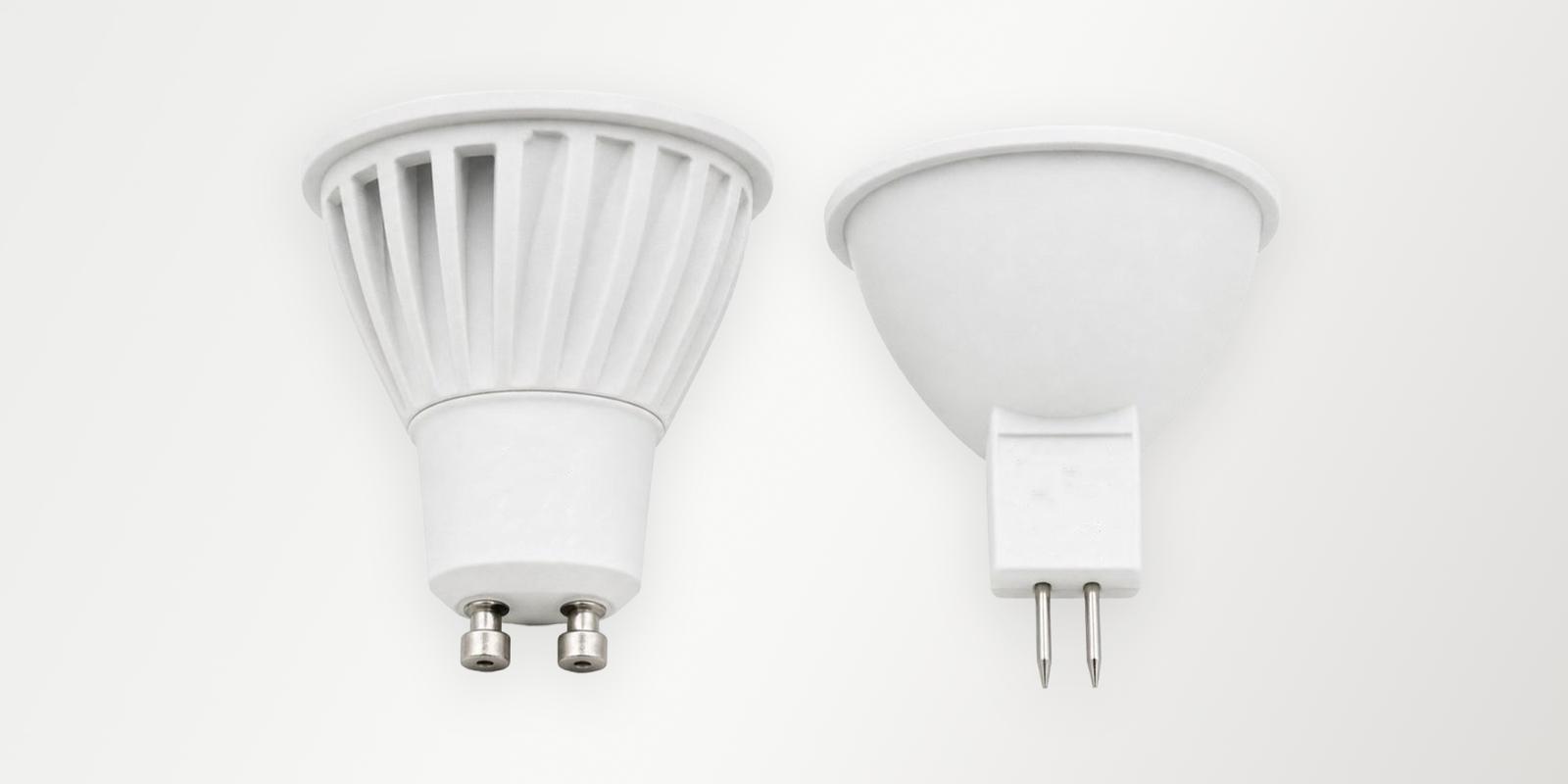
Pull a spotlight out of two different ceilings and you can end up holding two globes that look the same: a 50mm mirror-backed cone, the shape lighting people call a multifaceted reflector. Turn them over and the difference shows up on the base. One has two thin pins that push in. The other has two chunky pins that twist and lock. That is the whole GU10 vs MR16 question, and it decides which globe fits, whether you need a transformer, and how easily you can make the light smart.
MR16 is the low-voltage one. It runs on 12 volts through a transformer hidden above the ceiling, and its two-pin base is technically a GU5.3 fitting. GU10 runs straight off 240V mains, the same power as your wall sockets, so it needs no transformer at all. They are not interchangeable, and knowing which sits in your ceiling is the first step in any downlight upgrade.
Base and voltage: the only real difference
Strip away the marketing and two things separate these globes.
| Feature | MR16 | GU10 |
|---|---|---|
| Base | Two smooth push-in pins (GU5.3) | Two pins with small feet that twist and lock |
| Voltage | 12V low voltage | 240V mains |
| Transformer | Needs one (a driver above the ceiling) | None, wired to mains |
| Dimming | Needs an LED-ready transformer and dimmer | Works with standard trailing-edge dimmers |
| Reflector size | 50mm across the face | 50mm across the face |
| Best for | Garden and low-voltage lighting | Most indoor downlights |
Both are 50mm across the face, which is why they look identical once they are in the ceiling. Strictly, "MR16" describes the reflector shape, not the base, so you will occasionally see that shape sold with a GU10 base. But when Australians say MR16, they almost always mean the 12V GU5.3 spotlight, and that is how we use it here.
How to tell which one you have
You do not need to guess. Turn the light off, let it cool, and gently pull the globe straight down out of the fitting (most downlights hold it with a spring clip, not a thread). Look at the pins. Two thin, smooth pins that were pushed into a socket means an MR16, and there will be a transformer sitting above the plasterboard. Two thicker pins with little feet, on a base that turned to lock in, means a GU10 wired straight to mains. If a globe flickers, buzzes or will not dim smoothly, that is usually an MR16 fighting an old transformer, not a faulty globe.
Which should you choose?
For a new install or a straight upgrade in most Australian homes, GU10 is the simpler pick. There is no transformer to fail, it works with the standard dimmers electricians already fit, and there is a far wider range of LED and smart GU10 globes on the shelf. One less component in the ceiling is one less thing to go wrong.
MR16 still earns its place where 12V is genuinely useful: garden and outdoor lighting, in-ground uplights, and other low-voltage runs where the lower voltage is safer around water and easier to work with. If you already have quality LED-ready transformers, good MR16 LED globes will run happily on them, so there is no need to rip out a system that works. Outdoor and bathroom fittings also need the right IP rating, whichever base you land on.
Converting MR16 downlights to GU10
Plenty of people upgrading old halogen downlights move from 12V MR16 to mains GU10 at the same time. It means removing or bypassing each transformer and wiring the new GU10 socket straight to the 240V supply.
Making the light smart
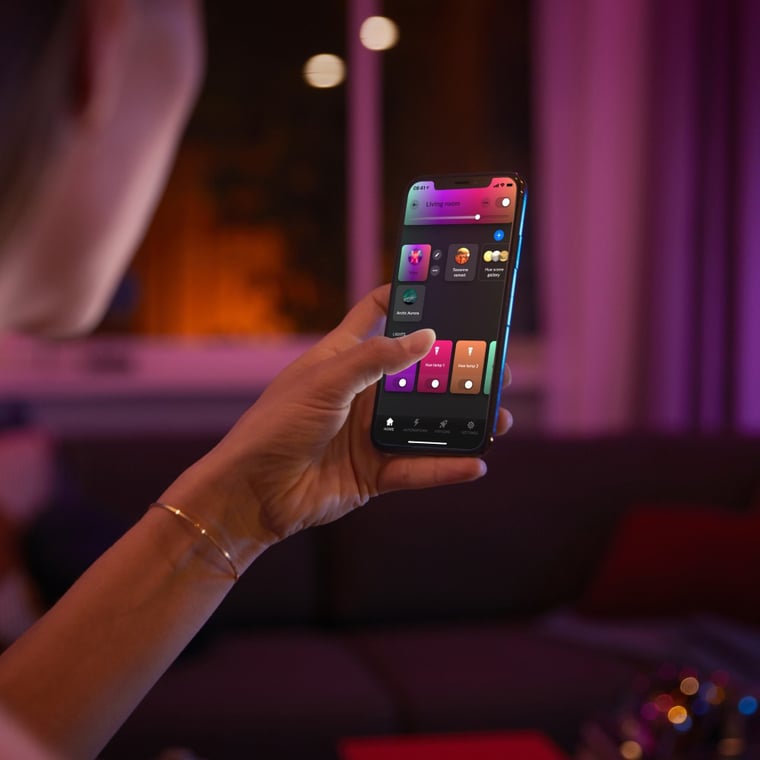
This is where the choice really tells. Because GU10 runs on mains, smart GU10 globes from brands like Philips Hue and Nanoleaf drop straight into an existing downlight and give you app control, dimming and colour without touching the wiring. Smart 12V MR16 globes exist but are far rarer, and they have to play nicely with your transformer, which is a fussier setup. If smart lighting is the goal, GU10 is the path of least resistance, which is why we point most people there first.
Buying a replacement: a quick checklist
Whichever base you land on, check these before you buy:
- Base: match it exactly to your fitting. A GU10 globe will not fit an MR16 socket, or the other way around.
- Length: LED globes can sit deeper than the old halogens because of the heat sink, so check the fitting has room.
- Brightness: a 50W halogen is roughly 400 to 500 lumens. Read the lumens, not the watts.
- Colour: pick a colour temperature to suit the room, warm white for living spaces and cooler white for kitchens and bathrooms.
- Dimming: if you dim, check the globe is dimmable, and for MR16 that your transformer and dimmer are LED-rated.
Frequently asked questions
What is the difference between GU10 and MR16?
The base and the voltage. An MR16 has two smooth push-in pins (a GU5.3 base) and runs on 12 volts through a transformer. A GU10 has two pins with feet that twist and lock, and runs straight off 240V mains with no transformer. Both use the same 50mm reflector, so they look the same until you check the base.
Are GU10 and MR16 interchangeable?
No. The bases are physically different and they run at different voltages, so a GU10 will not fit an MR16 socket and vice versa. You have to match the globe to the fitting you already have, or change the fitting.
Is GU10 or MR16 better?
For most indoor downlights in Australian homes, GU10 is the easier choice: no transformer to fail, standard dimming, and more smart options. MR16 is better for low-voltage jobs like garden and outdoor lighting where 12V is safer.
Can I convert MR16 downlights to GU10?
Yes, but it means removing the transformers and wiring the GU10 sockets to 240V mains, which is licensed-electrician work in Australia. Plug-in GU5.3-to-GU10 adapters exist but only work around the base, they do not remove the transformer.
Is GU10 being phased out?
No. It is halogen globes that have been phased out in Australia, not the GU10 base. GU10 LED globes are the current standard for downlights, and the same is true for LED MR16, which is still sold for low-voltage fittings.
Still need a hand?
We answer most messages within one business day. If your question is about an existing order, have your order number ready. It speeds things up.
Contact us