
















Comparison Ecosystems
Which Shelly energy monitor do you need?
Shelly's meters split on three questions: how many circuits, one phase or three, and whether you have solar. Of the ones we carry, only the Pro models measure what your panels export.
Shelly names its energy meters after their channel count and their format. That is precise once you know the range, and no help at all when you are standing in front of the switchboard working out which box to buy.
Three questions settle it. How many circuits do you want to see separately, is the property single-phase or three-phase, and do you have solar. Everything else is detail.
How these meters read current
There are two methods, and they decide how much the meter can measure. The EM Mini Gen4 sits in line: the circuit runs through the meter on screw terminals, and everything downstream of it is measured. That caps it at 16 A, or 3,840 W, so it suits one appliance circuit rather than a whole house. It is also the only meter here with a Zigbee radio and Matter support.
Everything else in the range reads through a current transformer, a split-core clamp that closes around the cable without breaking into it. Nothing is disconnected to fit one, the clamp carries no load, and the meter's current rating comes from the CT rather than from the meter's own terminals.
Shelly 3EM vs Pro 3EM
The original 3EM is Gen1 hardware: Wi-Fi only with no Bluetooth, three 120 A clamps in the box, and a contactor output rated 10 A. It does measure two-way consumption, reporting produced as well as used energy per phase, which for its age is more than you might expect.
The Pro 3EM range is the current three-phase line. It mounts on DIN rail, adds Ethernet alongside Wi-Fi and Bluetooth, does 4-quadrant measurement, and holds 45 to 60 days of one-minute data on the meter itself depending on the model. None of them has a relay: contactor control needs the separate Pro 3EM Switch Add-on, which is its own 19 mm module on the rail.
The one we carry is the Pro 3EM-3CT63. Rather than three loose clamps it uses a combined three-phase transformer block rated 0 to 63 A, with a 9 mm conductor aperture, designed to sit directly over the circuit breakers. It reads a single-phase installation as well, so it is not only for three-phase homes.
| EM Mini Gen4 | EM Gen3 | Pro EM-50 | Pro 3EM-3CT63 | |
|---|---|---|---|---|
| Phases | Single | Single | Single | Single or three |
| Channels | 1 | 2 | 2 | 3 |
| Reads via | In line | CT clamp | CT clamp | 3CT63 block |
| Up to | 16 A | 50 A, or 80 A with the larger CT | 50 A | 63 A |
| Mounting | Wall box | Wall box or cabinet | DIN rail | DIN rail |
| Relay | None | Dry contact, 2 A | Dry contact, 2 A | Add-on required |
| 4-quadrant | Not stated | Not stated | Yes | Yes |
| On-meter history | 10 days | 10 days | 60 days | 60 days |
| Wired network | No | No | Ethernet | Ethernet |
Switching as well as measuring
Two of them can act as well as watch. The EM Gen3 and the Pro EM-50 each carry a dry contact rated 2 A at 240 V. That is enough to drive a contactor coil for a hot water system or a pool pump, not the load itself, which is the usual way a meter ends up controlling the thing it is measuring.
The solar question
The Pro EM-50 and the Pro 3EM-3CT63 both list 4-quadrant measurement and are described as photovoltaic ready. In practice that means imported and exported energy are counted separately instead of netted off against each other. Shelly describes the behaviour in its KNX documentation: meters that support it "independently measure and store this generated energy, rather than simply subtracting it from the energy consumed from the grid".
Neither the EM Gen3 nor the EM Mini Gen4 makes that claim. The EM Gen3's specification lists active and apparent power and energy, power factor and fundamental reactive energy. The EM Mini Gen4 lists active power and active energy only. Neither mentions returned energy or photovoltaic readiness, so do not buy one expecting to see export.
Single-phase or three-phase
Most Australian houses are single-phase. Three phases turn up in newer builds, larger homes, and anywhere running ducted air conditioning or a three-phase solar inverter. The reliable tell is three service fuses instead of one, or a meter labelled 3P4W rather than 1P2W. A three-pole main switch usually means three phases, but it is not proof on its own.
The EM Gen3 and the Pro EM-50 are single-phase with two channels each, so they read two circuits, or the mains plus one circuit you care about. For three phases you need the Pro 3EM-3CT63, which also handles the single-phase case if you expect to upgrade later.
Which one to buy
One circuit
Watch a single appliance
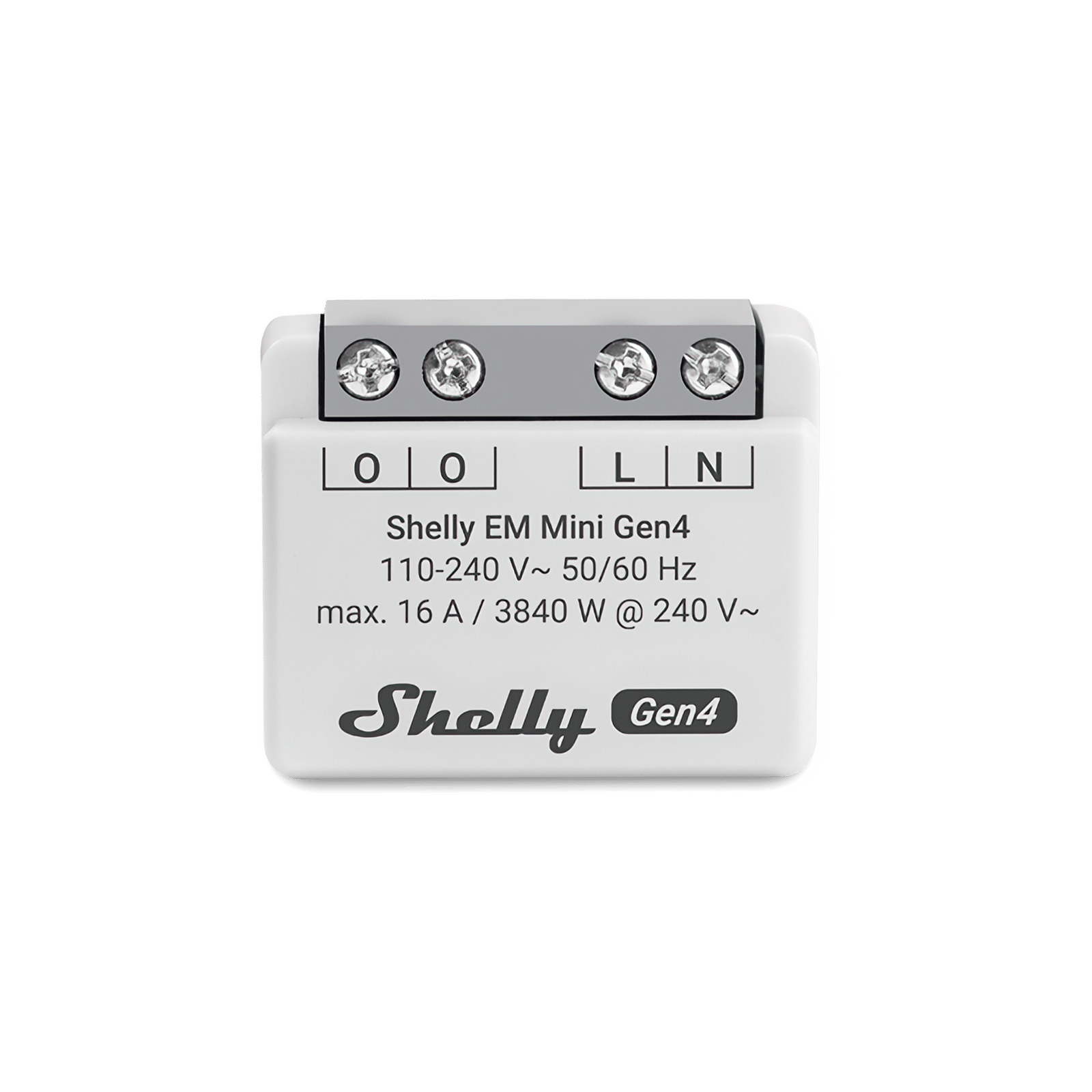 Shelly EM Mini Gen4 Energy Meter $34.95
 In line, up to 16 A. No clamp to fit and nothing to mount in the switchboard.
See the EM Mini Gen4 Two circuits
The retrofit meter
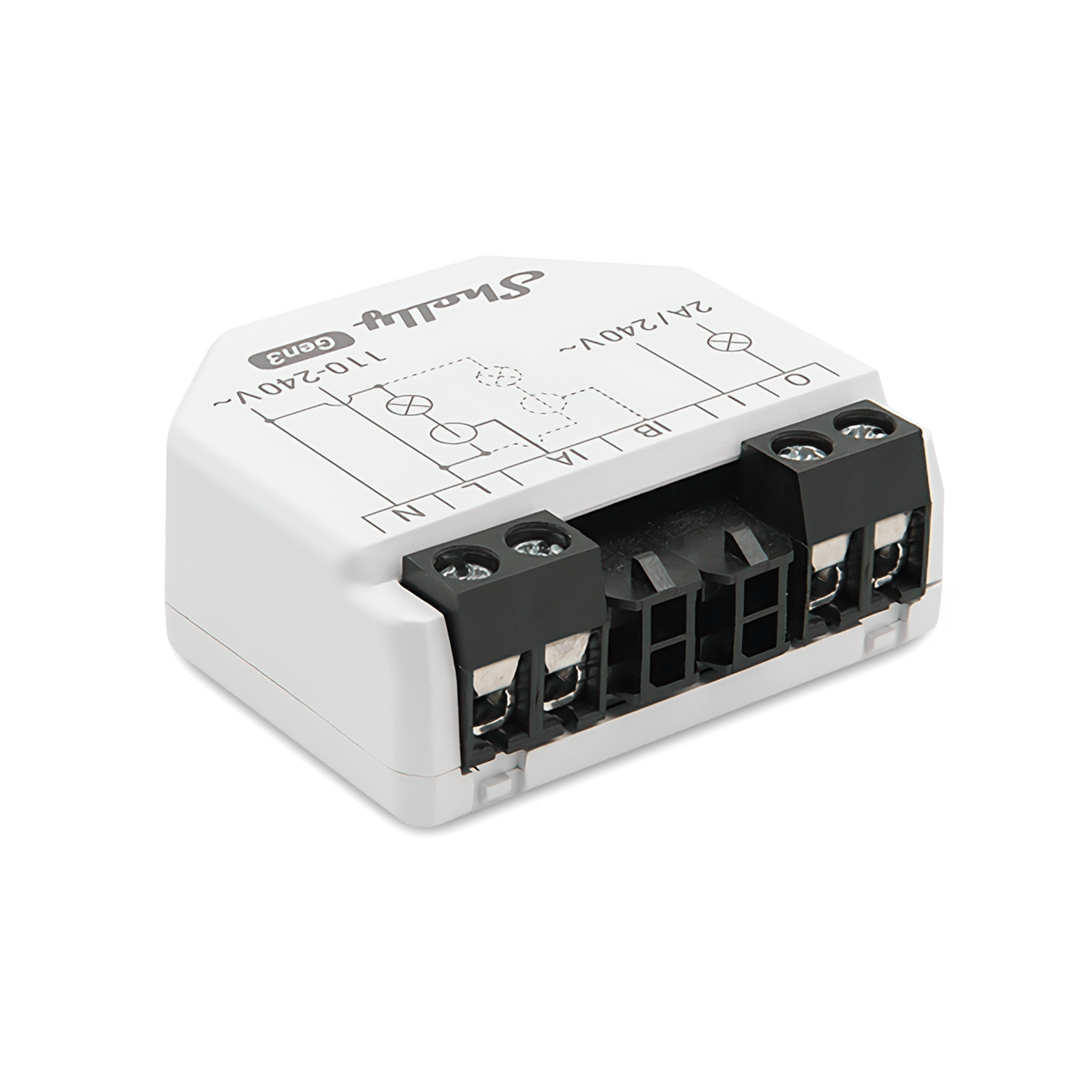 Shelly EM Gen3 Energy Meter $99.95
 A 50 A clamp is included, and the optional larger CT takes it to 80 A. Fits a wall box, so it needs no switchboard space.
See the EM Gen3 Solar Our pick
The one for a solar home
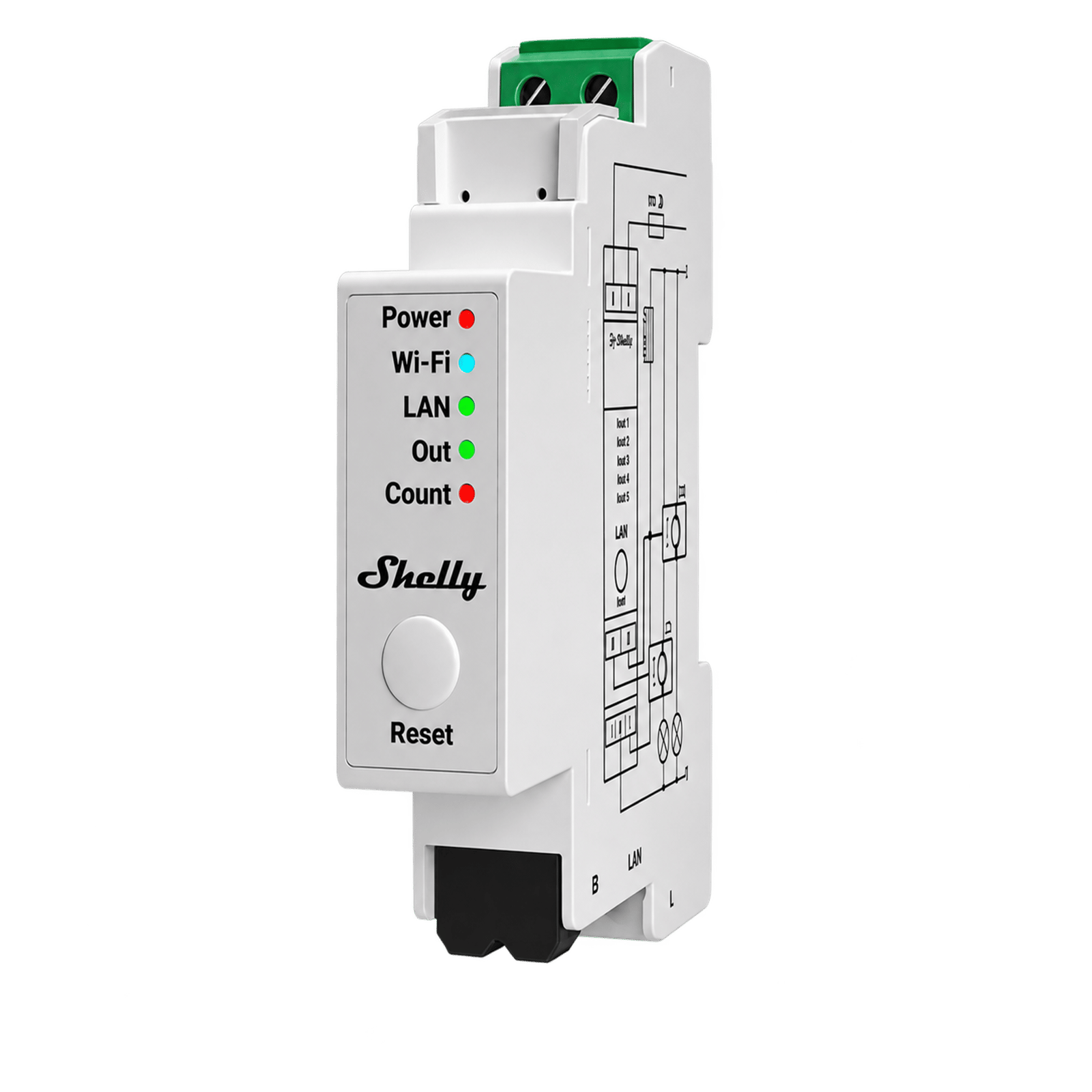 Shelly Pro EM 50 Energy Meter $149.95
 4-quadrant measurement, Ethernet, and 60 days of one-minute data on the meter.
See the Pro EM-50Fitting it
Two of these retrofit behind something. The EM Gen3 is 37 by 42 by 16 mm and goes in a wall box or a cabinet, and the EM Mini Gen4 is smaller again at 29 by 34 by 16 mm. The Pro EM-50 and the Pro 3EM-3CT63 are DIN rail meters, 19 mm wide on the rail and 94 by 69 mm on the face. If you are adding the Switch Add-on to a Pro 3EM-3CT63, budget for two rail positions rather than one.
Reading the data yourself
All four work with Home Assistant, and none of them needs a Shelly account to do it. The whole range speaks MQTT, HTTP and WebSocket locally and exports its recorded data as CSV or as JSON over Shelly's RPC interface. The Pro 3EM-3CT63 adds Modbus. The Pro meters also have an Ethernet port, which matters more than it sounds in a switchboard with a metal door between the meter and your access point.
Where the range fits
Shelly's naming trips people up across the whole range, not just the meters. Generation numbers, the Plus range and the Pro range all mean different things, and a Pro is a format rather than a step up.
Frequently asked questions
Which Shelly meters does Synced stock?
The EM Mini Gen4, the EM Gen3, the Pro EM-50 and the Pro 3EM-3CT63. Shelly's meters are sold in Australia by several retailers, so check which generation you are being offered. The original EM and 3EM are Gen1 hardware, and Shelly also makes an EM Gen4 and a 3EM-63 Gen3 that we do not currently stock.
Can a Shelly energy meter work with solar panels?
The Pro EM-50 and the Pro 3EM-3CT63 can, because both do 4-quadrant measurement and count exported energy separately from imported. Neither the EM Gen3 nor the EM Mini Gen4 documents a returned-energy reading, so do not buy one expecting to see what your panels sent back to the grid.
How accurate is the Shelly Pro 3EM?
Shelly rates the Pro 3EM-3CT63 at accuracy class B for active energy, with its ammeter at ±1% from 2 to 63 A, loosening to ±2% below 2 A. The Pro EM-50 is the same class, at ±1% from 5 to 50 A and ±2% below that. The EM Gen3 is looser again at ±2% between 2 and 50 A.
Does a Shelly energy meter need a hub?
No. Every meter in the range joins your network directly over Wi-Fi, and the Pro models can use Ethernet instead. There is no Shelly hub to buy.
Do I need an electrician to install one?
Yes. These are hardwired meters, and the Pro models mount in the switchboard, so in Australia a licensed electrician fits them.
How many circuits does each Shelly meter read?
One for the EM Mini Gen4, two for the EM Gen3 and the Pro EM-50, and three for the Pro 3EM-3CT63, which reads them either as three phases or as three separate single-phase circuits.
Still need a hand?
We answer most messages within one business day. If your question is about an existing order, have your order number ready. It speeds things up.
Contact us