









On this page
- Key takeaways
- The radio is the same. The plumbing is not.
- What each one needs in the house
- You may already own a Thread border router
- Bridge or direct: the Hue example
- In Australia, the catalogue is the real difference
- Battery life and range barely separate them
- So which should you buy?
- Frequently asked questions
Comparison Protocols
Zigbee vs Thread: which one should you buy?
Zigbee and Thread use the same radio. The real difference is that a Thread device joins Apple Home, Google Home or Alexa directly, while a Zigbee device gets there through a bridge.
Zigbee and Thread run on the same radio. Both use IEEE 802.15.4 on 2.4 GHz, both form a mesh where mains-powered devices relay for battery ones, and both sip power. If you came here for a radio shootout, there isn't one.
The difference sits above the radio. Thread gives every device its own IP address, which is what lets Matter run straight over it. Zigbee speaks its own language and needs something to translate. That one distinction decides how a device gets into Apple Home, Google Home or Alexa, and it decides very little else.
The radio is the same. The plumbing is not.
Home Assistant's Thread documentation puts it plainly: Thread uses the same radio technology as Zigbee, but provides IP connectivity more like Wi-Fi. Every Thread device is addressable over IPv6, inside the mesh and outside it.
The catch is that Thread by itself does not control anything. It moves packets. Something has to sit on top to turn a packet into "set that light to 40%", and in practice that something is Matter or Apple HomeKit. This is why a Thread logo on a box is not a promise of Matter support. Look for the Matter logo itself.
Zigbee carries its own application layer, so a Zigbee bulb and a Zigbee coordinator already agree on what brightness means. Nothing else is needed. That completeness is also the limitation: the conversation is fluent inside the Zigbee network and unintelligible outside it.
| Zigbee | Thread | |
|---|---|---|
| Radio | IEEE 802.15.4, 2.4 GHz | IEEE 802.15.4, 2.4 GHz |
| Network shape | Mesh. Mains devices route for battery devices | Mesh. Mains devices route for battery devices |
| Addressing | Its own network layer, not IP | IPv6, every device individually addressable |
| Control layer | Built in | None of its own. Needs Matter or Apple HomeKit |
| What the house needs | A coordinator: a hub or a USB dongle | One or more Thread border routers |
| Reaching Apple, Google or Alexa | Through a bridge that exposes the devices | Directly, once the device is commissioned |
| If the hub dies | One coordinator, so the network stops | A network can hold several border routers |
| Devices sold in Australia | Large, cheap, mature | Smaller, growing |
| Frequencies here | Same as everywhere else | Same as everywhere else |
What each one needs in the house
Zigbee needs a coordinator. That is a hub, or a USB dongle plugged into a Home Assistant box, and there is exactly one of them per network. Every mains-powered Zigbee device you add repeats the signal, so coverage improves as the network grows.
Thread needs a border router. A border router is a device that connects the Thread mesh to your ordinary IP network over Ethernet or Wi-Fi. It forwards packets between the two and does not look inside them, and it does not control devices either. Unlike Zigbee, a single Thread network can have several border routers running at once, which improves coverage and means no one box is the point of failure.
You may already own a Thread border router
Border routing is usually a side job on a device bought for something else. Home Assistant's supported list includes the Apple HomePod mini and HomePod (2nd generation), Apple TV 4K (2nd generation) and Apple TV 4K (3rd generation) in the Wi-Fi and Ethernet configuration, plus Google's Nest Hub (2nd generation), Nest Hub Max, Nest Wifi, Nest Wifi Pro and the Google TV Streamer (4K). Amazon and Nanoleaf make border routers too.
All of these are sold here, so a fair number of Australian homes already have one sitting on a shelf. Whether it is useful to you depends on which app you run: an Apple border router is the one Apple Home will use, and a Google one is the one Google Home will use. The Apple side is worth reading in full if that is your household, because the model variations matter.
Bridge or direct: the Hue example
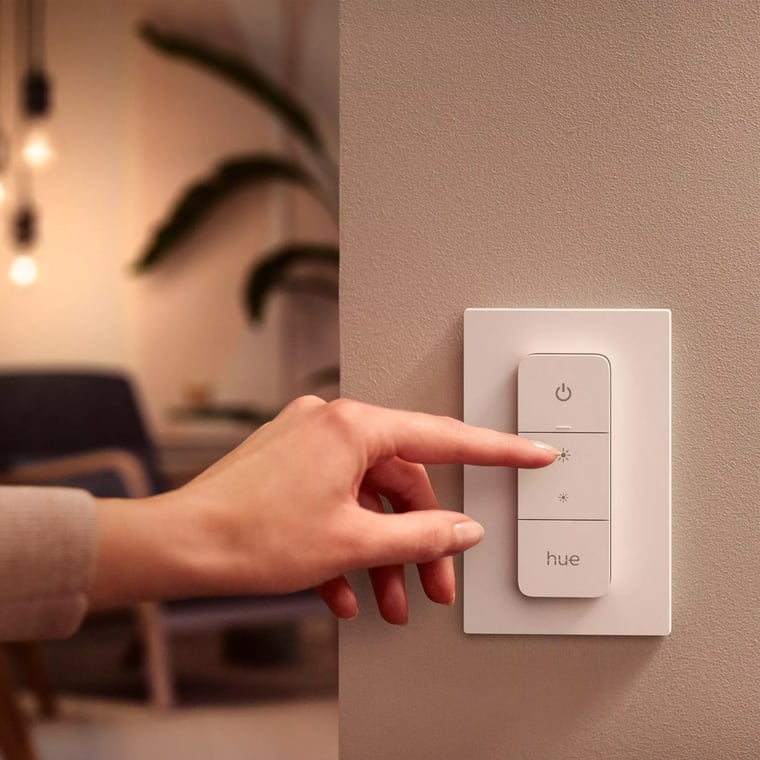
Hue's Australian support pages describe both routes for the same bulb, which makes it the clearest worked example.
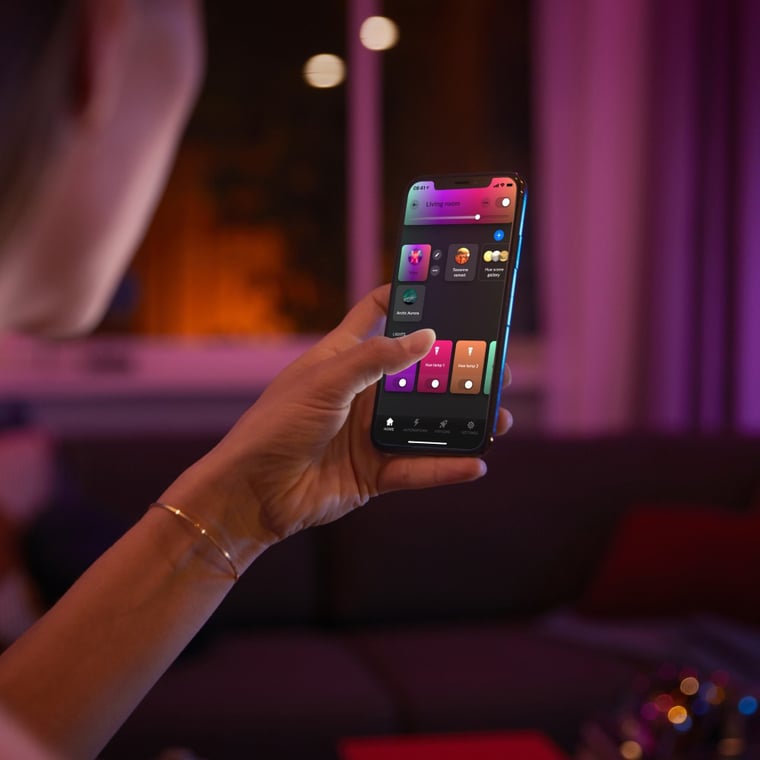
Put the bulb on a Hue Bridge and it runs Zigbee. The Bridge then presents your lights to Apple Home, Google Home or Alexa over Matter. Every Hue product works, including the older bulbs, and you keep the Hue features that live in the Bridge.
Or skip the Bridge and pair a Matter-enabled Hue bulb straight into the app over Thread. You need a border router, only the newer Matter-badged lights can do it, and control over Matter is basic: on, off, colour, brightness. Scenes and entertainment features stay behind.
Neither route is the wrong one. The Zigbee path costs you a box and gives you the full feature set. The Thread path removes the box and trims what the light can do.
In Australia, the catalogue is the real difference
Both protocols use the same 2.4 GHz channels in every country, so unlike Z-Wave there is no regional model to hunt for and no import trap. What differs here is what you can put in a cart.
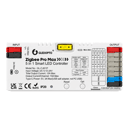
Zigbee is still ahead, and it isn't close. Gledopto, one of the LED control brands we stock, publishes 27 Zigbee product pages against three Matter ones. Shelly's Gen4 relays are a good illustration of the same thing from the other direction: the ANZ models carry a multi-protocol chip doing Zigbee and Bluetooth, and their Matter support runs over Wi-Fi, because there is no Thread radio in them. Pressing the button five times swaps the device from its Matter profile to its Zigbee one. You choose one or the other, not both.
That is the point we correct most often. Matter is not Thread. Plenty of Matter devices sold here are Matter over Wi-Fi, and buying one will not give you a Thread network.
Battery life and range barely separate them
Both are low-power designs built around sleepy end devices that wake, report and go quiet, and there is no credible same-product measurement showing one lasting meaningfully longer than the other. Battery life is set by how often the device reports, how good its firmware is and how strong its signal is, not by which of the two protocols is printed on the box. Treat "Thread lasts longer" as a claim, not a fact.
Range is much the same story. Same band, same power class, same brick walls.
The one thing worth planning is congestion. Zigbee, Thread and Wi-Fi all share 2.4 GHz, and running all three means three networks competing in one band. Set your Zigbee and Thread channels away from your busiest Wi-Fi channel and you will avoid most of the trouble people blame on the protocol.
So which should you buy?
Buy the device you want. In almost every case the protocol comes attached to it, and arguing with that choice costs you the product you actually wanted.
If you are starting from nothing and buying sensors, buttons and lights on a budget, start with Zigbee. The range of gear is larger, the prices are lower, and one dongle or hub covers all of it.
If you already own a HomePod, an Apple TV or a Nest speaker and you want a handful of devices in Apple Home or Google Home without another bridge, Thread is doing exactly the job it was designed for. Buy Matter over Thread and let it join directly.
Most homes with more than a dozen devices finish with both running, and that is a perfectly good outcome rather than a failure to decide. The two networks coexist, they route independently, and the only thing you have to get right is the channel planning.
Frequently asked questions
Is Thread better than Zigbee?
Not in any way you would feel day to day. They use the same radio, build the same kind of mesh and draw similar power. Thread is better at one specific thing, which is joining Apple Home, Google Home or Alexa directly without a bridge, and Zigbee is better at a different one, which is the number of devices you can buy today.
Does Thread replace Zigbee?
No, and there is no sign of it doing so. Thread is the transport the big platforms are backing through Matter, so new device ranges increasingly ship with it, but Zigbee networks keep working and the Zigbee catalogue is still much larger. Most homes will run both for years.
Do Zigbee devices work on Thread?
No. A Zigbee device cannot join a Thread network and a Thread device cannot join a Zigbee one, even though the two share a radio. A few products have chips capable of either protocol and let you pick one at setup, but that is a choice between two networks, not a bridge between them.
Do I need a hub for Thread?
You need a Thread border router, which is the device that connects the Thread mesh to your home network. It is often built into something you already own, such as a HomePod mini, an Apple TV 4K with Ethernet, a Nest Hub or a Google TV Streamer. You also need a Matter controller, which on those platforms is the same box.
Still need a hand?
We answer most messages within one business day. If your question is about an existing order, have your order number ready. It speeds things up.
Contact us