












Explainer Lighting
Colour Rendering Index (CRI), explained
CRI scores how truthfully a light shows colour, from 0 to 100. Here is what a good number looks like, the hidden figure that matters more than the headline score, and where it is worth paying for.
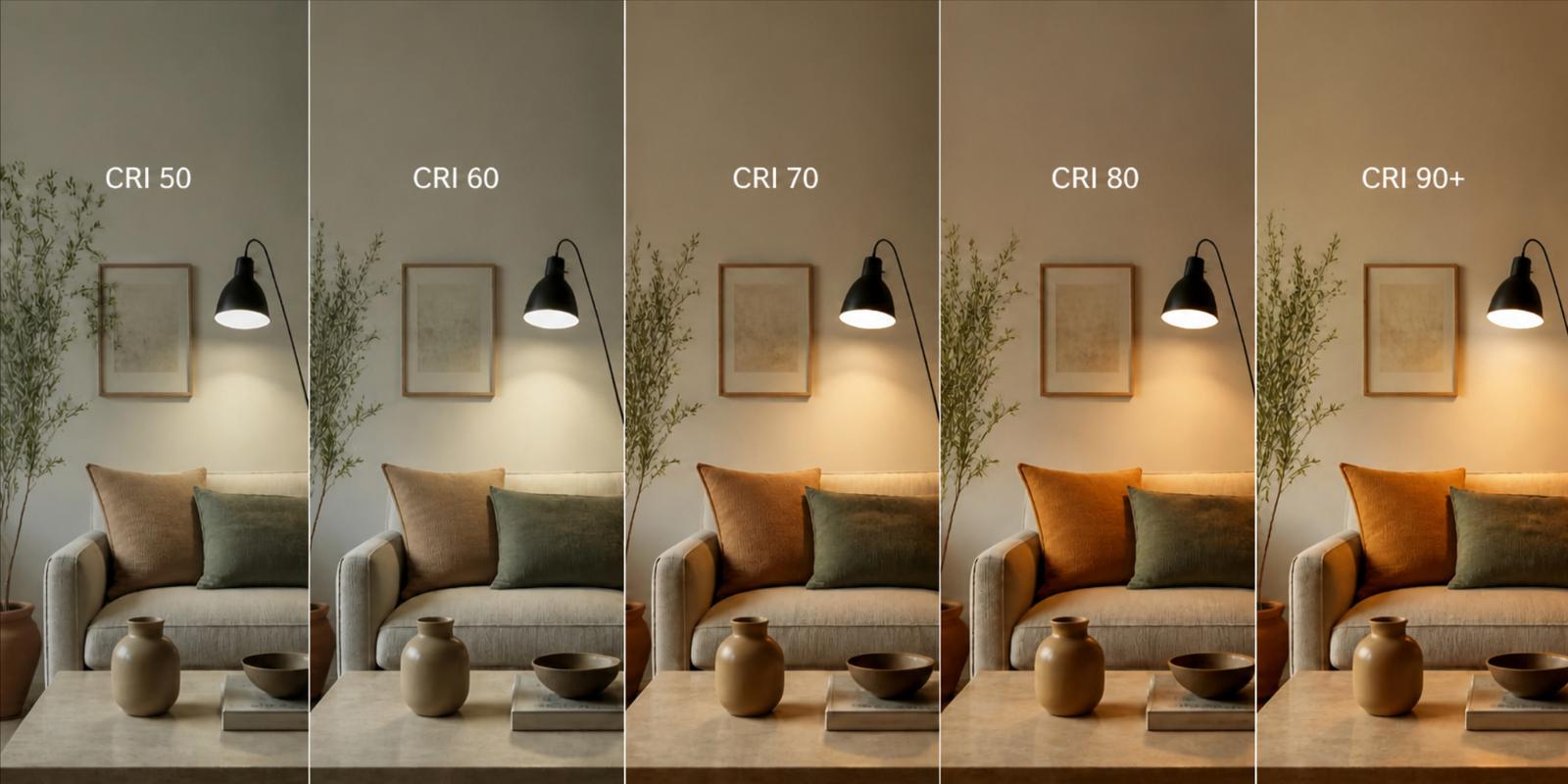
Colour Rendering Index, or CRI, is a score from 0 to 100 for how truthfully a light shows the colour of everything it lands on. A high-CRI bulb makes skin, food and timber look the way they do in daylight. A low-CRI bulb drains them: reds go muddy, faces look sallow, a steak looks grey. It has nothing to do with how bright the light is, or whether it is warm or cool. It is its own number, and most bulb boxes hide it.
This guide covers what CRI measures, the one hidden number that matters more than the headline score, and where it is worth paying for and where it is not.
What CRI actually measures
CRI compares a light against a perfect reference and scores how close it gets. The reference is natural light: daylight for cool bulbs, an old incandescent globe for warm ones. Both are defined as 100, and no LED quite reaches them. The headline figure, properly called Ra, is an average across eight test colours. That averaging is where the catch hides.
| CRI (Ra) | What you get |
|---|---|
| Under 80 | Noticeable. Colours look flat or off. Common in cheap downlights and old fluoro tubes. |
| 80 | The LED baseline. Fine for general rooms, weak on deep reds. |
| 90 to 95 | High-CRI. Skin, food and timber look natural. Worth it where colour matters. |
| 95 to 99 | Professional. Photography, art, retail, colour-critical work. |
| 100 | The reference itself: natural daylight and old incandescent globes. No LED reaches it. |
The number behind the number: R9
The eight colours in the Ra average are all soft pastels. Deep, saturated red is tested separately, as R9, and it is the one LEDs most often fail. A bulb can post a respectable Ra of 90 and still have an R9 near zero, which is why some high-CRI lights still make raw meat, red wine and warm timber look lifeless. If a product lists R9 at all, that is a good sign. Look for R9 above 50; above 90 is excellent. Where deep reds matter, in a kitchen or a wardrobe, R9 tells you more than the headline CRI does.
Where CRI is worth paying for
Every LED sold in Australia clears CRI 80. The question is whether you go higher. Spend the extra where you judge colour, and save it where you do not.
| Where | Look for | Why |
|---|---|---|
| Kitchen | 90+ | Judge how food actually looks, raw and cooked. |
| Bathroom / wardrobe | 90+ | Skin tone, make-up, matching clothes. |
| Dining | 90+ | Food and faces both matter here. |
| Living room | 90 if you can | You spend the most time under these lights. |
| Home studio / craft / art | 95+ | Colour work needs the top tier. |
| Hallway, stairs, laundry | 80 is fine | Function over fidelity. |
| Garage, shed, outdoor, cupboards | 80 is fine | Nobody is judging colour out here. |
How to read it on the box
Manufacturers word it a few ways: CRI greater than 90, Ra90, or 90 CRI. They mean the same thing. If the box says nothing, assume 80, because a bulb worth boasting about would say so. There is a small trade-off: pushing CRI higher costs a little efficiency, so a 90-plus bulb draws marginally more watts for the same brightness than an 80 one. On a household scale that difference is cents a year, and not worth losing sleep over.
CRI is often confused with colour temperature, the warm-to-cool number measured in Kelvin. They are completely independent: a bulb can be warm and accurate, or cool and inaccurate, in any combination. Read both numbers on the box.
What about smart bulbs?
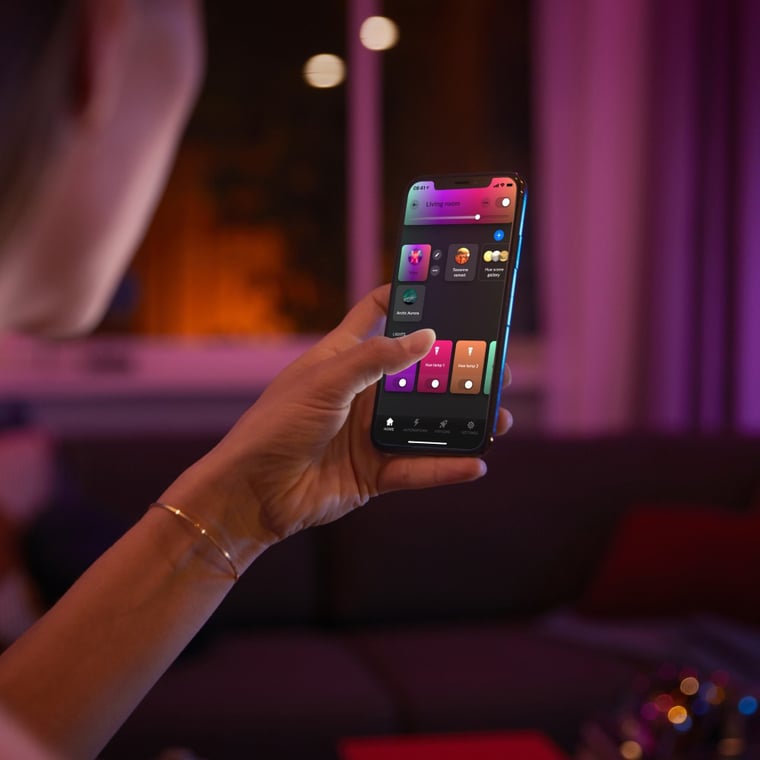
Colour smart bulbs from the major brands, Philips Hue and LIFX, land in the high 80s to low 90s on white light, which is plenty for living spaces. Their job is flexibility, millions of colours and the full warm-to-cool white range, rather than gallery-grade accuracy. If a room is genuinely colour-critical, a home studio or a make-up space, pair a high-CRI fixed downlight for the accurate white with smart bulbs for the mood, rather than asking one bulb to do both.
Colour Rendering Index: the short answer
CRI scores how real colours look under a light, from 0 to 100, and it is separate from both brightness and warm-versus-cool. Eighty is the LED baseline and fine for hallways and garages. Ninety and up is worth the small extra in kitchens, bathrooms, wardrobes and anywhere you judge colour, and if the box lists R9, higher is better there too.
Frequently asked questions
What is a good CRI for LED lights?
CRI 80 is the baseline every LED in Australia meets, and it is fine for general rooms. CRI 90 or higher is high-CRI and worth it wherever colour matters, kitchens, bathrooms, wardrobes and dining. For photography or art, look for 95 plus.
Does CRI affect brightness?
No. Brightness is measured in lumens and CRI is measured 0 to 100 for colour accuracy. They are independent. A dim bulb can have perfect CRI and a bright one can have poor CRI. Push CRI higher and you lose a little efficiency, so it draws marginally more watts for the same lumens, but the light is not dimmer.
Is a higher CRI always better?
For how colours look, yes, higher is always more accurate. The only cost is a small drop in efficiency and usually a slightly higher price. In rooms where nobody judges colour, like a garage or hallway, CRI 80 is perfectly good and not worth paying to improve.
What is R9 in CRI?
R9 is a separate score for deep, saturated red, which the headline CRI (Ra) leaves out of its average. LEDs often score well overall but poorly on R9, which makes reds, raw meat and warm timber look muddy. If a product lists R9, look for 50 or higher; 90 plus is excellent.
Do smart bulbs have good CRI?
Colour smart bulbs from Philips Hue and LIFX sit in the high 80s to low 90s on white light, which is plenty for living rooms and bedrooms. They are built for flexibility rather than gallery-grade accuracy. For a colour-critical space, pair a high-CRI downlight for accurate white with smart bulbs for colour and mood.
Is CRI the same as colour temperature?
No, and they are often mixed up. Colour temperature (Kelvin) is whether the light looks warm or cool. CRI is how accurately it shows colour. They are independent: a warm bulb can have high or low CRI, and so can a cool one. Read both numbers on the box.
Still need a hand?
We answer most messages within one business day. If your question is about an existing order, have your order number ready. It speeds things up.
Contact us