










Setup Ecosystems
Adding a Matter accessory to Apple Home, and what you lose
You can add a Matter accessory with just an iPhone on iOS 18 or later; no hub needed to start. What the steps are, what a hub adds later, and which features stay in the maker's app.
Matter is the industry standard that lets one accessory work across ecosystems, and Apple Home is a Matter controller. Adding a Matter accessory is genuinely simple, and on a current iPhone it needs less hardware than most guides claim. This page walks the steps, then covers the part the box never mentions: what the Matter path does not carry.
What you need
An iPhone running iOS 18 or later is enough to add a Matter accessory and control it at home. Apple states this plainly on its newer support page; an older Apple page still says a hub is required to add Matter accessories, and it is superseded. One qualifier travels with it: for Thread-based accessories, hub-free control needs an iPhone 15 Pro or later. Do not buy hardware to solve a problem you do not have.
What a home hub does earn is everything beyond standing in the room: automations, Home notifications, control from outside the house, and sharing with family. Start with the phone, add a HomePod or Apple TV 4K when you want the home to act on its own; and if Thread accessories are in your plans, mind that the hub and border-router lists differ.
- Check the accessory's code
A Matter accessory carries an 11-digit or 21-digit setup code beside a QR code. (An 8-digit code means a HomeKit accessory; the steps are similar, but this guide is about Matter.)
- For a battery-powered Thread accessory, update its firmware first
Apple notes battery accessories may need a manufacturer firmware update before an iPhone can pair them; run the maker's app once before you start.
- Open the Home app, tap the add button, then Add Accessory
With your iPhone on your home Wi-Fi and Bluetooth switched on, scan the Matter QR code, or enter the numeric code by hand.
- Follow the prompts and assign a room and name
The accessory joins your home and appears in the Home app and Control Centre.
- Keep the packaging, or photograph the code
The printed code matters if the accessory is ever factory reset, because a reset removes it from every ecosystem it belongs to.
Which device types Apple Home supports
Matter defines more device types than any single platform implements, and Apple Home implements a specific set. Per Apple's developer badge guidelines, the supported Matter categories are air purifiers, blinds and shades, bridges, fans, lights, locks, outlets, robot vacuum cleaners, sensors, switches and thermostats.
Cameras and video doorbells are absent, and that is the one to know before buying. Add a Matter camera to Apple Home over Matter and it appears as a bridge, not a camera: no live view, no recording. A camera buyer should look for HomeKit Secure Video support instead. The background, for those who like reasons: Apple's Matter certification stands at version 1.4, and cameras arrived in the specification after that, so the gap is a version story rather than a mystery.
Robot vacuums, a category people assume is missing, arrived with iOS 18.4: starting, stopping, docking, room selection and suction control from the Home app, with mapping and no-go zones staying in the maker's app.
What the Matter path does not carry
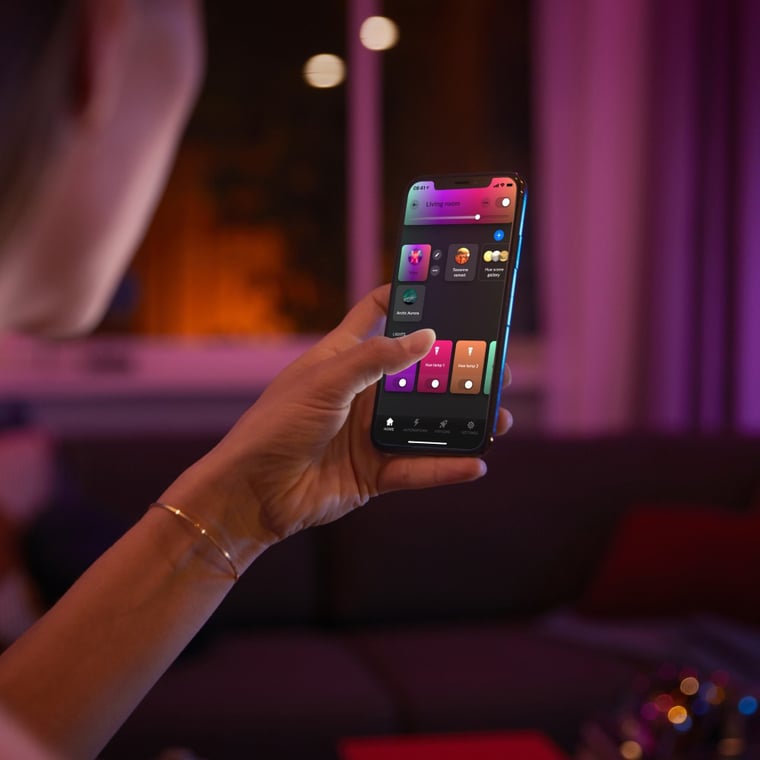
This is the same trade every ecosystem makes with Matter, not an Apple quirk. It can even be a regression: reporting records Philips Hue owners losing scene transfer into Apple Home after moving from the classic HomeKit connection to Matter, with the fix arriving only in late 2025. If an accessory offers both a HomeKit path and a Matter path, the HomeKit path sometimes exposes more; check what matters to you before switching.
One direction Matter does not work: Apple Home takes accessories in, it does not send them out. A Matter accessory paired here can also be added to Google Home or Alexa, but that is the accessory's own multi-admin feature, and sharing it properly is its own topic with its own traps. A HomeKit-only accessory cannot be shared out at all, because a HomeKit accessory pairs to one controller at a time.
One word, two Thread protocols
The confusing corner of the whole subject: two different protocols ride the Thread radio, and both are sold as 'Thread'.
| HomeKit over Thread | Matter over Thread | |
|---|---|---|
| What rides the radio | Apple's HomeKit protocol (HAP) | Matter |
| Ecosystems | Apple Home only | Apple Home, Google Home, Alexa, SmartThings |
| Setup code on the box | 8 digits | 11 or 21 digits |
| Can join a second ecosystem later | No, unless the maker ships a Matter upgrade | Yes via multi-admin |
If you might ever share the accessory with a non-Apple platform, buy Matter over Thread. The setup code is the quickest tell: 8 digits with no Matter code means HomeKit over Thread. Some makers (Eve, for instance) offer a one-way Matter upgrade for older Thread accessories; note that it replaces the printed setup code, so the new code needs keeping as carefully as the old one.
Frequently asked questions
Does Apple Home support Matter?
Yes. Apple Home is a Matter controller, and Matter support has been built in since the iOS 16.1 generation of Apple's operating systems. Matter accessories sit in the Home app alongside HomeKit ones.
Do I need a hub to add Matter accessories to Apple Home?
No. On an iPhone running iOS 18 or later you can add and locally control Matter accessories with no hub. For Thread-based accessories, hub-free control needs an iPhone 15 Pro or later. Apple states this on its newer support page; an older page saying a hub is required is superseded. A hub is what adds automations, notifications, remote access and sharing.
Are Matter devices available in Australia?
Yes, widely, across lights, plugs, sensors, switches and more. Check the category as well as the logo: Apple Home supports a specific list of Matter device types, and cameras are not on it.
Why does my Matter camera show up as a bridge in Apple Home?
Because Apple Home does not support Matter cameras. Added over Matter, a camera presents as a bridge, with no live view or recording. Use the camera's HomeKit integration instead if it has one, and look for HomeKit Secure Video support when buying.
Will I lose features using my accessory through Apple Home?
The standard controls carry across; manufacturer extras often do not. Brand scenes, effects, advanced configuration and firmware updates usually stay in the maker's app, so the practical answer is to run both: Apple Home for everyday control and automations, the maker's app for the rest.
Still need a hand?
We answer most messages within one business day. If your question is about an existing order, have your order number ready. It speeds things up.
Contact us