
















Setup Automation
Turn on the range hood automatically when you start cooking
A sensor or a stove-on signal can switch the range hood on the moment cooking starts, and off again once the air clears, without anyone reaching for a separate, often noisy control.
The idea
Having the range hood or exhaust fan switch on by itself as smoke, steam, or cooking odours build up, and switch off again once the air clears, means nobody has to remember to operate a separate control with their hands full of a hot pan.
What you'll need
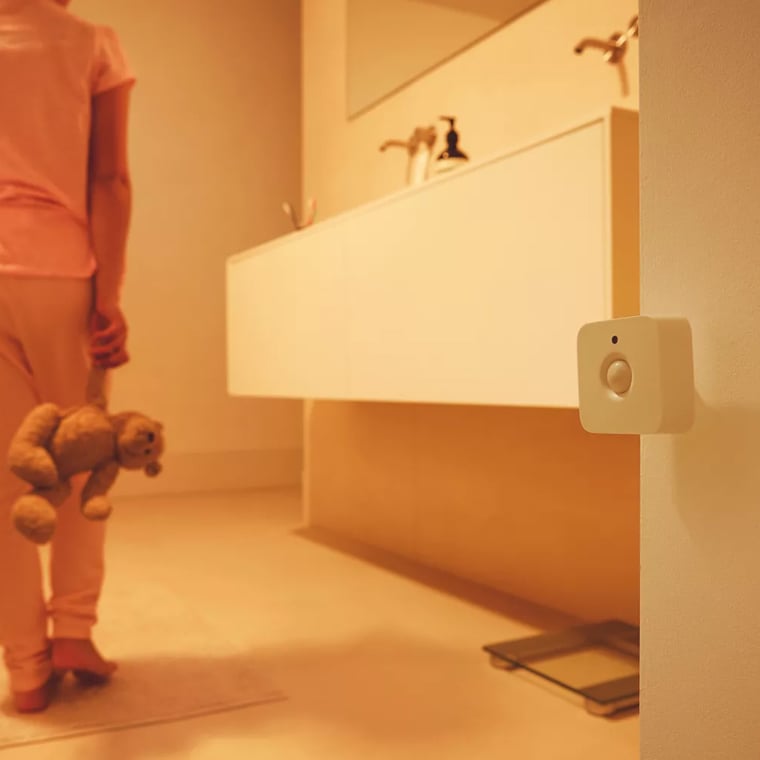
- An air-quality, smoke, or humidity sensor positioned near the cooktop, capable of detecting steam or smoke levels or a rapid rise in particulates.
- A smart switch or smart plug on the range hood or exhaust fan, if it isn't already a networked appliance.
- Optionally, a stove-on signal (a knob sensor or a power-monitoring plug on the stove) as an earlier, more proactive trigger than waiting for smoke or steam to actually build up.
How the automation works
Same trigger, condition, action pattern as the rest of this series, with a choice of two triggers:
- Trigger (reactive): the air-quality or smoke sensor detects levels above a set threshold.
- Trigger (proactive): a stove-on signal fires the hood immediately when cooking starts, rather than waiting for smoke or steam to build up first, closer to how a person would actually use the hood.
- Action (on): turn the range hood or exhaust fan on, scaling fan speed to the reading's severity if your hood supports variable speed.
- Action (off): once the reading drops back under the threshold for a sustained period (a few minutes, to avoid the fan cycling repeatedly), turn the hood back off.
- Decide between the reactive and proactive trigger
Base it on what hardware you already have: a stove-on signal gives a faster, more natural-feeling response than waiting for smoke or steam.
- Position the sensor
Mount it close enough to the cooktop to react quickly, but not so close that normal simmering constantly triggers it.
- Connect the range hood
Add it to a smart switch or plug if it isn't already networked.
- Build the on and off automations
Use your chosen trigger for on, and a separate off automation with a sustained-clear condition to avoid rapid cycling.
- Tune the thresholds over a few real cooking sessions
This automation typically needs a bit of trial and error to get the sensitivity right.
Common mistakes to avoid
- No sustained-clear condition on the off trigger. Without requiring the reading to stay clear for a couple of minutes, the fan can cycle on and off repeatedly as levels fluctuate near the threshold.
- Sensor placed too close to the cooktop. This can fire the hood on completely normal, low-smoke cooking like a gentle simmer.
- Sensor placed too far away. A sensor mounted away from the cooking area can be slow to react to an actual spike, defeating the point of automatic activation.
- Relying only on the reactive trigger. Some cooking produces strong odours with very little visible smoke or steam. A proactive stove-on trigger tends to cover this better than a pure air-quality threshold.
Variations worth trying
This automation's often paired with opening a window automatically, or activating a separate ventilation fan, as an extra response alongside the range hood. Don't rely on this sensor for gas safety though: the particulate or VOC sensor used here doesn't detect carbon monoxide or a gas leak, that needs a dedicated, purpose-built detector with its own certified sensor. If you want gas-leak alerts as part of the same automation system, add one as a separate device with its own higher-urgency response, rather than assuming your air-quality sensor already covers it.
Frequently asked questions
Should I use a smoke sensor or a stove-on trigger for this?
A stove-on signal (a knob sensor or a power-monitoring plug on the stove) gives a faster, more natural-feeling response since it fires the moment cooking starts. A smoke or air-quality sensor is the simpler reactive option if you don't already have a way to detect the stove being on.
How do I stop the fan cycling on and off repeatedly?
Add a sustained-clear condition to the off automation: require the sensor reading to stay under the threshold for a few minutes before switching off, rather than reacting to a single clear reading.
Where should I mount the sensor?
Close enough to the cooktop to react quickly, but not so close that normal simmering sets it off. Expect to adjust the position and threshold after a few real cooking sessions.
Can the same sensor also detect a gas leak?
No. The sensor used for this automation is a particulate or VOC-type sensor, and doesn't detect carbon monoxide or combustible gas. A gas leak alert needs a separate, dedicated detector with its own certified sensor.
Still need a hand?
We answer most messages within one business day. If your question is about an existing order, have your order number ready. It speeds things up.
Contact us