

















DS18B20 Temperature Probe 3m
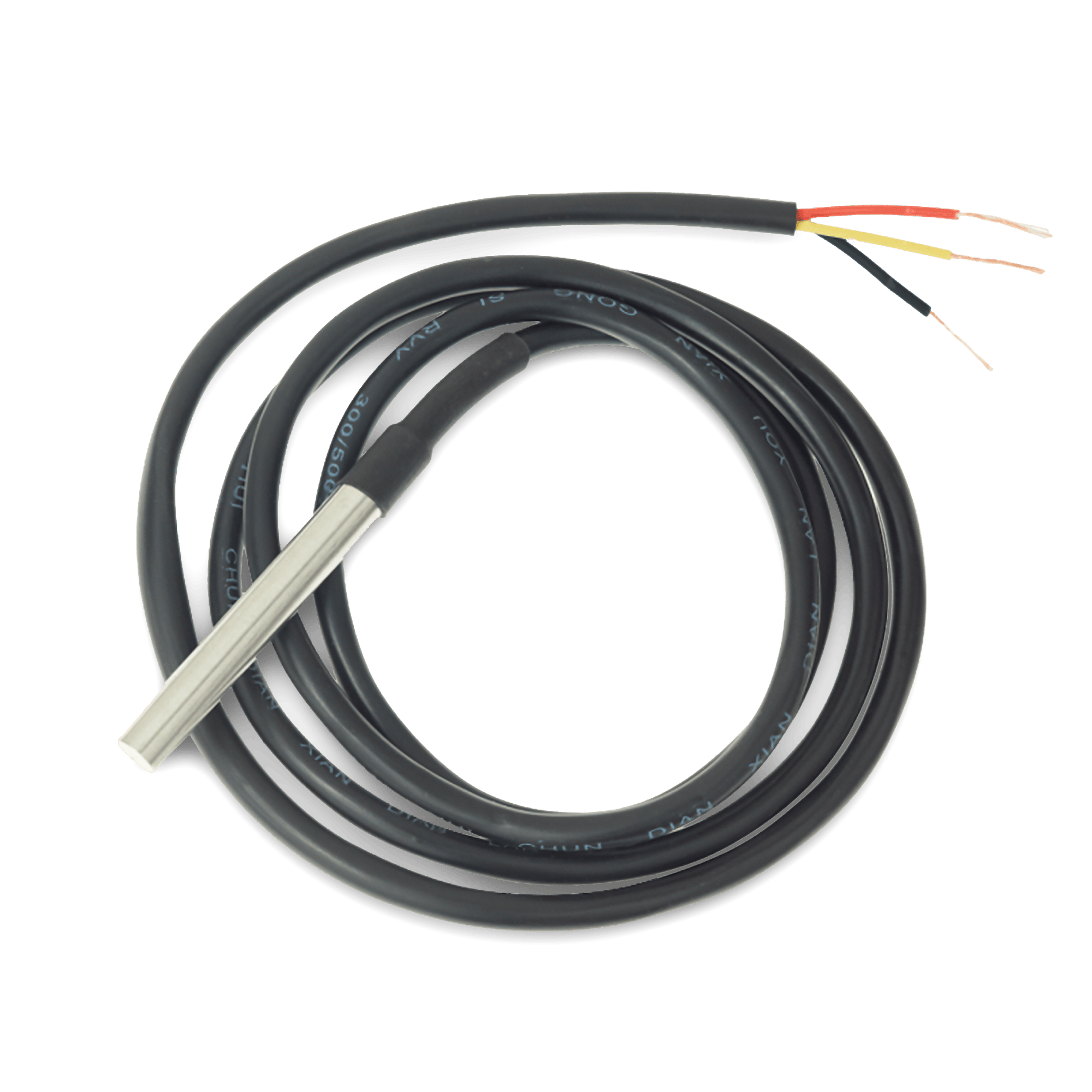
A DS18B20 temperature probe on a 3 metre lead, ending in three bare wires. They go into the screw terminals on a Shelly Plus Add-On, which gives a Shelly in the wall a temperature reading.
$14.95 inc GST In stock · ships today
Currently sold out.
Free shipping over $150 Order before 3pm Melbourne time on a weekday and it ships the same day.
30-day returns Unused items, easy online returns
3-year warranty Backed by Shelly
Everything you need to know
The sections below cover what this probe does, what it fits, the full specifications, and how warranty and returns work. If something's still unanswered, the questions at the bottom cover the common ones.
Product features
What this probe does
A DS18B20 is a small digital temperature sensor on a lead. This one ends in three bare wires (red, yellow and black) that go into the screw terminals on a Shelly Plus Add-On, which is what carries the reading back to the Shelly it's attached to. On its own it does nothing. It's the sensing end of a setup where a Shelly in the wall needs to know a temperature: the water in a tank, the slab under a floor, the air in a roof space.
- Digital temperature probe on a 3 m lead
- Three bare wires, into the Plus Add-On's screw terminals
- Up to five can share one Add-On
- Needs a host Shelly, it isn't a standalone sensor
Wiring it up
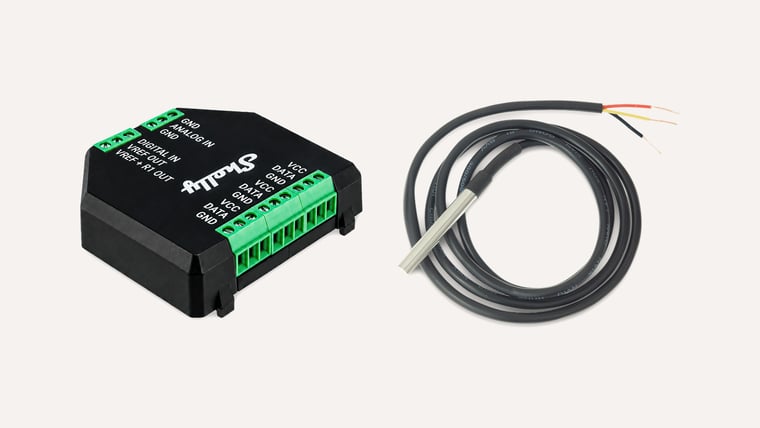
The three wires go into the 1-Wire terminals on the Plus Add-On. The Add-On has three sets of VCC, DATA and GND terminals, so a probe can land on any set, and up to five probes can share them.
- Red to VCC
- Yellow to DATA
- Black to GND
- Fit the Add-On with the power off
How Shelly works

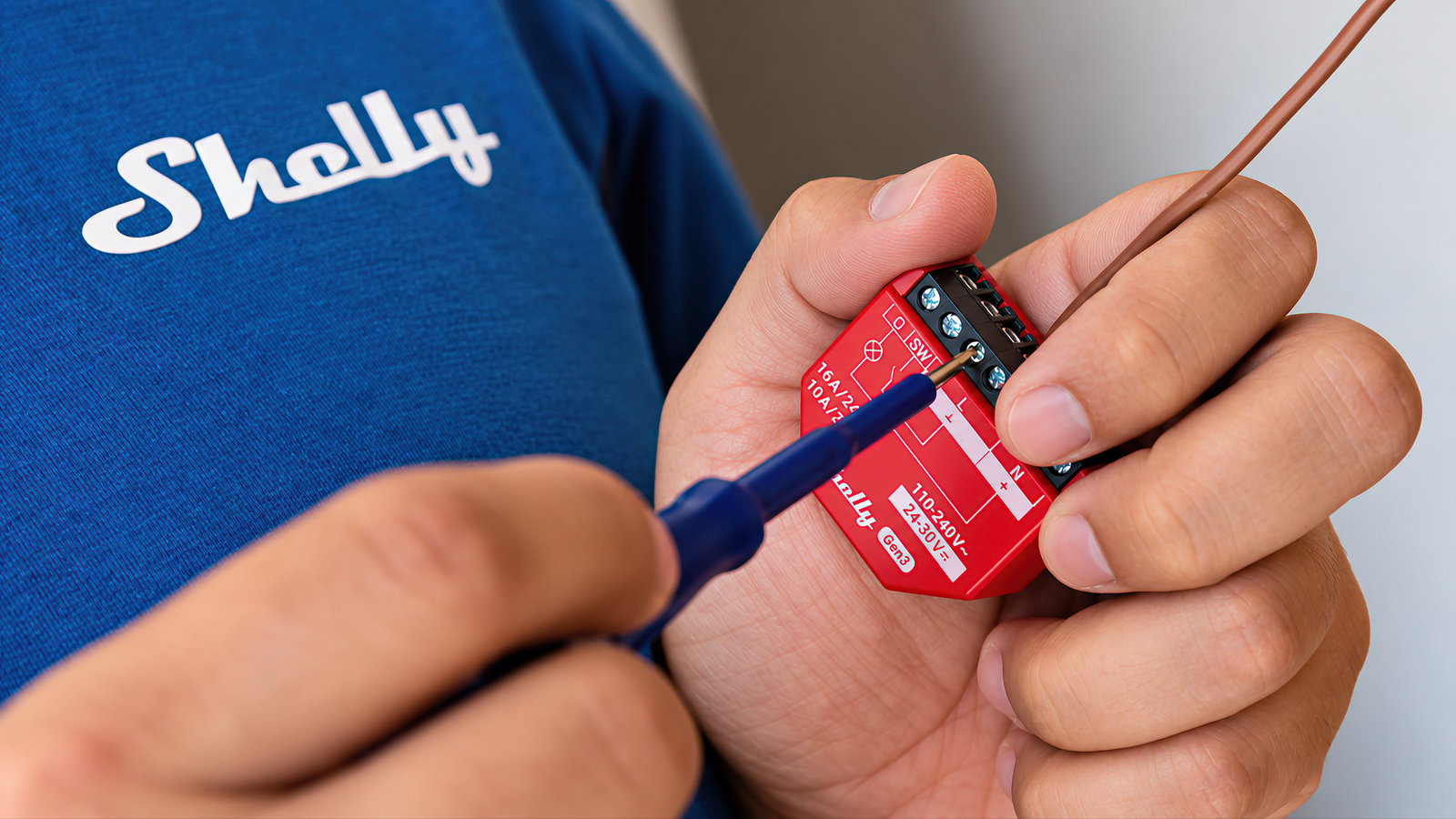
A Shelly is a small module that makes wiring you already have controllable. It joins your Wi-Fi directly, holds its schedules and scenes on the device itself, and keeps running them if your internet drops. Nothing you set up depends on Shelly's servers being reachable.
The device
The brain is the device
Shelly does the thinking locally, not in a data centre. Schedules, scenes and logic are stored on the unit and run there, so the lights still come on at dusk when the internet is out.
The network
No hub, no bridge
There is nothing to buy before the first one works. Where a Philips Hue setup is built around a Bridge that every light talks through, a Shelly joins your router directly and answers your phone from there.
The control
The app is optional
Every Shelly serves its own web interface, so you can set it up and run it from a browser on your own network, with no account. The Shelly Smart Control app and Shelly Cloud are free and add remote access and voice control, but nothing needs them.
The generations
What Gen1 to Gen4 means
Shelly has run through four hardware generations, and the same product name can exist in more than one of them. Later generations are faster and carry more radios than the ones before, which is why the generation is part of the name. The specifications on each page tell you which one you are looking at.
Getting started
1
It goes behind what you already have Start here
Shelly retrofits. The module fits behind the switch, socket or appliance that is already there, so your switch plates and fittings stay as they are and the original switch keeps working for anyone who just wants to flick it. Anything wired into a mains circuit is a job for a licensed electrician.
2
Open by design Then run it your way
Shelly publishes its local API and does not put it behind a developer account. Devices answer HTTP and MQTT on your own network and can run small scripts on themselves. That is why Shelly is the default choice for people building on Home Assistant, which ships an official Shelly integration.
Start with one and add more whenever you like. There is no hub to outgrow, and each Shelly works on its own whether you ever add another or not.
Specifications & Installation
Setup · 1:47
How to install it
Shelly's walkthrough fitting this DS18B20 probe to a Shelly Plus Add-On.
Watch setup videoNo specifications match.
Type
- Accessory type
- Sensor probe
- Fits
- Shelly Plus Add-On
- Connections
- Flying leads
- Size (Temperature Probe)
- * Length: 50 mm * Diameter: 6 mm
- Weight
- 25 g
- Cable length
- 1 m
- Cable material
- Stainless steel cover
- Cable color
- Black
- SKU
- SHE-ACC-0004
- Barcode
- 3800235266403
What you can do with it

A roof-space fan that runs when the roof gets hot
A temperature probe in the roof space switches the exhaust fan on when the air up there gets hot, and off again once it cools. It runs on the relay itself, so it keeps working without the internet. Control with any of


Run the pool pump when it costs less
The pool pump is one of the hungriest circuits in most houses, so schedule its runs into off-peak windows and see what each one uses. Changing the season's run times happens from the couch, not the pump shed. Control with any of Common questions
Quick answers before you buy. We test this gear ourselves. Can't find yours? Ask our Melbourne team
No. It's a probe, not a sensor with a radio. It needs a Shelly Plus Add-On fitted to a compatible Shelly, which reads the probe and reports the temperature.
Up to five DS18B20 probes share one Plus Add-On, on the same one-wire bus.
Anywhere a Shelly needs to know a temperature it can't sense itself: a hot water tank, a slab under a floor, a roof space, or the room a heater is warming.
The probe itself is low voltage, but the Add-On it connects to sits in a wall box alongside a mains-wired Shelly, so that installation is electrical work.
Shelly · DS18B20 Temperature Probe 3m