










Explainer Ecosystems
Does SmartThings work without internet?
Hub-connected devices and the automations built from them keep running through an outage. What survives, what stops, and why a hub cannot rescue a cloud device.
Some of it does, and more of it than most people expect. Anything you paired straight to a SmartThings hub keeps working when the internet drops, and so do the automations built from it. Everything that runs through your Samsung account stops.
So the honest label is not offline. Samsung's platform has one foot in your house and one in its data centre, and losing the connection costs you the second. What decides how much of your home carries on is which side each of your devices sits on, and that line does not run where most people assume.
What keeps working, and what stops
| Keeps working when the internet drops | Stops when the internet drops |
|---|---|
| Devices connected straight to a hub over Zigbee, Z-Wave, Thread or Matter | Any device reached through its manufacturer's cloud, including ones added by signing in to the maker's app |
| Automations where the trigger and the device are both on the hub | Voice control, which relays your command through SmartThings' servers |
| Timer-triggered automations, handled by the Rules API | Remote access from outside the house, and notifications that need the cloud to reach you |
| Integrations running locally against the hub over your own network | The Samsung account layer, third-party cloud integrations, and the syncing of your Locations and household members |
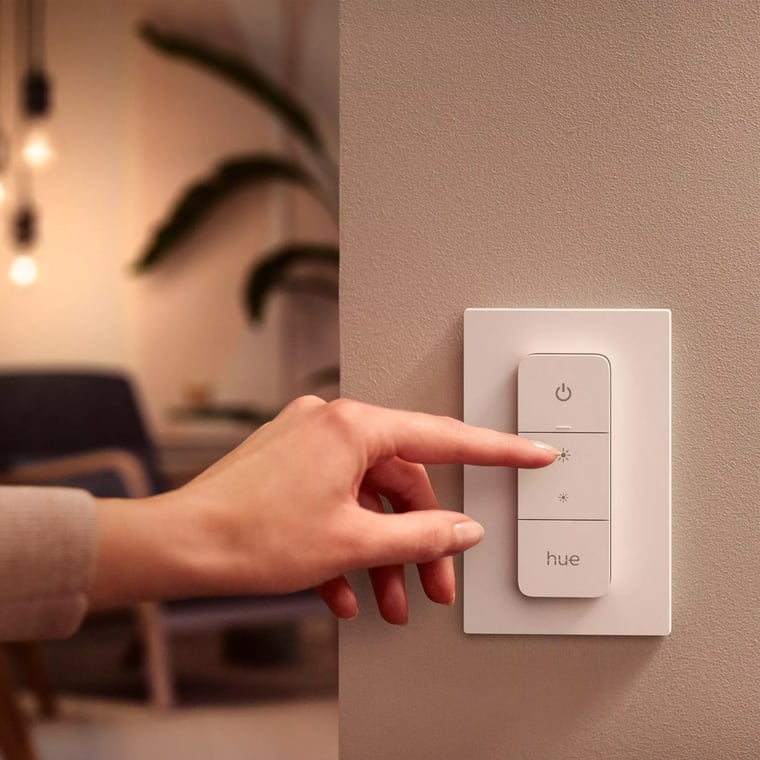
Everything in the right column is account-shaped rather than device-shaped. SmartThings is built around a Samsung account, so when that account layer cannot be reached, the things hanging off it go with it. Let the automations and the wall switches carry the house.
One distinction worth making, because in most houses the same box does both jobs: the internet being down and the router being down are different failures. Zigbee and Z-Wave devices reach the hub on their own radios and ride out either. Matter over Wi-Fi, and anything running across your local network, still needs the router up even when the line to the world is not.
What SmartThings Edge changed
Until the end of 2022, device logic ran in Samsung's cloud. A motion sensor in the hallway reported to a data centre, the data centre decided the light should come on, and the instruction travelled back down. Break that path anywhere and the instruction never arrived. It also meant an outage at Samsung's end and an outage at yours looked identical from inside the house.
Samsung shut the old Groovy platform down on 31 December 2022 and replaced it with Edge, which moved that work onto the hub. Drivers now run on the hub itself, so control and automations for devices connected directly to it, over Zigbee, Z-Wave, Thread, Matter or your local network, are decided in your house rather than in a data centre. Timer-triggered automations run locally too, through the platform's Rules API.
The line is how a device connects, not what brand it is
Two smart plugs can sit side by side on a shelf, carry the same brand, cost within a few dollars of each other, and land on opposite sides of that table. The Zigbee one talks to your hub and keeps switching through an outage. The Wi-Fi one talks to its maker's servers and stops. The front of the box will not tell you, because the front of a box describes features. The specification on the back names the radio, and that one line is the whole answer.
So if riding out an outage matters, buy for the connection. Zigbee, Z-Wave, Thread and Matter all terminate at a hub in your house, provided your hub carries that radio, because not every SmartThings hub carries all four. Z-Wave is the one to check twice. It runs on a different frequency in each region, so a hub or a device bought from a US or UK seller will not pair with the Z-Wave gear sold here. Buy the Australian and New Zealand unit. The same logic applies to anything you are shopping for now: if all it offers is Wi-Fi and an account, you are buying something that goes quiet with the connection.
How this compares to Google Home
Google Home is mostly cloud, with local Matter control, so its local half is narrow and Google has never claimed otherwise. SmartThings put the device logic on the hub and left it there. Against Google Home that is a genuine advantage, on this one question rather than in general. It matters more than it looks, because an outage is exactly when you want the lights and the door to behave, and exactly when a cloud-first platform has least to offer.
The cloud half is the trade for one app that speaks Zigbee, Z-Wave, Thread, Matter and a long list of manufacturers' clouds at once. Every vendor integration is a cloud connection by definition, because the device on the other end lives on somebody else's server. That is a reasonable deal, as long as you know which of your devices you bought on which side of it.
What to put on the hub
Put the things you would miss during an outage on the hub, and treat anything you added with a login as convenience rather than infrastructure. Lights, switches and sensors belong in the first group. A lock can too, but do not make any smart platform the only way through your own door: keep a key, and keep a manual override on anything you would be stuck without.
If you are on fixed wireless, satellite, or a line that drops for an hour most weeks, none of this is hypothetical, and every one of those hours runs on whatever you put on the hub. And if running without a connection is a requirement rather than a preference, SmartThings is not the platform built for that. Home Assistant is.
Frequently asked questions
Can you use SmartThings offline?
Partly. Devices connected straight to a hub over Zigbee, Z-Wave, Thread or Matter keep working, along with automations built from them, and timer-triggered automations, provided what they switch is also on the hub. What stops is the Samsung account layer, remote access, voice control, cloud-dependent notifications and third-party cloud integrations.
Do SmartThings automations keep running during an outage?
Yes, when they are built from hub-connected devices. Since Edge, control and automations for devices connected directly to the hub are handled by the hub, and timer-triggered automations run locally through the Rules API. An automation that reaches a cloud-connected device, or that ends in a cloud notification, will not complete.
Will a SmartThings hub make my Wi-Fi devices work offline?
Not the cloud-connected ones. A hub makes local operation possible for devices that can speak a hub protocol, and that includes Matter over Wi-Fi. A device that reaches SmartThings by signing in to its manufacturer's account is not speaking a hub protocol, and adding a hub does not change how it talks to its manufacturer. A hub does not retrofit anything.
My Samsung TV has a SmartThings hub in it. Does the same apply?
In principle, yes: whatever is paired to that hub over its radios is local, on the same terms as anything else. The catch is which radios it has. No embedded Samsung hub supports Z-Wave, with or without the dongle, and which radios a built-in hub has depends on the tier of the set rather than the year it was made. Check the model before you plan around it.
Can I still use the SmartThings app when the internet is down?
Do not count on it. The account layer and remote access are both among the things that stop, so the safe plan is that your phone is not the way in during an outage. That is the argument for automations that do not need you, and for keeping real switches on the wall.
Still need a hand?
We answer most messages within one business day. If your question is about an existing order, have your order number ready. It speeds things up.
Contact us